
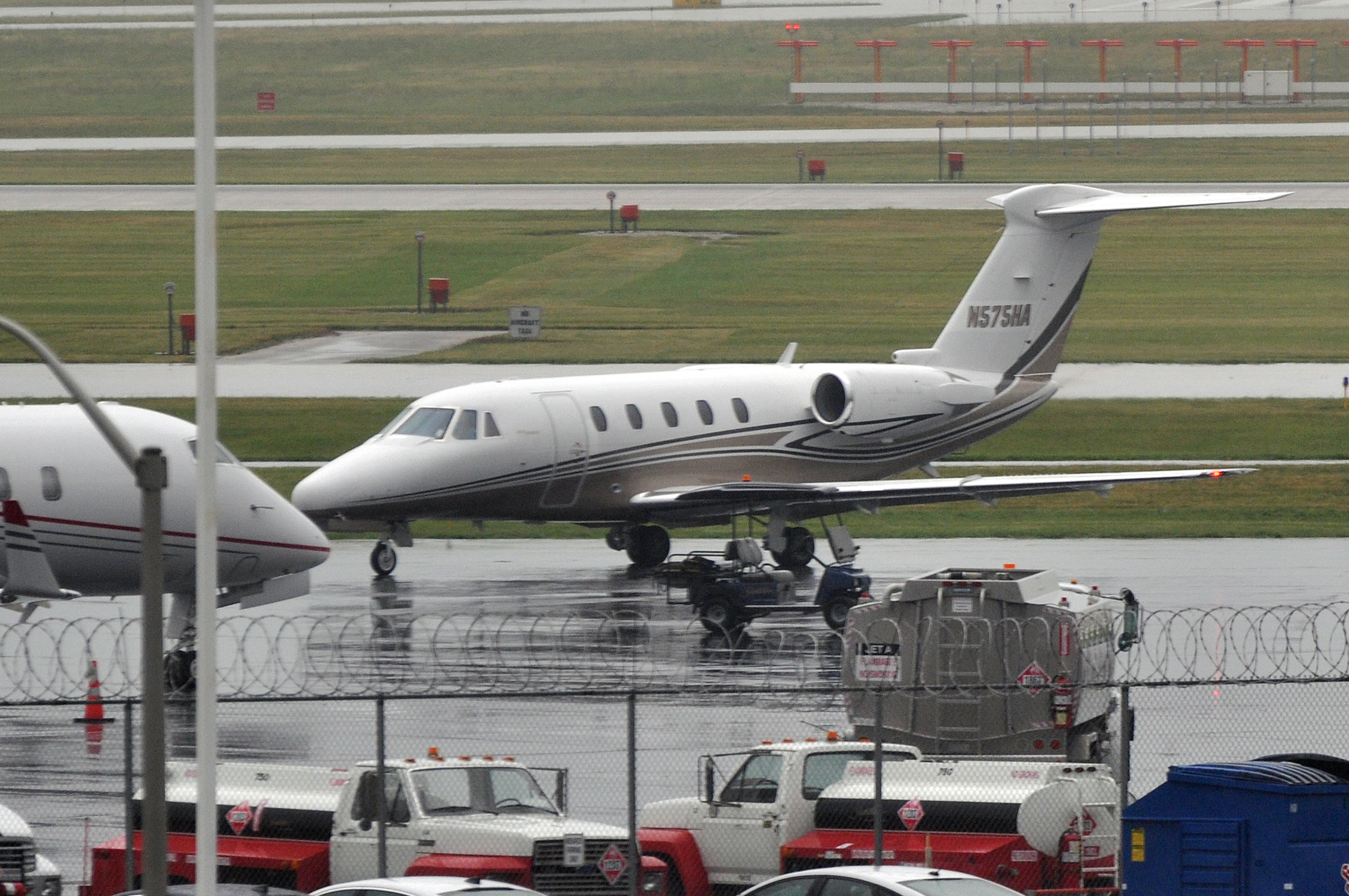
Cessna Citation VII N575HA at Indianapolis in June 2018. · Photo: Eric Salard, Wikimedia Commons (via Flickr), CC BY-SA 2.0
Cessna · Midsize Jet
Citation VII (650)
The last and most powerful of three Model 650 versions, after the Citation III and VI.
The Citation VII delivers midsize speed, a 51,000 ft ceiling and a private aft lavatory for the price of a used light jet. The catch is ownership: thirsty engines, costly engine programs and 1990s avionics push yearly costs near $2 million.
Buy it if
You fly four to six people on trips under about 1,500 nm, want a real enclosed lavatory and midsize speed, and can budget roughly $1.9 million a year for a professionally crewed jet.
Skip it if
You need nonstop coast-to-coast range, a stand-up cabin, modern touchscreen avionics, or running costs closer to a light jet's. Newer midsize jets and late-model light jets do those jobs better.
Biggest compromise
Operating cost. 9 million, close to the price of the aircraft itself.
The numbers that matter
Purchase price
$2.3M
typical asking · $2.19M–$2.4M
What it costs per year
$1.93M
at 300 hrs · two professional pilots
How far it flies
1,825 nm
1,670–1,815 nm with passengers
How fast
452 kt
high-speed cruise
Seats
8
7–8 typical; 6–9 by interior
Pilots needed
2
Always flown by two pilots; the 2026 single-pilot rule change does not affect it.
Price
What one costs to buy
Typical asking price
$2,300,000
Where asking prices sit
Low
$2.19M
Typical
$2.3M
High
$2.4M
Most asking prices fall inside this band.
Other sites
Priced vs call
with a price / call for price
Only 3 of 10 listed aircraft show prices, all 1999–2000 models. Older examples are priced on request; a broker guide puts typical values at $1.7–2.1M.
Price vs its family and alternatives
Scroll to explore · select a jet for details
Citation VII (650) · This aircraft
$2.3M
Sits between the Hawker 800XP and the Citation Sovereign (680).
For sale now
None listed right now
Cost to own
What it costs per year to run
300hours / year
Per year
Per flight hour
Estimate — your operator will quote actual numbers.
Fuel, airframe maintenance, scheduled and unscheduled, engine program (honeywell msp gold) and apu program rise as you fly more. Two professional pilots, recurrent simulator training, hangar, insurance and subscriptions and databases stay the same however much you fly.
Where the money goes
- Two professional pilots$307,50016%
- Recurrent simulator training$45,0002%
- Hangar$54,0003%
- Insurance$35,0002%
- Subscriptions and databases$18,0001%
- Fuel$714,78037%
- Airframe maintenance, scheduled and unscheduled$353,25018%
- Engine program (Honeywell MSP Gold)$364,68619%
- APU program$39,3392%
Fuel is the biggest single cost at 37% of the total.
The JetGrade
65 out of 100 — Below its class average
Peer group: Cessna Citation Excel (560XL), Raytheon Hawker 800XP, Learjet 60, IAI Astra SPX
Seven categories at a glance
- - - 70 = typical— This aircraft
Strongest on speed & trip time, weakest on running costs.
Grades are editorial opinions about the model, not any specific aircraft. Sponsors and affiliates have no input. Reviewed 2026-10-14.
Where it flies
Sample trips and reach
Typical trips on a map
Nonstop
Depends on weight or weather
Fuel stop likely
Out of reach
5 of 8 sample trips are comfortable nonstops.
Sample flight times
- 0.9 hr
Carlsbad → Las Vegas
205 nm · Short hop; Carlsbad runway limits weight on hot days
- 1.9 hr
Carlsbad → Aspen
625 nm · Mountain airport; weather, rules and season apply
- 2.2 hr
Santa Ana → San José del Cabo
765 nm
- 2.5 hr
Teterboro → West Palm Beach
900 nm
- 3.2 hr
Dallas → Teterboro
1,190 nm · Comfortable nonstop with four passengers
- 3.8 hr
Teterboro → San Juan
1,410 nm · Nonstop with four; headwinds can tighten reserves
- 5.7 hr
Carlsbad → Teterboro
2,100 nm · Needs one stop, typically mid-continent
Los Angeles → Honolulu
2,215 nm · Beyond range; no fuel stop over the ocean
Lineage
What came before and after

1992–2000
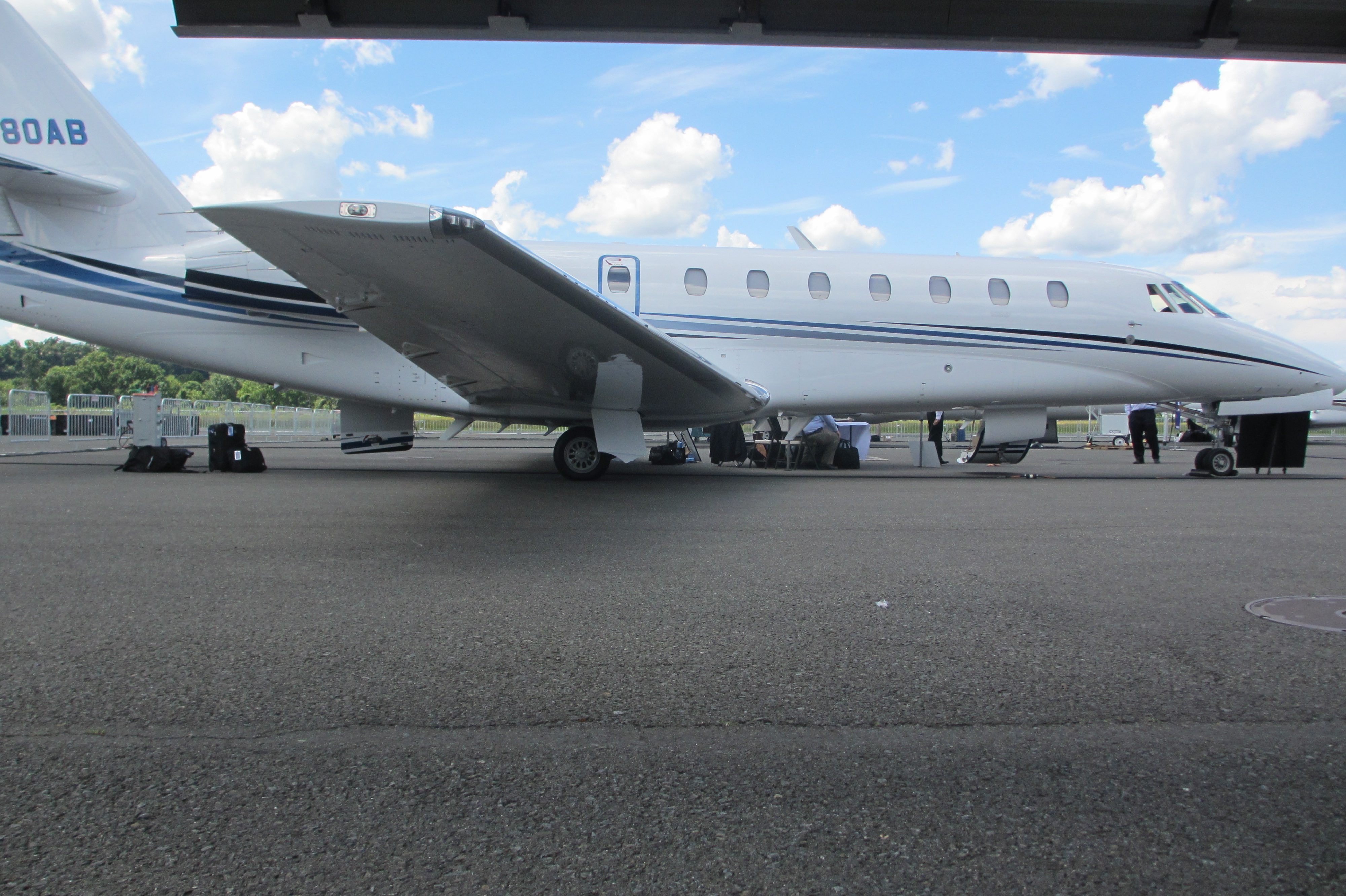
Cessna Citation VII (650)
Stronger -4R engines, 1,000 lb more takeoff weight, quieter cabin.
What changed from the Cessna Citation III (650)
- TFE731-4R engines with 4,080 lb thrust each, up from 3,650 lb on the Citation III.
- Maximum takeoff weight rose about 1,000 lb, to 23,000 lb.
- Better takeoff and climb on hot days and at high-altitude airports.
- Honeywell SPZ-8000 autopilot with five-screen electronic flight displays.
- Improved soundproofing and cabinetry over the Citation III.
- Simplified flap system and digital electronic engine controls.
Size and cabin
How big it is, inside and out
Outside
Silhouette · scaled to length
Length
Wingspan
Height
Inside the cabin
Cabin length
Width
Height
Compare
How it stacks up
This aircraft
Citation VII (650)
- JetGrade
- 65
- Price
- $2.3M
- Cost per year
- $1.93M
- Range
- 1,825 nm
- Speed
- 452 kt
- Seats
- 8
- Cabin length
- 18′ 5″
- Pilots
- 2
- Years built
- 1992–2000
← Before
- JetGrade
- Not yet graded
- Range
- 1,900 nm
- Speed
- 450 kt
- Seats
- 8
- Years built
- 1983–1992
After →
- JetGrade
- 75
- Price
- $6.9M
- Cost per year
- $1.87M
- Range
- 2,847 nm
- Speed
- 445 kt
- Seats
- 9
- Cabin length
- 25′ 3″
- Pilots
- 2
- Years built
- 2004–2013
Alternative
- JetGrade
- Not yet graded
- Range
- 1,800 nm
- Speed
- 430 kt
- Seats
- 7
- Years built
- 1998–2004
Alternative
- JetGrade
- 72
- Price
- $2.17M
- Cost per year
- $1.83M
- Range
- 2,540 nm
- Speed
- 448 kt
- Seats
- 8
- Cabin length
- 21′ 4″
- Pilots
- 2
- Years built
- 1995–2005
- Cessna Citation Excel (560XL) instead: A stand-up cabin, much shorter runway needs and lower fuel burn, in exchange for slower cruise and a lower ceiling.
- Raytheon Hawker 800XP instead: A larger cabin with baggage you can reach in flight and longer range, but a slower climb and a 41,000 ft ceiling.
- Cessna Citation III (650) instead: The same airframe for less money, with weaker engines that limit hot-day, high-altitude and heavy-weight departures.
Gold marks the best figure in each row.
Owning one
What to know before you buy
Engines & inspections
2 × Honeywell TFE731-4R-2S · 4,080 lbf each
Engine hours until overhaul
- Document 4 inspection · 400 hr
- Air-conditioning motor brush replacement · 500 hr
- Document 8 inspection · 1,200 hr
- Engine mid-life inspection · 2,500 hr
- Engine core zone inspection · 5,000 hr
- Annual inspection documents every 12 months
- Documents 11 and 19 every 72 months
Most listed examples have both engines on Honeywell MSP Gold, quoted at about $600 per engine per hour in 2026; JSSI cover also exists.
Known issues
Engine events can exceed value
Mid-life and overhaul work on two TFE731 engines can cost as much as the aircraft; program coverage is essential.
Aging five-screen avionics
The original Honeywell cockpit uses CRT screens; LCD replacements and full Universal panels exist but are costly.
Stabilizer trim control unit
An FAA directive required an improved horizontal stabilizer trim control unit; confirm it is installed and logged.
Pre-buy checklist
0 of 9 checked
Textron Aviation service centers and Honeywell's TFE731 network support the airframe and engines. Textron's parts program covers the 650, and most listed aircraft have engines on Honeywell's MSP plan.
Review
The full review
Strengths
- Fast for its class: about 452 knots in high-speed cruise and a 51,000 ft ceiling above most weather and traffic.
- Carries 1,620 lb with full tanks, so six passengers and their bags can usually fly the full distance.
- Private, full-width aft lavatory and a 422 cu ft cabin seating seven or eight, rare at around $2 million.
Limitations
- Running costs near $1.9 million a year at 300 hours, driven by fuel burn and engine program fees.
- Cabin is about 5 ft 8 in tall, so most adults stoop, and bags ride in a 54 cu ft tail compartment.
- Original 1990s five-screen cockpit; sellers value full modern Universal panel upgrades at $600,000 to $800,000.
The Citation VII is the last and most capable version of Cessna's Model 650, the swept-wing family that started with the Citation III in 1983. Cessna built 119 of them between 1992 and 2000, alongside a cheaper Citation VI, before the larger Citation Sovereign took over the slot. It looks almost identical to the III, but it has stronger Honeywell TFE731-4R engines, 1,000 lb more takeoff weight and a quieter, better-finished cabin.
Pilot's take
The Citation VII is a pilot's airplane in the best sense: strong engines, a quick climb to the 40s and a cruise speed that keeps pace with newer midsize jets. The -4R engines fixed the Citation III's main weakness on hot, high days. The workload is classic 1990s two-crew, with CRT screens, a separate FMS and plenty of switches, so crew experience on type matters. We would favor examples with WAAS approaches, ADS-B and display upgrades already done, and we would read the engine program paperwork as closely as the logbooks.
Who this is for
A company or owner with a two-pilot professional crew flying 200 to 400 hours a year on 500 to 1,500 nm trips, who values speed and a private lavatory over the newest avionics and wants a capable midsize jet for about $2 million.

Ask about this aircraft
Answers come only from our research file on the Cessna Citation VII (650).
Your earlier questionsOwners
Private to verified ownersOwn a Cessna Citation VII (650)? Verify with its FAA registration to join the owners' thread and the real-cost poll.