
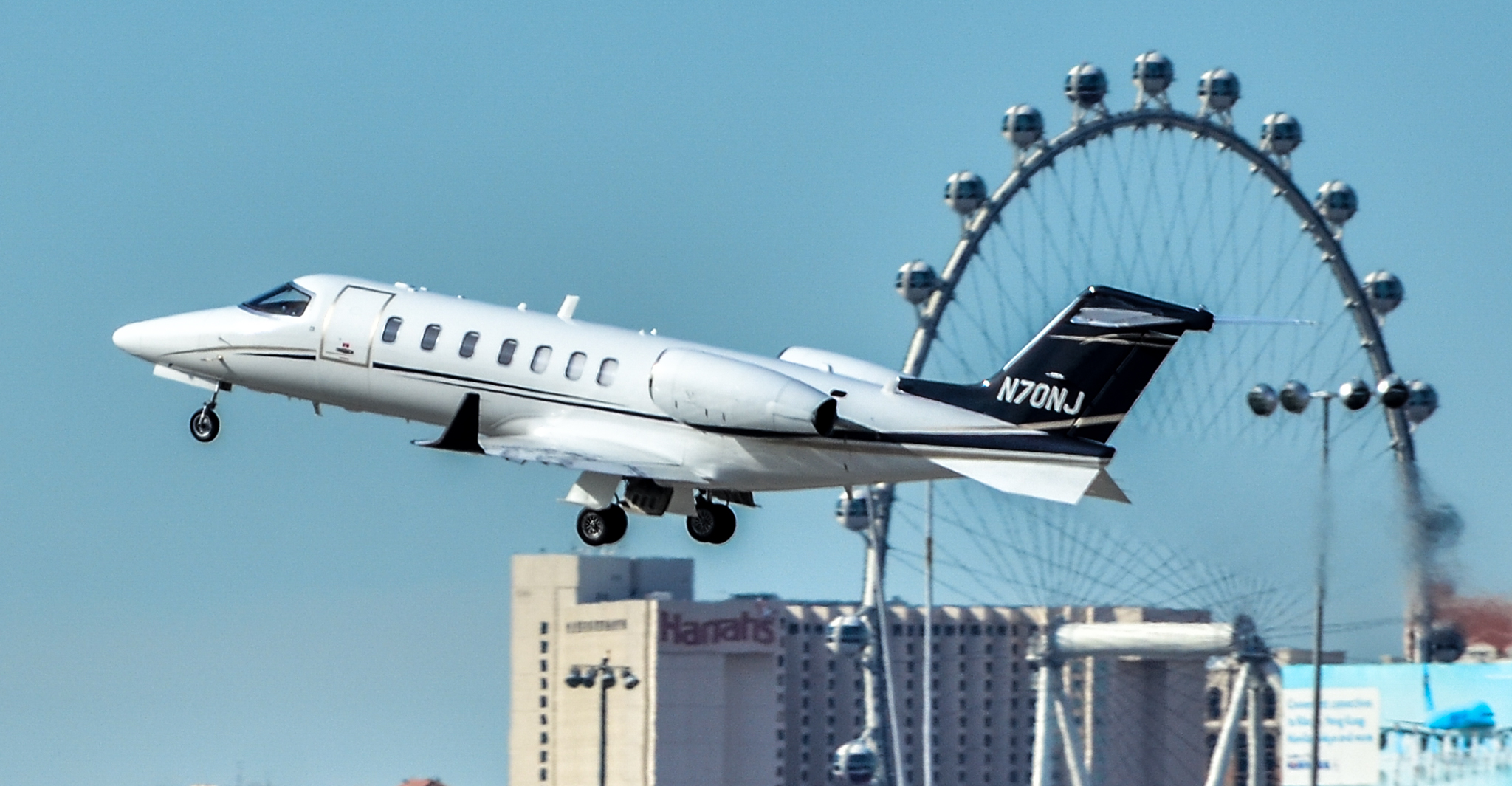
Learjet 70 N70NJ at Las Vegas in March 2017. · Photo: Tomás Del Coro, CC BY-SA 4.0, via Wikimedia Commons
Learjet · Light Jet
Learjet 70
The short-cabin member of Learjet's final family, replacing the 40XR; the longer Learjet 75 was built alongside it.
One of the fastest, longest-legged light jets you can buy for around $5M, with a modern Garmin cockpit. The catch: two pilots are mandatory, it needs longer runways than rivals, and only 13 exist, which makes pricing and resale harder.
Buy it if
You fly two to six people on trips of up to about 1,800 nm, want to cruise near 464 kt at up to 51,000 ft, and already plan on a two-pilot crew.
Skip it if
You want to fly yourself, use runways shorter than about 4,500 ft at full weight, or need an easy resale. A Citation CJ4 or Phenom 300 offers single-pilot flexibility and a far deeper market.
Biggest compromise
Rarity. Only 13 Learjet 70s were built before Bombardier paused production in 2016, and all Learjet building ended in 2022.
The numbers that matter
Purchase price
$4.75M–$6.75M
guide value (Conklin & de Decker; AircraftCostCalculator)
What it costs per year
$1.59M
at 300 hrs · two professional pilots
How far it flies
2,060 nm
1,849–2,060 nm with passengers
How fast
464 kt
high-speed cruise
Seats
6
6 typical (up to 7)
Pilots needed
2
Certified for two pilots only; there is no single-pilot approval.
Price
What one costs to buy
Guide value
$4.75M–$6.75M
Other sites
Priced vs call
with a price / call for price
One 2015 example is listed without a price. Published estimates run $4.75M–$6.75M; the larger Learjet 75 asks about $3M–$9.4M.
Price vs its family and alternatives
Scroll to explore · select a jet for details
Learjet 70 · This aircraft
$4.75M–$6.75M guide
Guide value, not a listed asking price.
The most expensive here; the Citation CJ4 (525C, original) is the next step down.
For sale now
None listed right now
Cost to own
What it costs per year to run
300hours / year
Per year
Per flight hour
Estimate — your operator will quote actual numbers.
Fuel, airframe maintenance, engine program and crew travel, landing and handling rise as you fly more. Two professional pilots, recurrent training, hangar, insurance, management and subscriptions and services stay the same however much you fly.
Where the money goes
- Two professional pilots$361,50023%
- Recurrent training$60,0004%
- Hangar$40,3003%
- Insurance$35,0002%
- Management$72,0005%
- Subscriptions and services$27,5002%
- Fuel$447,87628%
- Airframe maintenance$283,50018%
- Engine program$204,00013%
- Crew travel, landing and handling$60,0004%
Fuel is the biggest single cost at 28% of the total.
The JetGrade
68 out of 100 — Below its class average
Peer group: Cessna Citation CJ4 (525C), Embraer Phenom 300 (original), Learjet 75, Learjet 40XR
Seven categories at a glance
- - - 70 = typical— This aircraft
Strongest on speed & trip time, weakest on running costs.
Grades are editorial opinions about the model, not any specific aircraft. Sponsors and affiliates have no input. Reviewed 2026-09-29.
Where it flies
Sample trips and reach
Typical trips on a map
Nonstop
Depends on weight or weather
Fuel stop likely
Out of reach
5 of 8 sample trips are comfortable nonstops.
Sample flight times
- 0.9 hr
Carlsbad → Las Vegas
205 nm · Short hop; well within range
- 1.8 hr
Carlsbad → Aspen
625 nm · High-altitude arrival; depends on weight and weather
- 2.1 hr
Santa Ana → San José del Cabo
765 nm · Comfortable nonstop with four passengers
- 2.4 hr
Teterboro → West Palm Beach
900 nm · Comfortable nonstop with four passengers
- 3.1 hr
Dallas → Teterboro
1,190 nm · Nonstop with fuel to spare
- 3.5 hr
Teterboro → San Juan
1,410 nm · Over-water nonstop with four passengers
- 5.5 hr
Carlsbad → Teterboro
2,100 nm · One stop in still air; strong tailwinds may allow nonstop
Los Angeles → Honolulu
2,215 nm · Beyond range; no fuel stop over the Pacific
Lineage
What came before and after


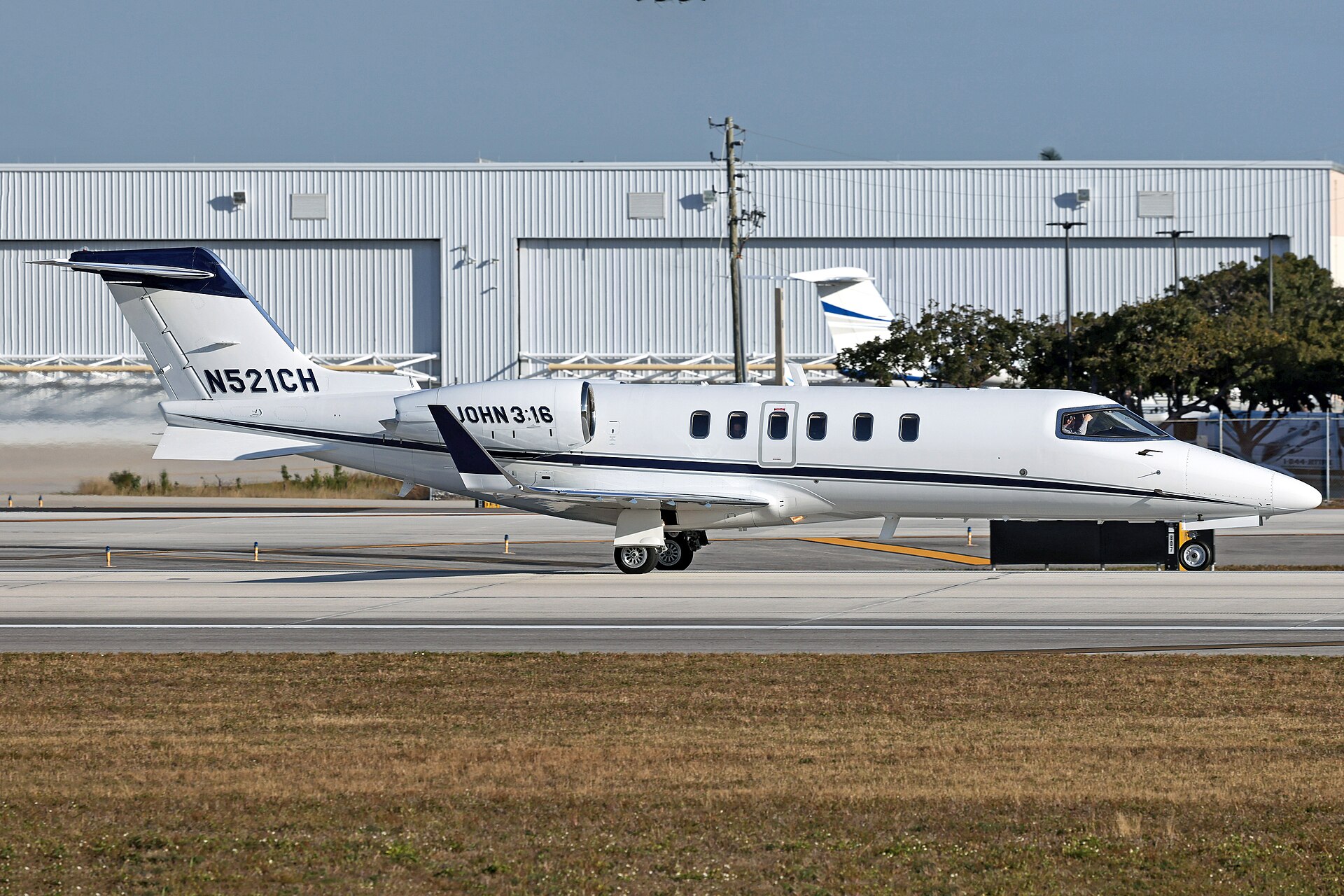
2013–2016
Learjet 70
New engines, winglets and Garmin G5000 cockpit; 13 built.
What changed from the Learjet 40XR
- Honeywell TFE731-40BR engines give 3,850 lb thrust each, about 10% more takeoff power.
- Garmin G5000 cockpit with three 14-inch displays and touchscreen controllers.
- New canted winglets widen the span to about 51 ft and cut drag.
- Maximum takeoff weight rises to 21,500 lb from 21,000 lb.
- Redesigned interior with a pocket door, larger galley and seat-side HD screens.
- Range grows to about 2,060 nm with four passengers.
Size and cabin
How big it is, inside and out
Outside
Silhouette · scaled to length
Length
Wingspan
Height
Inside the cabin
Cabin length
Width
Height
Compare
How it stacks up
This aircraft
Learjet 70
- JetGrade
- 68
- Price
- $4.75M–$6.75M guide
- Cost per year
- $1.59M
- Range
- 2,060 nm
- Speed
- 464 kt
- Seats
- 6
- Cabin length
- 17′ 8″
- Pilots
- 2
- Years built
- 2013–2016
← Before
- JetGrade
- 70
- Price
- $2.07M
- Cost per year
- $1.57M
- Range
- 1,935 nm
- Speed
- 465 kt
- Seats
- 6
- Cabin length
- 17′ 8″
- Pilots
- 2
- Years built
- 2006–2012
Alternative
- JetGrade
- 68
- Cost per year
- $1.52M
- Range
- 2,040 nm
- Speed
- 465 kt
- Seats
- 8
- Cabin length
- 19′ 9″
- Pilots
- 2
- Years built
- 2013–2019
Alternative
Cessna Citation CJ4 (525C, original)
- JetGrade
- Not yet graded
- Price
- $5.1M
- Range
- 2,165 nm
- Speed
- 451 kt
- Seats
- 7
- Years built
- 2010–2021
Alternative
- JetGrade
- 70
- Cost per year
- $1.27M
- Range
- 1,971 nm
- Speed
- 453 kt
- Seats
- 7
- Cabin length
- 17′ 2″
- Pilots
- 1
- Years built
- 2009–2017
- Learjet 75 instead: Same speed, engines and cockpit with a longer eight-seat cabin and an APU, and 156 were built; early examples ask similar money.
- Cessna Citation CJ4 (525C) instead: Single-pilot certified, needs about 3,410 ft of runway and has a large fleet, trading some speed and cabin height.
- Embraer Phenom 300 (original) instead: Single-pilot certified with a bigger baggage hold and a much larger fleet, at a slightly lower top speed.
Gold marks the best figure in each row.
Owning one
What to know before you buy
Engines & inspections
2 × Honeywell TFE731-40BR-1B · 3,850 lbf each
No APUEngine hours until overhaul
- 600-hour / 36-month inspection · 600 hr
- 1,200-hour / 72-month inspection · 1,200 hr
- 2,400-hour / 108-month inspection · 2,400 hr
- Engine mid-life inspection · 3,500 hr
- Engine overhaul · 7,000 hr
- 12-month zonal inspection every 12 months
- Landing gear inspection every 96 months
- Wing splice corrosion check every 96 months
Most engines are on Honeywell's hourly MSP plan. Confirm the coverage level, that it is paid up, and that it transfers to you.
Known issues
Very small fleet
Only 13 were built, so fewer shops know the type well; most parts are shared with the Learjet 75.
Wing splice plate corrosion
An FAA directive requires checking a center-wing splice plate for corrosion every eight years; repairs can be costly.
Engine fan disk inspection
A 2019 FAA directive ordered some TFE731-40BR fan disks removed and inspected; confirm it does not apply or is done.
Pre-buy checklist
0 of 9 checked
Bombardier still holds the type certificate and supports Learjets through a Wichita response center and nine company-owned service centers. Most airframe parts and the engines are shared with the larger Learjet 75.
Review
The full review
Strengths
- Top cruise of 464 kt and a 51,000 ft ceiling make it one of the quickest light jets.
- Carries 1,973 lb with full fuel and flies about 2,060 nm with four passengers.
- Garmin G5000 cockpit with three 14-inch screens is current and received a software upgrade in 2020.
Limitations
- Two pilots are always required, adding roughly $315,000–$410,000 a year in crew cost.
- Needs about 4,440 ft of runway at maximum weight, around 1,000 ft more than a Citation CJ4.
- Only 13 were built, so listings are rare and values are hard to pin down.
The Learjet 70 is the short-cabin member of the last family of Learjets, built by Bombardier from 2013 until production paused in 2016. It replaced the Learjet 40XR, keeping that jet's fuselage and flat-floor cabin but adding Honeywell TFE731-40BR engines, new canted winglets and a Garmin G5000 cockpit. Its longer sibling, the Learjet 75, got the same upgrades and far outsold it: only 13 Learjet 70s were built, against 156 Learjet 75s.
Pilot's take
From the flight deck, the Learjet 70 feels like a proper Learjet: a strong climb, a high ceiling and a top cruise near Mach 0.81 that few light jets match. The G5000 cockpit, with its large screens and touchscreen controllers, cuts workload on busy departures, which matters because the jet is always flown by two pilots. The trade-offs show up at shorter fields, where about 4,440 ft at maximum weight limits options, and on the ramp, where there is no APU. We would call it a crew's airplane: rewarding to fly, and best suited to operators already set up for two-pilot flying.
Who this is for
Owners and flight departments that already budget for two pilots and want Learjet speed on 1,000–2,000 nm trips with up to six passengers, and who value a newer Garmin cockpit over a larger cabin or deeper resale market.

Ask about this aircraft
Answers come only from our research file on the Learjet 70.
Your earlier questionsOwners
Private to verified ownersOwn a Learjet Learjet 70? Verify with its FAA registration to join the owners' thread and the real-cost poll.