
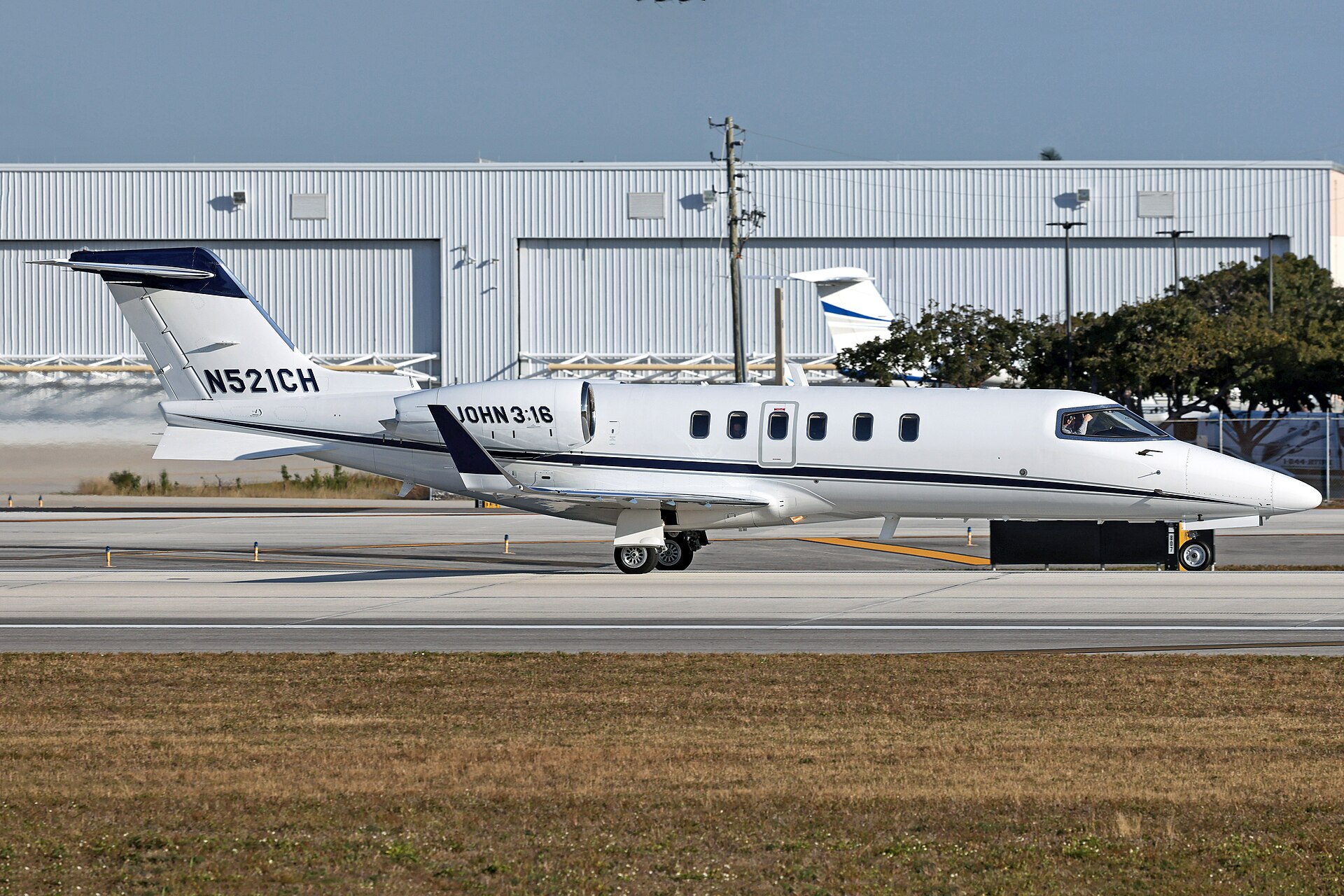
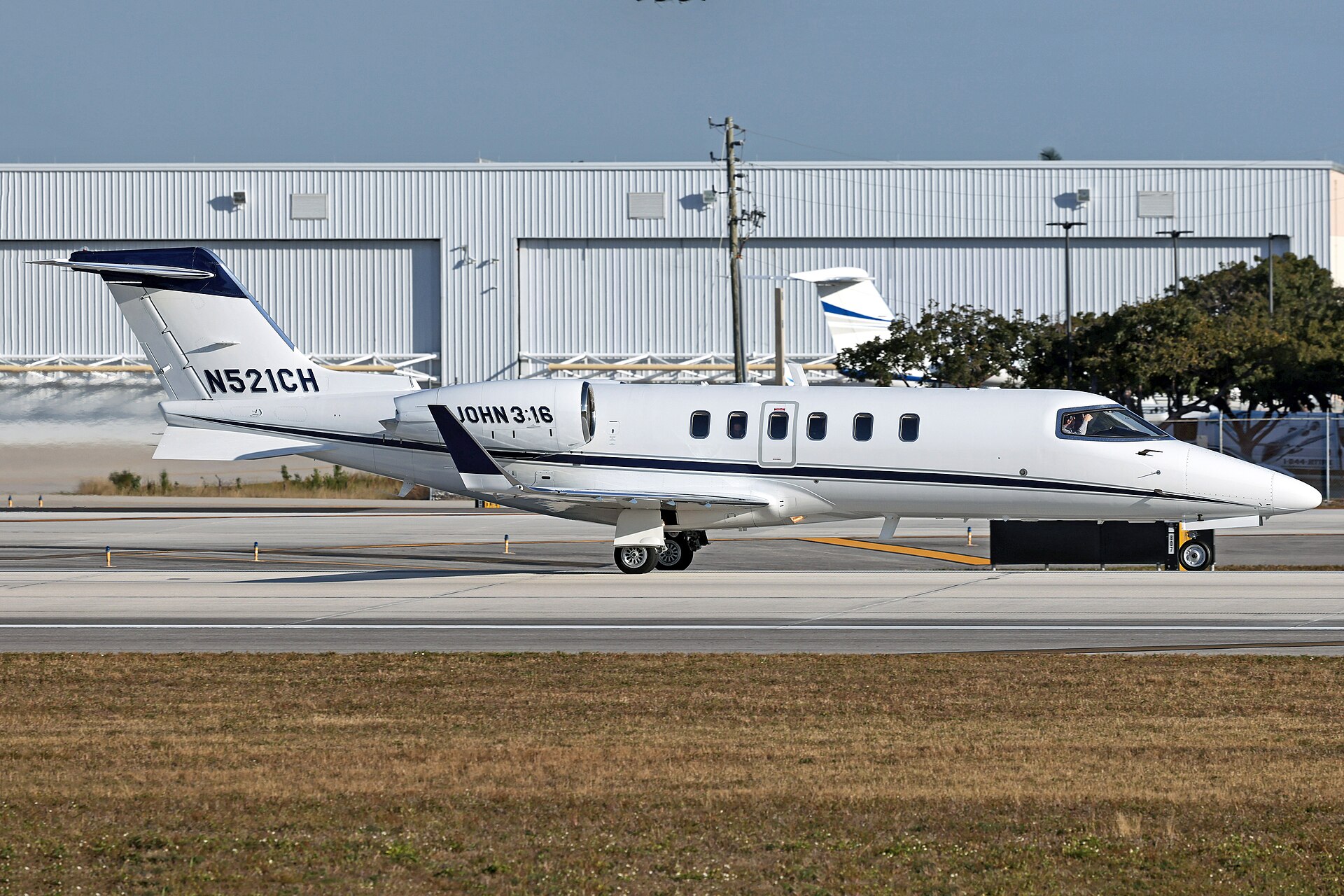
Learjet 40XR N521CH, photographed in 2026. · Photo: DUNCAN KIRK via Wikimedia Commons, CC BY 4.0
Learjet · Light Jet
Learjet 40XR
The upgraded Learjet 40, built 2006 to 2012 between the original 40 and the Learjet 70.
The 40XR is one of the fastest, highest-flying light jets you can buy for about $2M to $3M, with a flat-floor cabin and an enclosed lavatory. The trade-offs are a two-pilot crew, high fuel burn, aging cockpit screens and a small fleet.
Buy it if
You fly up to six people on trips of 1,800 nm or less, want to climb above weather and airline traffic quickly, value a private lavatory, and will employ two professional pilots.
Skip it if
You want to fly the jet yourself as a single pilot, need a stand-up cabin or more than six seats, or want a modern touchscreen cockpit without paying for upgrades.
Biggest compromise
Running costs. 57M.
The numbers that matter
Purchase price
$2.07M
typical asking · $1.9M–$2.95M
What it costs per year
$1.57M
at 300 hrs · two professional pilots
How far it flies
1,935 nm
1,755–1,835 nm with passengers
How fast
465 kt
high-speed cruise
Seats
6
6 typical (7 using the lavatory seat)
Pilots needed
2
Certified for two pilots only; there is no single-pilot version.
Price
What one costs to buy
Typical asking price
$2,072,500
Where asking prices sit
Low
$1.9M
Typical
$2.07M
High
$2.95M
Most asking prices fall inside this band.
Other sites
15.7% of the fleet
6-month move
Priced vs call
with a price / call for price
Four of ten listings show prices, from $1.895M to $2.95M. Aircraft Bluebook values 2008 to 2012 aircraft at $2.9M to $3.7M; airframe hours vary widely.
Price vs its family and alternatives
Scroll to explore · select a jet for details
Learjet 40XR · This aircraft
$2.07M
Sits between the Learjet 31A and the Learjet 40.
For sale now
None listed right now
Cost to own
What it costs per year to run
300hours / year
Per year
Per flight hour
Estimate — your operator will quote actual numbers.
Fuel, airframe maintenance, engine program and landing, handling and trip costs rise as you fly more. Two professional pilots, recurrent training, hangar, insurance, management and subscriptions and databases stay the same however much you fly.
Where the money goes
- Two professional pilots$326,00021%
- Recurrent training$50,0003%
- Hangar$37,1002%
- Insurance$27,6002%
- Management$48,0003%
- Subscriptions and databases$10,0001%
- Fuel$525,33634%
- Airframe maintenance$230,40015%
- Engine program$260,10017%
- Landing, handling and trip costs$52,5003%
Fuel is the biggest single cost at 34% of the total.
The JetGrade
70 out of 100 — Typical for its class
Peer group: Cessna Citation CJ3, Embraer Phenom 300, Cessna Citation Encore+, Beechcraft Hawker 400XP
Seven categories at a glance
- - - 70 = typical— This aircraft
Strongest on speed & trip time, weakest on running costs.
Grades are editorial opinions about the model, not any specific aircraft. Sponsors and affiliates have no input. Reviewed 2026-09-29.
Where it flies
Sample trips and reach
Typical trips on a map
Nonstop
Depends on weight or weather
Fuel stop likely
Out of reach
5 of 8 sample trips are comfortable nonstops.
Sample flight times
- 0.9 hr
Carlsbad → Las Vegas
205 nm · Short hop, well within range
- 1.9 hr
Carlsbad → Aspen
625 nm · Hot-and-high; depends on weight and weather
- 2.2 hr
Santa Ana → San José del Cabo
765 nm
- 2.5 hr
Teterboro → West Palm Beach
900 nm
- 3.2 hr
Dallas → Teterboro
1,190 nm · Comfortable margin with four passengers
- 3.7 hr
Teterboro → San Juan
1,410 nm · Over water; within range with four passengers
- 5.5 hr
Carlsbad → Teterboro
2,100 nm · Needs one stop, typically mid-continent
Los Angeles → Honolulu
2,215 nm · Beyond range over open ocean; no stop possible
Lineage
What came before and after
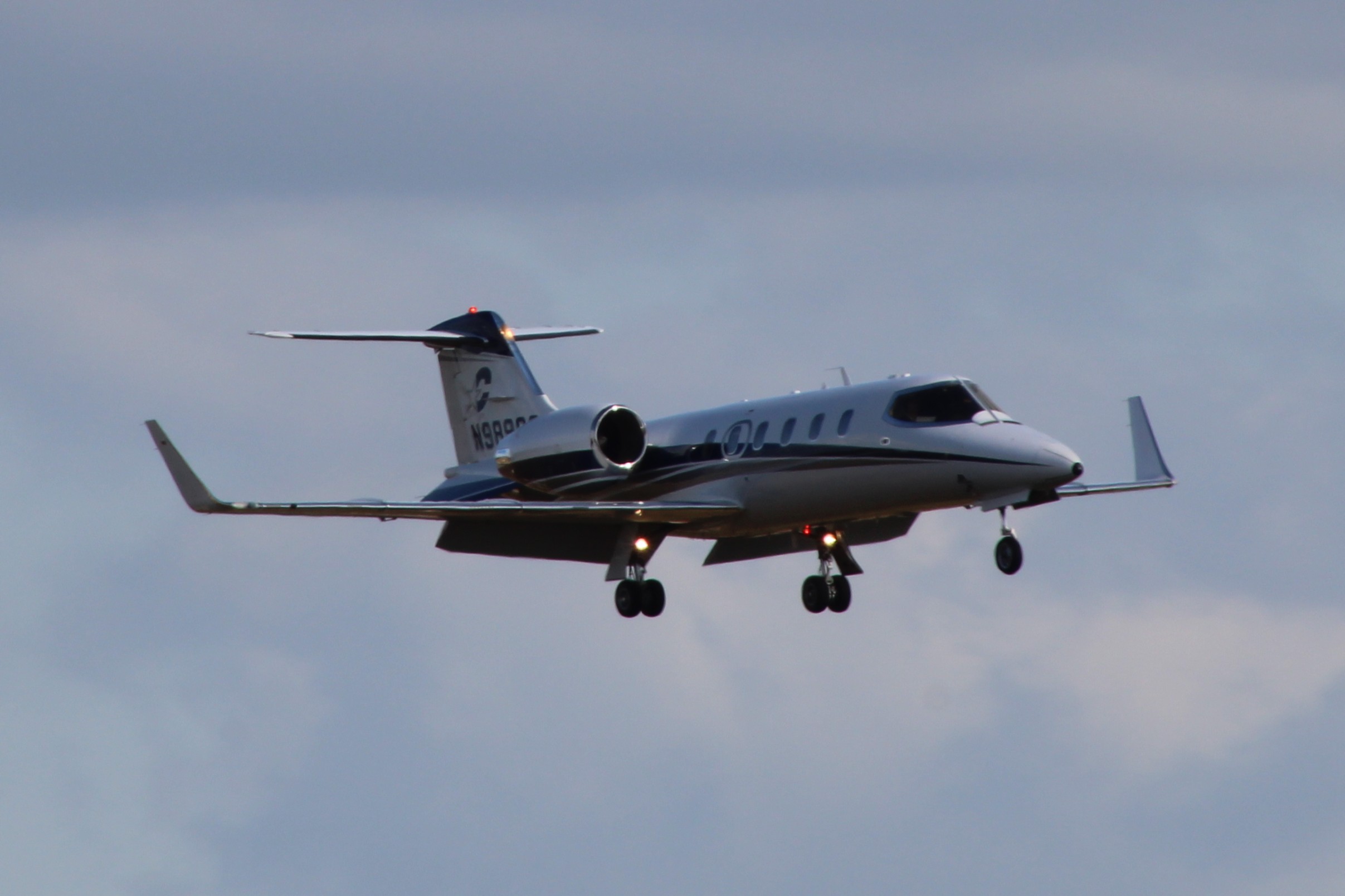

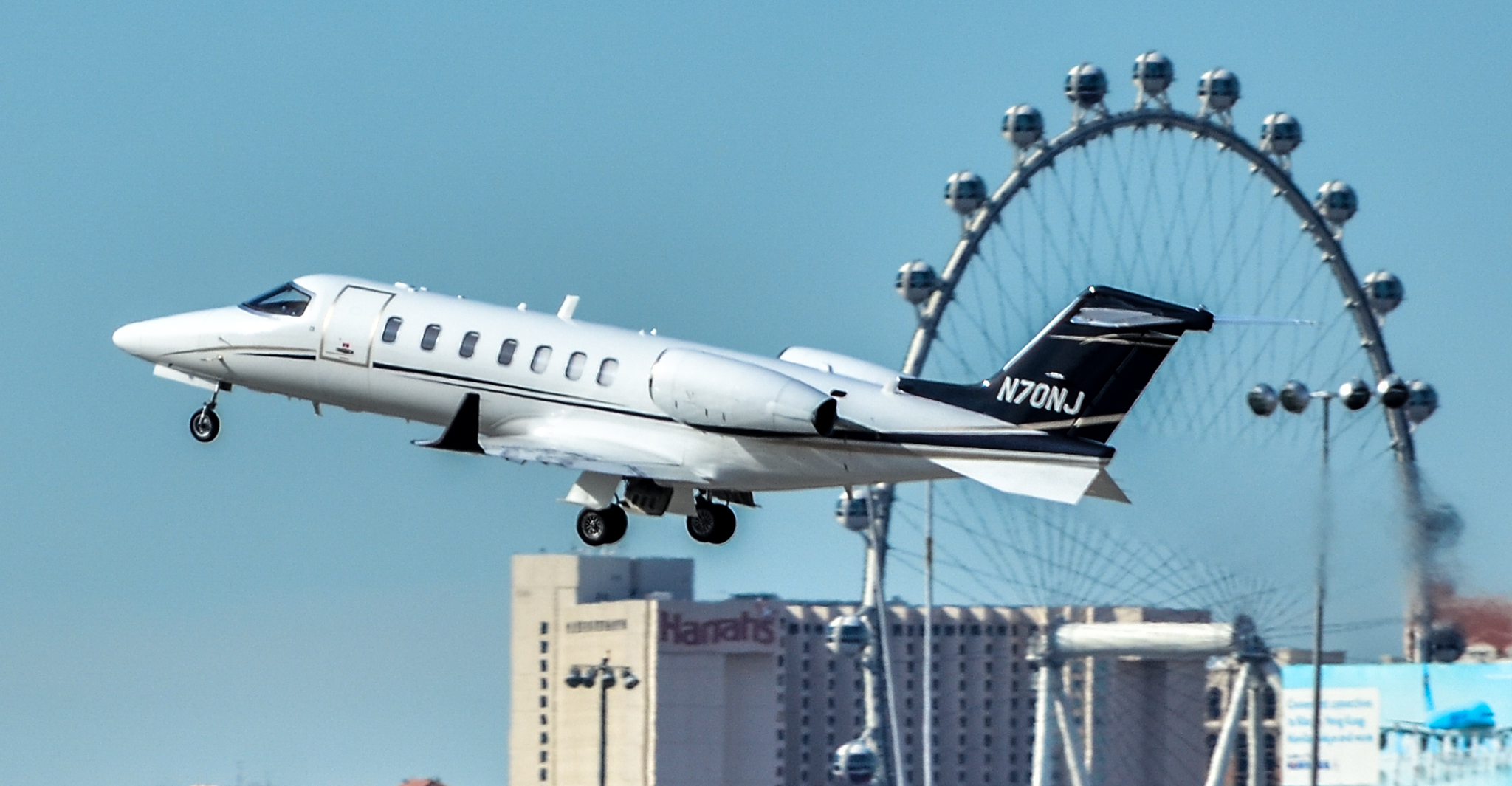
2006–2012
Learjet 40XR
Uprated engines and higher weights for better climb, speed and hot-day range.
What changed from the Learjet 40
- TFE731-20BR engines keep full 3,500 lb takeoff thrust up to 104°F, versus 88°F before.
- Maximum takeoff weight rises 650 lb to 21,000 lb; landing and zero-fuel weights unchanged.
- About 180 nm more range from sea-level airports and far more from hot or high ones.
- Faster time to climb and higher cruise speeds from the uprated engines.
- Earlier Learjet 40s could be upgraded to the same standard through factory service bulletins.
Size and cabin
How big it is, inside and out
Outside
Silhouette · scaled to length
Length
Wingspan
Height
Inside the cabin
Cabin length
Width
Height
Compare
How it stacks up
This aircraft
Learjet 40XR
- JetGrade
- 70
- Price
- $2.07M
- Cost per year
- $1.57M
- Range
- 1,935 nm
- Speed
- 465 kt
- Seats
- 6
- Cabin length
- 17′ 8″
- Pilots
- 2
- Years built
- 2006–2012
← Before
- JetGrade
- 69
- Price
- $1.9M–$2.5M guide
- Cost per year
- $1.27M
- Range
- 1,857 nm
- Speed
- 465 kt
- Seats
- 6
- Cabin length
- 17′ 8″
- Pilots
- 2
- Years built
- 2004–2007
After →
- JetGrade
- 68
- Price
- $4.75M–$6.75M guide
- Cost per year
- $1.59M
- Range
- 2,060 nm
- Speed
- 464 kt
- Seats
- 6
- Cabin length
- 17′ 8″
- Pilots
- 2
- Years built
- 2013–2016
Alternative
- JetGrade
- 68
- Price
- $3.6M
- Cost per year
- $1.67M
- Range
- 1,939 nm
- Speed
- 457 kt
- Seats
- 8
- Cabin length
- 19′ 9″
- Pilots
- 2
- Years built
- 2004–2012
Alternative
- JetGrade
- 71
- Price
- $5.2M
- Cost per year
- $955K
- Range
- 1,875 nm
- Speed
- 417 kt
- Seats
- 6
- Cabin length
- 15′ 8″
- Pilots
- 1
- Years built
- 2004–2014
Alternative
- JetGrade
- 70
- Cost per year
- $1.27M
- Range
- 1,971 nm
- Speed
- 453 kt
- Seats
- 7
- Cabin length
- 17′ 2″
- Pilots
- 1
- Years built
- 2009–2017
- Learjet 45XR instead: Same engines and cockpit with a cabin about 2 ft longer, room for eight or nine passengers and an auxiliary power unit, usually at a higher price.
- Cessna Citation CJ3 instead: Certified for a single pilot, with lower fuel burn and a very large support network, but slower, lower-flying and with a smaller cabin.
- Embraer Phenom 300 instead: Newer and single-pilot certified, with a similar-size cabin and a modern Garmin cockpit, but typically at a much higher price.
Gold marks the best figure in each row.
Owning one
What to know before you buy
Engines & inspections
2 × Honeywell TFE731-20BR-1B · 3,500 lbf each
No APUEngine hours until overhaul
- Phase A inspection · 300 hr
- Phase B inspection · 600 hr
- Phase C inspection · 1,200 hr
- Phase D inspection · 2,400 hr
- Engine mid-life inspection · 2,500 hr
- 4,800-hour inspection items · 4,800 hr
- Engine core inspection · 5,000 hr
- Main landing gear inspection every 96 months
Most 40XRs for sale are on Honeywell's pay-per-hour plan. Engine upgrades can stretch the core inspection from 5,000 to 7,000 hours.
Known issues
Obsolete cockpit display screens
Honeywell no longer supports the original DU-870 screens; plug-in DU-875 LCD replacements are the standard fix.
Engine program status drives value
Engines off Honeywell's hourly plan leave the owner paying mid-life and core inspections directly.
Center wing corrosion checks
A 2021 directive requires repeat center-wing splice inspections every eight years; any repair cost is open-ended.
Pre-buy checklist
0 of 10 checked
Bombardier still holds the type certificate, runs Learjet service centers including Wichita and Tucson, and ships most Learjet parts from stock. Honeywell and independent shops such as Duncan Aviation support the engines.
Review
The full review
Strengths
- Cruises at about 465 kt and climbs to 43,000 ft in roughly 23 minutes, with a 51,000 ft ceiling.
- Flies about 1,835 nm with four passengers and standard fuel reserves, enough for Dallas to New York nonstop.
- A 17 ft 8 in flat-floor cabin, 4 ft 11 in tall, with an enclosed, externally serviced lavatory.
Limitations
- Requires two pilots, so crew salaries alone run about $244,000 to $408,000 a year.
- The original four-screen Honeywell cockpit uses displays Honeywell no longer supports; replacement LCD screens are the usual fix.
- Needs about 4,680 ft of runway at maximum weight at sea level, more than most light-jet rivals.
The Learjet 40XR is the upgraded version of the Learjet 40, a light jet Bombardier created by shortening the Learjet 45 by about two feet. Announced in 2004 and delivered from 2006 until 2012, it added more powerful Honeywell TFE731-20BR engines and a higher maximum takeoff weight of 21,000 lb. Roughly 94 were built, and some earlier Learjet 40s were later upgraded to the same standard. The Learjet 70 replaced it in 2013.
Pilot's take
Pilots describe the 40XR as a true Learjet in handling: responsive, stable and quick to altitude, with the Honeywell Primus 1000 cockpit giving a clean, integrated layout for its era. The -20BR engines make the biggest difference on hot days and at high airports, where the original Learjet 40 had to leave fuel or passengers behind. It asks for a disciplined two-pilot crew, careful attention to takeoff distance at heavy weights, and a plan for the original display screens. Crews trained on the Learjet 45 move across easily, since one type rating covers both.
Who this is for
Owners and small flight departments flying two to six people on 500 to 1,800 nm trips, who value speed, altitude and a private lavatory more than running costs, and who employ two professional pilots.

Ask about this aircraft
Answers come only from our research file on the Learjet 40XR.
Your earlier questionsOwners
Private to verified ownersOwn a Learjet Learjet 40XR? Verify with its FAA registration to join the owners' thread and the real-cost poll.