
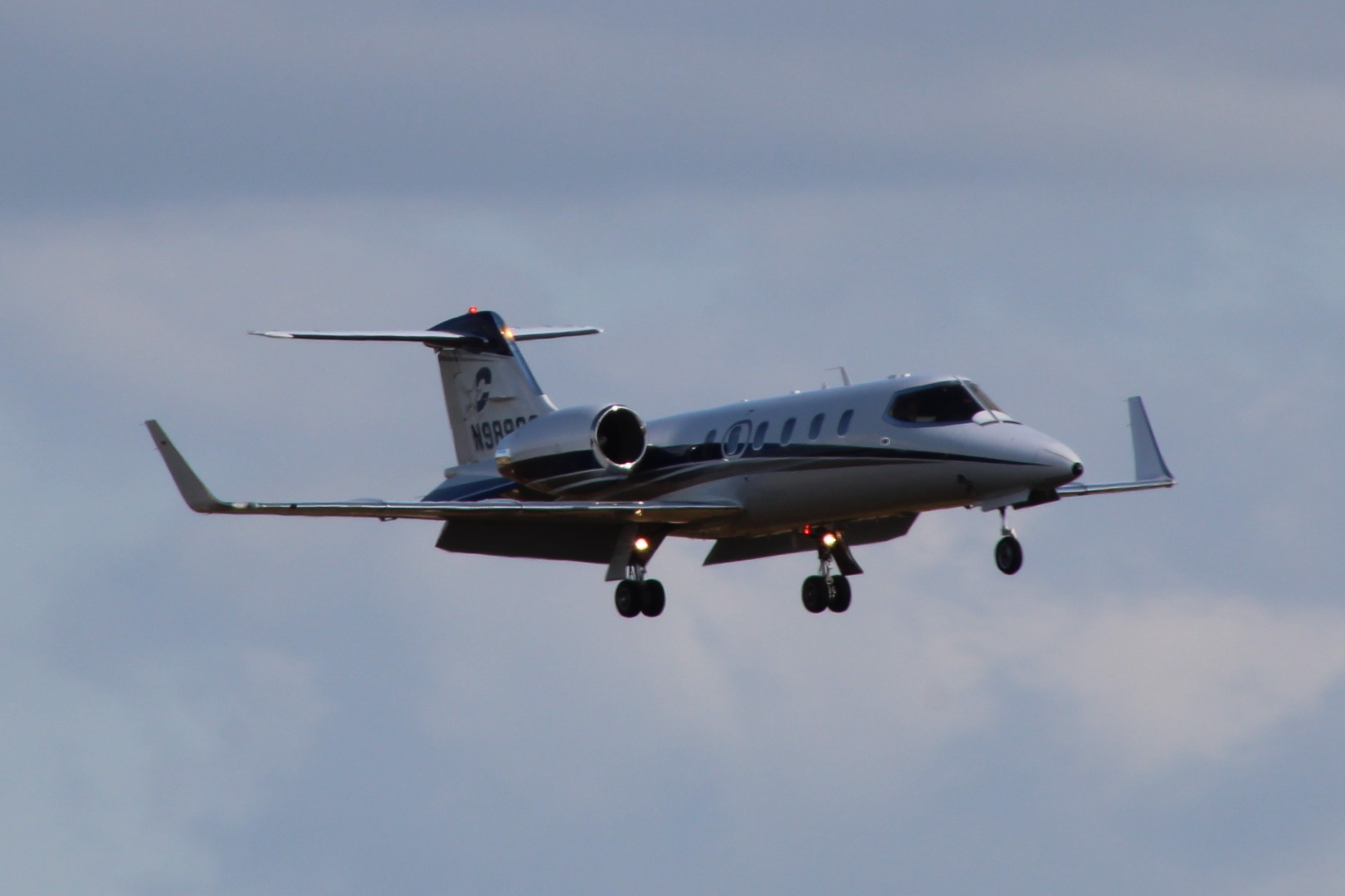
Learjet 31A N989CG at Daytona Beach International Airport, Florida. · Photo: ZLEA, CC BY-SA 4.0, via Wikimedia Commons
Learjet · Light Jet
Learjet 31A
The second and final version of the Learjet 31, built 1991–2003 and replaced by the Learjet 40.
The 31A is one of the fastest-climbing, quickest light jets you can buy for under $1.5M, with excellent short-runway manners. The price is a 4 ft 4 in cabin with no private toilet, about 1,250 nm of range with four aboard, and big inspection bills.
Buy it if
You fly two to four people on trips under about 1,000 nm, value speed and climb over cabin space, use shorter runways, and want a genuine Learjet for roughly $500,000 to $1.3M.
Skip it if
Your passengers expect to stand up or use a private lavatory, you regularly fly more than 1,200 nm, or you cannot absorb a six-figure inspection or engine bill on a jet that costs under $1.3M.
Biggest compromise
The cabin. At 4 ft 4 in tall and 4 ft 11 in wide, passengers crouch to move around, and the only toilet is a seat with a cushion over it and no door.
The numbers that matter
Purchase price
$760K
typical asking · $499K–$1.29M
What it costs per year
$1.47M
at 300 hrs · two professional pilots
How far it flies
1,290 nm
1,225–1,251 nm with passengers
How fast
459 kt
high-speed cruise
Seats
7
7 typical (6–8 by interior)
Pilots needed
2
Certified for two pilots; there is no single-pilot version.
Price
What one costs to buy
Typical asking price
$760,000
Where asking prices sit
Low
$499K
Typical
$760K
High
$1.29M
Most asking prices fall inside this band.
Other sites
Priced vs call
with a price / call for price
Six of 17 listings show prices, from $499,000 to $1.295M. Engine program coverage and avionics upgrades explain most of the spread.
Price vs its family and alternatives
Scroll to explore · select a jet for details
Learjet 31A · This aircraft
$760K
Sits between the Learjet 35 / 35A and the Beechjet 400A.
For sale now
None listed right now
Cost to own
What it costs per year to run
300hours / year
Per year
Per flight hour
Estimate — your operator will quote actual numbers.
Fuel, airframe maintenance, engine program and landing, handling and trip costs rise as you fly more. Two professional pilots, recurrent training, hangar, insurance, management and subscriptions and databases stay the same however much you fly.
Where the money goes
- Two professional pilots$295,50020%
- Recurrent training$37,5003%
- Hangar$35,5502%
- Insurance$31,2502%
- Management$48,0003%
- Subscriptions and databases$10,0001%
- Fuel$500,55634%
- Airframe maintenance$201,00014%
- Engine program$255,75017%
- Landing, handling and trip costs$57,0004%
Fuel is the biggest single cost at 34% of the total.
The JetGrade
64 out of 100 — Below its class average
Peer group: Beechcraft Beechjet 400A, Cessna Citation Ultra, Cessna Citation Encore, Learjet 35 / 35A
Seven categories at a glance
- - - 70 = typical— This aircraft
Strongest on speed & trip time, weakest on cabin & passenger comfort.
Grades are editorial opinions about the model, not any specific aircraft. Sponsors and affiliates have no input. Reviewed 2026-09-29.
Where it flies
Sample trips and reach
Typical trips on a map
Nonstop
Depends on weight or weather
Fuel stop likely
3 of 6 sample trips are comfortable nonstops.
Sample flight times
- 0.9 hr
Carlsbad → Las Vegas
205 nm · Short hop, well within range
- 1.9 hr
Carlsbad → Aspen
625 nm · Hot-and-high; depends on weight and weather
- 2.2 hr
Santa Ana → San José del Cabo
765 nm
- 2.5 hr
Teterboro → West Palm Beach
900 nm
- 3.3 hr
Dallas → Teterboro
1,190 nm · Near the limit; headwinds may force a stop
- 5.6 hr
Carlsbad → Teterboro
2,100 nm · Needs one stop, typically mid-continent
Lineage
What came before and after


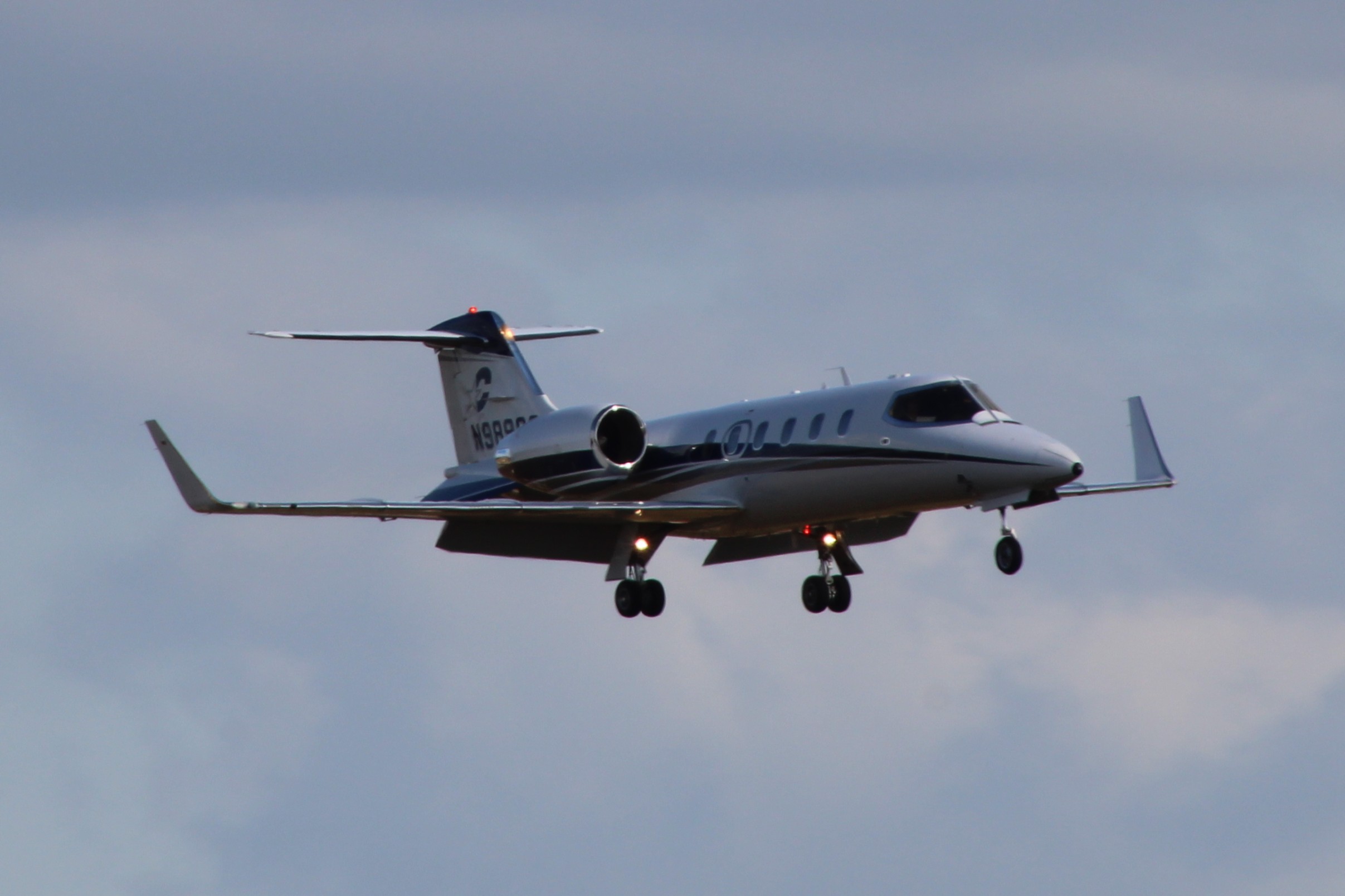
1991–2003
Learjet 31A
Adds a digital glass cockpit, higher speed limits and later weight increases.

What changed from the Learjet 31
- Digital five-screen Bendix/King cockpit and digital autopilot replaced the 31's analog instruments.
- Maximum speed raised to Mach 0.81 from 0.78, and to 325 knots from 300.
- Electric windshield heat, digital nosewheel steering and an improved rudder boost were added.
- Optional extended-range fuselage tank adds roughly 500 lb of fuel and about 200 nm.
- Maximum takeoff weight grew from 15,500 lb to 17,000 lb on later aircraft.
- From 2000, digital engine controls and Dee Howard thrust reversers became standard.
Size and cabin
How big it is, inside and out
Outside
Silhouette · scaled to length
Length
Wingspan
Height
Inside the cabin
Cabin length
Width
Height
Compare
How it stacks up
This aircraft
Learjet 31A
- JetGrade
- 64
- Price
- $760K
- Cost per year
- $1.47M
- Range
- 1,290 nm
- Speed
- 459 kt
- Seats
- 7
- Cabin length
- 12′ 11″
- Pilots
- 2
- Years built
- 1991–2003
← Before
- JetGrade
- 60
- Price
- $543K–$689K guide
- Cost per year
- $1.21M
- Range
- 1,631 nm
- Speed
- 448 kt
- Seats
- 6
- Cabin length
- 12′ 11″
- Pilots
- 2
- Years built
- 1988–1991
After →
- JetGrade
- 69
- Price
- $1.9M–$2.5M guide
- Cost per year
- $1.27M
- Range
- 1,857 nm
- Speed
- 465 kt
- Seats
- 6
- Cabin length
- 17′ 8″
- Pilots
- 2
- Years built
- 2004–2007
Alternative
- JetGrade
- 67
- Price
- $581K–$920K guide
- Cost per year
- $1.31M
- Range
- 2,196 nm
- Speed
- 451 kt
- Seats
- 6
- Cabin length
- 12′ 11″
- Pilots
- 2
- Years built
- 1974–1993
Alternative
- JetGrade
- 68
- Price
- $1.2M
- Cost per year
- $1.33M
- Range
- 1,885 nm
- Speed
- 458 kt
- Seats
- 7
- Cabin length
- 15′ 7″
- Pilots
- 2
- Years built
- 1990–2003
- Learjet 35A instead: Same cabin and engines with wingtip fuel tanks, adding roughly 600 nm of range in exchange for slower climb and longer runways, often at a lower price.
- Beechcraft Beechjet 400A instead: A taller cabin with an enclosed rear lavatory, trading away some speed, climb and short-runway ability, at somewhat higher asking prices.
- Learjet 40 instead: Learjet's replacement for the 31A, with a larger cabin, an enclosed lavatory and newer Honeywell avionics, at roughly twice the price.
Gold marks the best figure in each row.
Owning one
What to know before you buy
Engines & inspections
2 × Honeywell TFE731-2-3B (many converted to -2C) · 3,500 lbf each
No APUEngine hours until overhaul
- A check · 300 hr
- B check · 600 hr
- C check · 1,200 hr
- Engine mid-life inspection · 1,400 hr
- D check · 2,400 hr
- Engine core inspection · 4,200 hr
- Wing removal inspection · 12,000 hr
- 12-year inspection every 144 months
Honeywell's Maintenance Service Plan and the Engine Assurance Program cover these engines. Aircraft enrolled on a program sell for noticeably more than those without.
Known issues
Engine program status drives value
Engines off a pay-per-hour program can face six-figure inspection bills; enrolled aircraft sell for significantly more.
Costly 12-year and wing inspections
The 12-year inspection and 12,000-hour wing removal check have each cost $150,000–$250,000.
Aging avionics and upgrade costs
Original Bendix/King screens are dated; ADS-B and satellite-approach upgrades have cost $68,000–$140,000 per aircraft.
Pre-buy checklist
0 of 10 checked
Bombardier still holds the type certificate and supports Learjets from its service centers, though rare older parts can take time. Honeywell and independent shops such as StandardAero still maintain the TFE731-2 engines.
Review
The full review
Strengths
- Climbs at about 5,500 feet per minute and reaches 47,000 ft in roughly half an hour, above most weather and traffic.
- Cruises at about 460 kt (530 mph), among the fastest light jets ever built.
- Takes off in about 3,500 ft and lands in about 2,500 ft at sea level, opening many short runways.
Limitations
- The cabin is only 4 ft 4 in tall, with no enclosed lavatory; the toilet sits under a side-facing seat cushion.
- Range with four passengers is about 1,250 nm, so coast-to-coast trips need a fuel stop.
- The 12-year inspection and the 12,000-hour wing removal check can each cost $150,000–$250,000.
The Learjet 31A is the second and final version of the Learjet 31, built from 1991 to 2003. Learjet took the fuselage and Honeywell TFE731 engines of its long-running Learjet 35, removed the fuel tanks on the wingtips, and fitted the larger Learjet 55's wing with winglets, plus two small fins under the tail. The 31A added a digital five-screen cockpit, a higher speed limit and, on later aircraft, more takeoff weight and standard thrust reversers. About 208 were built before the Learjet 40 took its place in the lineup.
Pilot's take
Pilots describe the 31A as one of the most responsive light jets to fly: quick in roll, strong on climb and at home in the mid-40s flight levels. The ventral fins give it gentler low-speed manners than the older tip-tank Learjets, and good brakes plus thrust reversers make short runways routine. It still rewards discipline. Everything happens faster than in a straight-wing Citation, weight and balance gets tight with full seats, and the aging systems need a crew that knows the airplane. Two current, well-trained pilots are the right setup.
Who this is for
Owners, small companies and charter operators who fly short, fast regional trips with two to four people, prize speed over cabin comfort, and have a professional crew and a maintenance budget that can handle an older jet.

Ask about this aircraft
Answers come only from our research file on the Learjet 31A.
Your earlier questionsOwners
Private to verified ownersOwn a Learjet Learjet 31A? Verify with its FAA registration to join the owners' thread and the real-cost poll.