
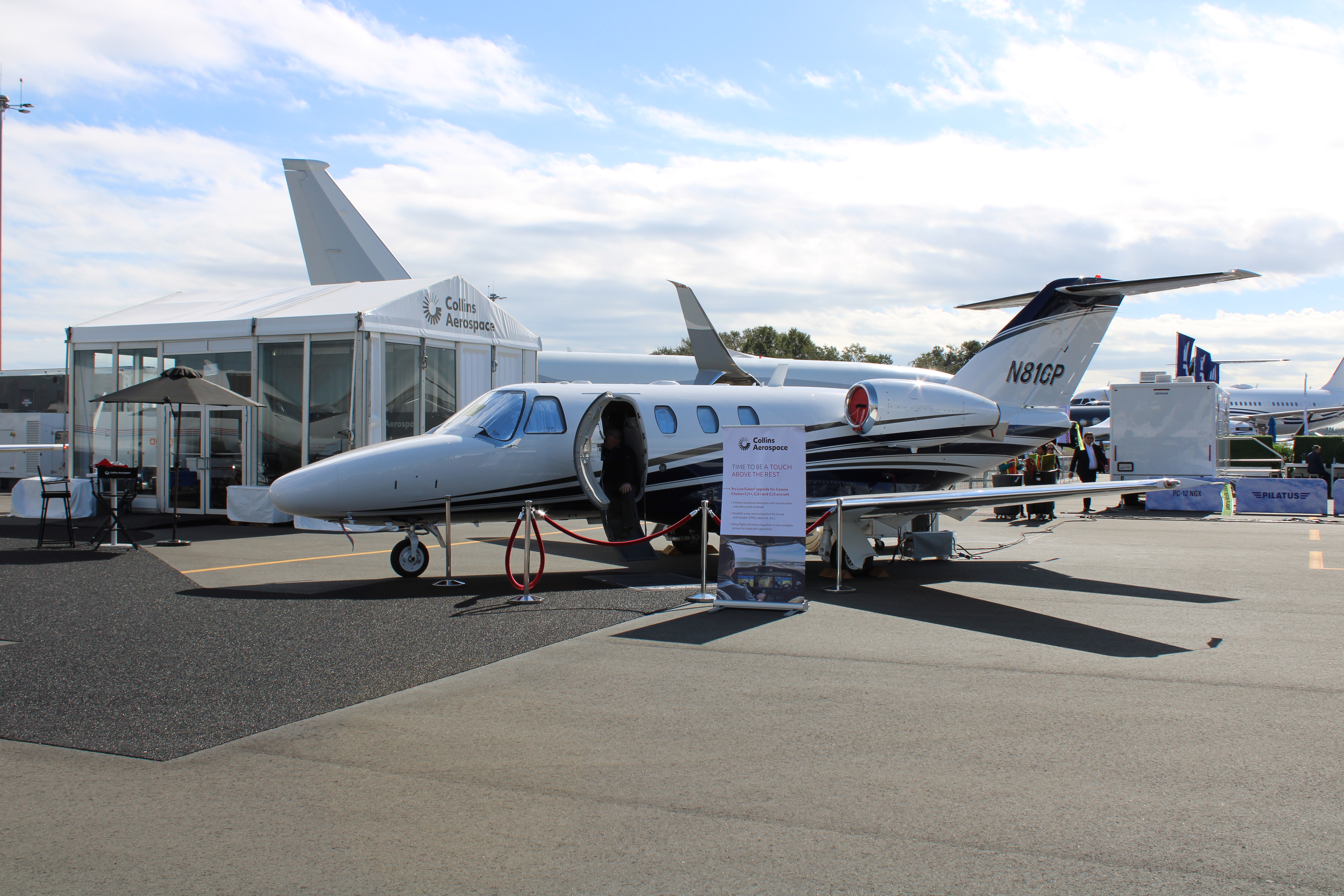
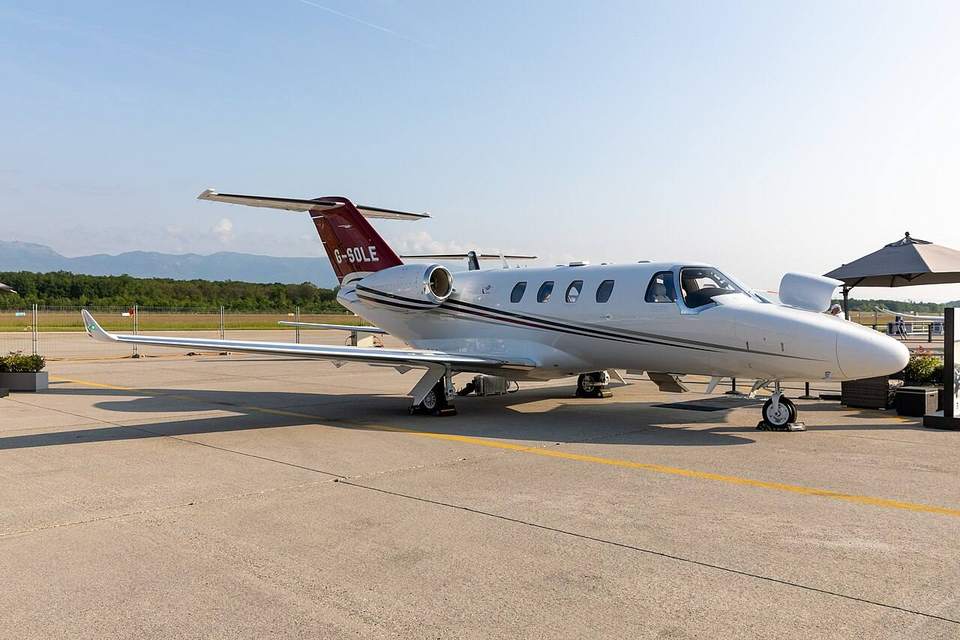
Citation CJ1+ N81CP, photographed in October 2022. · ZLEA, CC BY-SA 4.0, via Wikimedia Commons
Cessna · Light Jet
Citation CJ1+ (525)
Third of five versions of Cessna's Model 525 small jet, between the CJ1 and the Citation M2.
The CJ1+ gives owner-pilots a single-pilot Citation with computer-controlled engines, 389-knot cruise and strong factory support for about $2.4–2.85M, but its 11-foot cabin, outside-only baggage and roughly two-person full-fuel payload suit trips of one to four people.
Buy it if
You fly yourself or with one hired pilot, usually carry one to four people on trips under about 900 nm, and want a Citation with single-pilot certification and wide service support for about $2.4–2.85M.
Skip it if
You often fill every seat with bags, want more baggage room (a Phenom 100 offers 71 cu ft), or want more speed and a newer Garmin cockpit (a Citation M2 costs about $1.4M more).
Biggest compromise
Payload and cabin. With full tanks the CJ1+ carries only about 545 lb of people and bags, roughly two adults, so long trips and full cabins don't mix.
The numbers that matter
Purchase price
$2.6M–$3M
guide value (Aircraft Bluebook)
What it costs per year
$915K
at 300 hrs · one professional pilot
How far it flies
1,300 nm
873–1,127 nm with passengers
How fast
389 kt
high-speed cruise
Seats
5
5 typical, 6 using the belted toilet
Pilots needed
1
Certified for one pilot; the September 2026 FAA change for older Citations does not affect it.
Price
What one costs to buy
Guide value
$2.6M–$3M
Other sites
6.1% of the fleet
Priced vs call
with a price / call for price
Only two of six listed jets show a price, both 2007 models. Aircraft Bluebook guide values run $2.6–3.0M by year; recent reported sales ran $2.4–2.85M.
Price vs its family and alternatives
Scroll to explore · select a jet for details
Citation CJ1+ (525) · This aircraft
$2.6M–$3M guide
Guide value, not a listed asking price.
Sits between the Phenom 100 (original) and the Citation M2 (525).
For sale now
None listed right now
Cost to own
What it costs per year to run
300hours / year
Per year
Per flight hour
Estimate — your operator will quote actual numbers.
Fuel, airframe maintenance, engine program and landing, handling, crew travel and miscellaneous rise as you fly more. One professional pilot, recurrent training, hangar, insurance and management stay the same however much you fly.
Where the money goes
- One professional pilot$171,92219%
- Recurrent training$12,1921%
- Hangar$27,7913%
- Insurance$22,7562%
- Management$24,0003%
- Fuel$307,94434%
- Airframe maintenance$119,25013%
- Engine program$124,27214%
- Landing, handling, crew travel and miscellaneous$105,00011%
Fuel is the biggest single cost at 34% of the total.
The JetGrade
69 out of 100 — Below its class average
Peer group: Cessna Citation CJ1 (525), Cessna Citation M2 (525), Embraer Phenom 100, Embraer Phenom 100E, Beechcraft Premier IA, Honda HondaJet HA-420
Seven categories at a glance
- - - 70 = typical— This aircraft
Strongest on range & payload, weakest on cabin & passenger comfort.
Grades are editorial opinions about the model, not any specific aircraft. Sponsors and affiliates have no input. Reviewed 2026-09-28.
Where it flies
Sample trips and reach
Typical trips on a map
Nonstop
Depends on weight or weather
Fuel stop likely
3 of 6 sample trips are comfortable nonstops.
Sample flight times
- 0.9 hr
Carlsbad → Las Vegas
205 nm · Short hop, well within range
- 2.2 hr
Carlsbad → Aspen
625 nm · Hot-and-high; depends on weight and weather
- 2.6 hr
Santa Ana → San José del Cabo
765 nm · Nonstop with four passengers aboard
- 3.0 hr
Teterboro → West Palm Beach
900 nm · Nonstop in still air; strong headwinds can force a stop
- 4.4 hr
Dallas → Teterboro
1,190 nm · Just beyond four-passenger range; one stop typical
- 6.9 hr
Carlsbad → Teterboro
2,100 nm · One stop; two with headwinds or a full cabin
Lineage
What came before and after

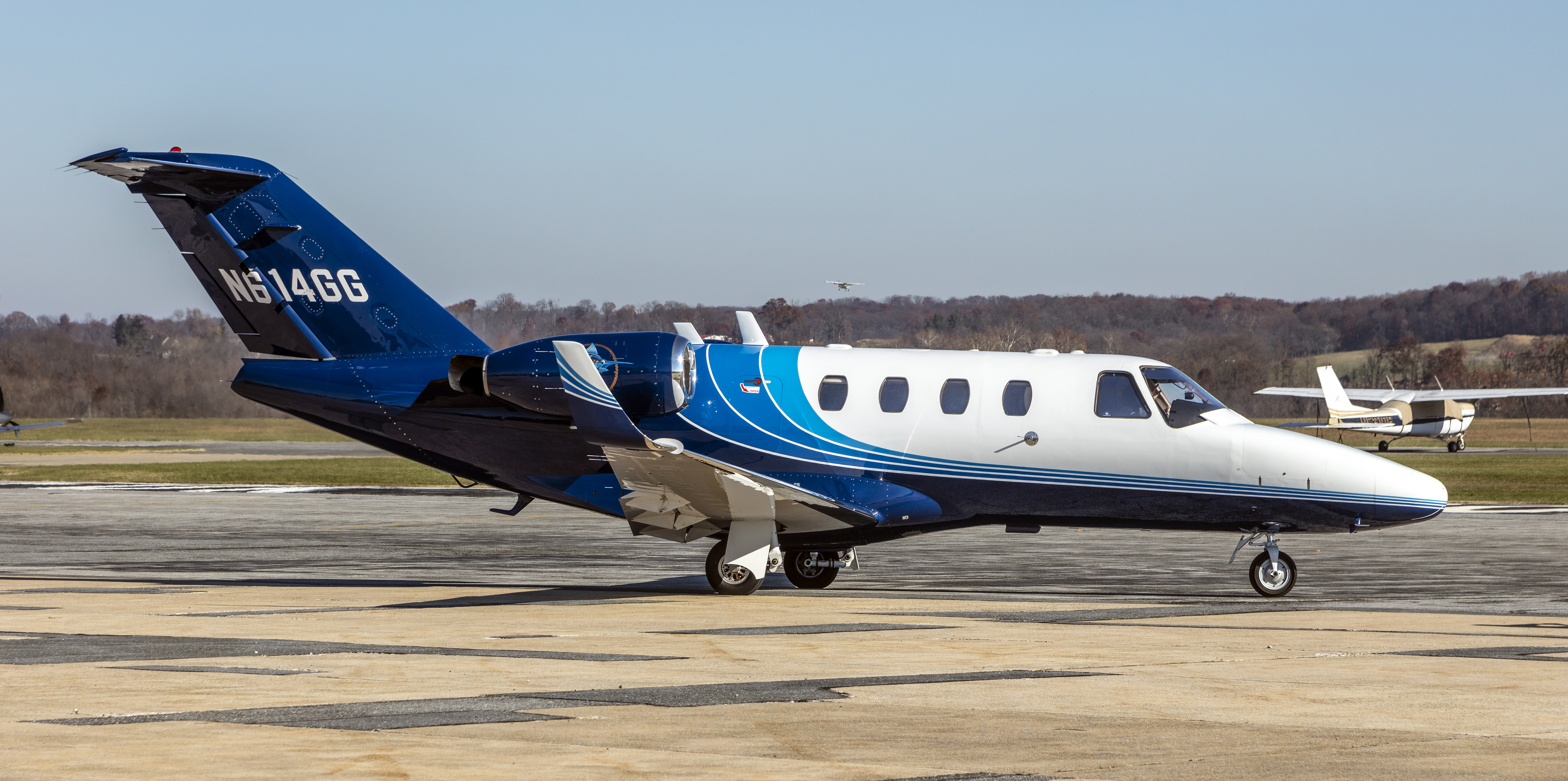
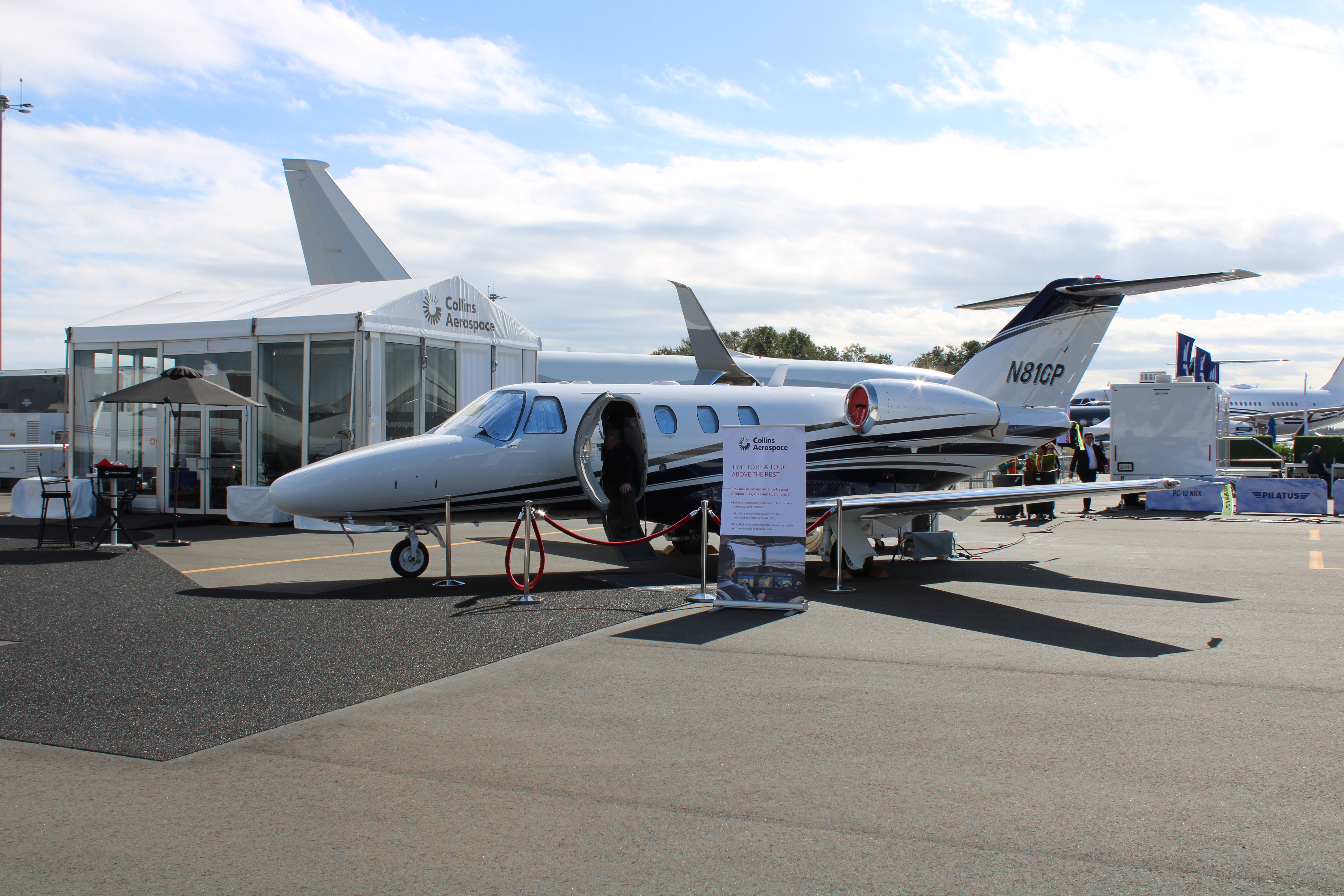
2005–2011
Cessna Citation CJ1+ (525)
FADEC engines with automatic power control and 100 lb more takeoff weight.
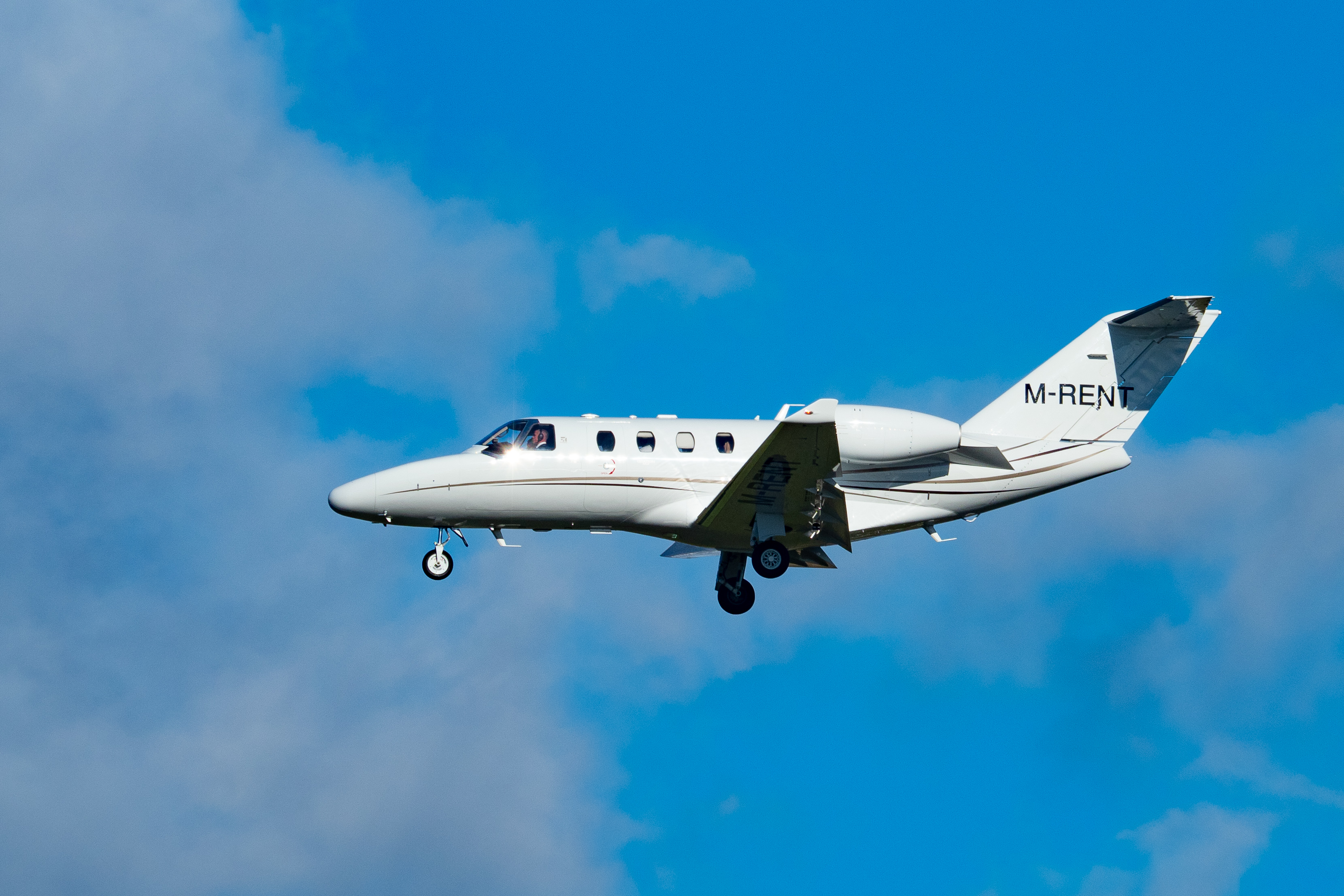
What changed from the Cessna Citation CJ1 (525)
- Williams FJ44-1AP engines with FADEC computer control, 1,965 lb thrust each, up from 1,900.
- Maximum takeoff weight up 100 lb to 10,700 lb; landing weight up to 9,900 lb.
- Dual Collins Pro Line 21 flight displays and air data standard; later jets added WAAS and electronic charts.
- Engine thrust attenuators removed; a 10-minute one-engine takeoff thrust rating was approved.
- No in-cabin baggage compartment; up to 725 lb of bags go in the nose and tailcone.
Size and cabin
How big it is, inside and out
Outside
Silhouette · scaled to length
Length
Wingspan
Height
Inside the cabin
Cabin length
Width
Height
Compare
How it stacks up
This aircraft
Citation CJ1+ (525)
- JetGrade
- 69
- Price
- $2.6M–$3M guide
- Cost per year
- $915K
- Range
- 1,300 nm
- Speed
- 389 kt
- Seats
- 5
- Cabin length
- 11′ 0″
- Pilots
- 1
- Years built
- 2005–2011
← Before
- JetGrade
- 68
- Price
- $2.03M
- Cost per year
- $829K
- Range
- 1,257 nm
- Speed
- 379 kt
- Seats
- 5
- Cabin length
- 11′ 0″
- Pilots
- 1
- Years built
- 2000–2005
After →
- JetGrade
- 71
- Price
- $3.79M
- Cost per year
- $855K
- Range
- 1,550 nm
- Speed
- 404 kt
- Seats
- 5
- Cabin length
- 11′ 0″
- Pilots
- 1
- Years built
- 2013–2021
Alternative
- JetGrade
- 72
- Price
- $2.35M
- Cost per year
- $871K
- Range
- 1,178 nm
- Speed
- 390 kt
- Seats
- 4
- Cabin length
- 11′ 0″
- Pilots
- 1
- Years built
- 2008–2013
- Embraer Phenom 100 instead: Similar asking prices with 71 cu ft of baggage and a wider cabin; lower hourly costs in published estimates, but about 20 kt slower.
- Cessna Citation M2 (525) instead: Same fuselage with winglets, a Garmin G3000 cockpit and about 404 kt cruise; recent asks around $3.8–4.0M.
- Cessna Citation CJ1 (525) instead: Nearly the same cabin for less: reported sales of $1.6–1.9M in 2026, with older non-FADEC engines and slightly lower weights.
Gold marks the best figure in each row.
Owning one
What to know before you buy
Engines & inspections
2 × Williams FJ44-1AP · 1,965 lbf each
No APUEngine hours until overhaul
- Doc 8 airframe inspection · 300 hr
- Air-conditioning motor brush replacement · 500 hr
- Doc 10 complete inspection · 1,200 hr
- Engine hot section · 2,500 hr
- Engine overhaul · 3,500 hr
- Fuselage skin fastener inspection · 6,000 hr
Williams TAP pay-per-hour coverage extends overhaul to 5,000 hours and the hot section to 2,500; every listed jet we found claimed coverage.
Known issues
Engine program status
Engines off a pay-per-hour program face overhauls reported at $250,000–$500,000 each, a large share of the jet's value.
Tamarack winglet directives
Jets with Tamarack active winglets carry three FAA directives and a UK-investigated roll event; check compliance and training.
Air-conditioning motor brushes
Worn brushes have caused tailcone smoke; a directive requires replacement every 500 hours or disabling the system.
Pre-buy checklist
0 of 10 checked
Strong support: Textron Aviation runs 20 company service centers, 11 in the US, plus more than 300 authorized shops, and independent shops such as Duncan Aviation service the Williams engines.
Review
The full review
Strengths
- Certified for one pilot, and unaffected by the FAA's September 2026 end to single-pilot exemptions for older Citations.
- Computer-controlled Williams engines; on the TAP pay-per-hour program, overhaul stretches from 3,500 to 5,000 hours.
- Easy to trade: 99 still flying, six for sale, and seven reported sales in six months at $2.4–2.85M.
Limitations
- Full fuel leaves about 545 lb for people and bags, roughly two adults.
- 11-foot cabin with a curtained toilet and 45 cu ft of outside-only baggage, versus 71 cu ft in a Phenom 100.
- Engines off a pay-per-hour program face overhauls reported at $250,000–$500,000 each.
The Citation CJ1+ is the third version of Cessna's Model 525, the small single-pilot jet line that began with the CitationJet in 1993. It followed the CJ1 in 2005 and gave way to the Citation M2 after 2011. Cessna delivered 102, and industry fleet data shows 99 still flying. The CJ1+ kept the CJ1's fuselage, straight wing, T-tail and Collins Pro Line 21 cockpit, and changed the engines: Williams FJ44-1AP turbofans of 1,965 lb thrust each, run by FADEC, a computer that manages engine power. Maximum takeoff weight rose 100 lb to 10,700 lb.
Pilot's take
On paper the CJ1+ is an uncomplicated airplane: a straight-wing Citation with FADEC engines and a Pro Line 21 panel that Citation pilots already know. Plan on high-300s knots and roughly half an hour to the low 40s, and run the weight-and-fuel numbers whenever more than two people and full tanks are involved. On a summer afternoon at Aspen or Sun Valley, expect to leave someone or some fuel behind. If the airplane has Tamarack winglets, know the supplementary procedures well; the UK accident investigators' report on one uncommanded roll shows why.
Who this is for
An owner-pilot stepping up from a turboprop or piston twin, or a small company with one professional pilot, flying 100–300 hours a year on regional trips with two to four passengers.

Ask about this aircraft
Answers come only from our research file on the Cessna Citation CJ1+ (525).
Your earlier questionsOwners
Private to verified ownersOwn a Cessna Citation CJ1+ (525)? Verify with its FAA registration to join the owners' thread and the real-cost poll.