
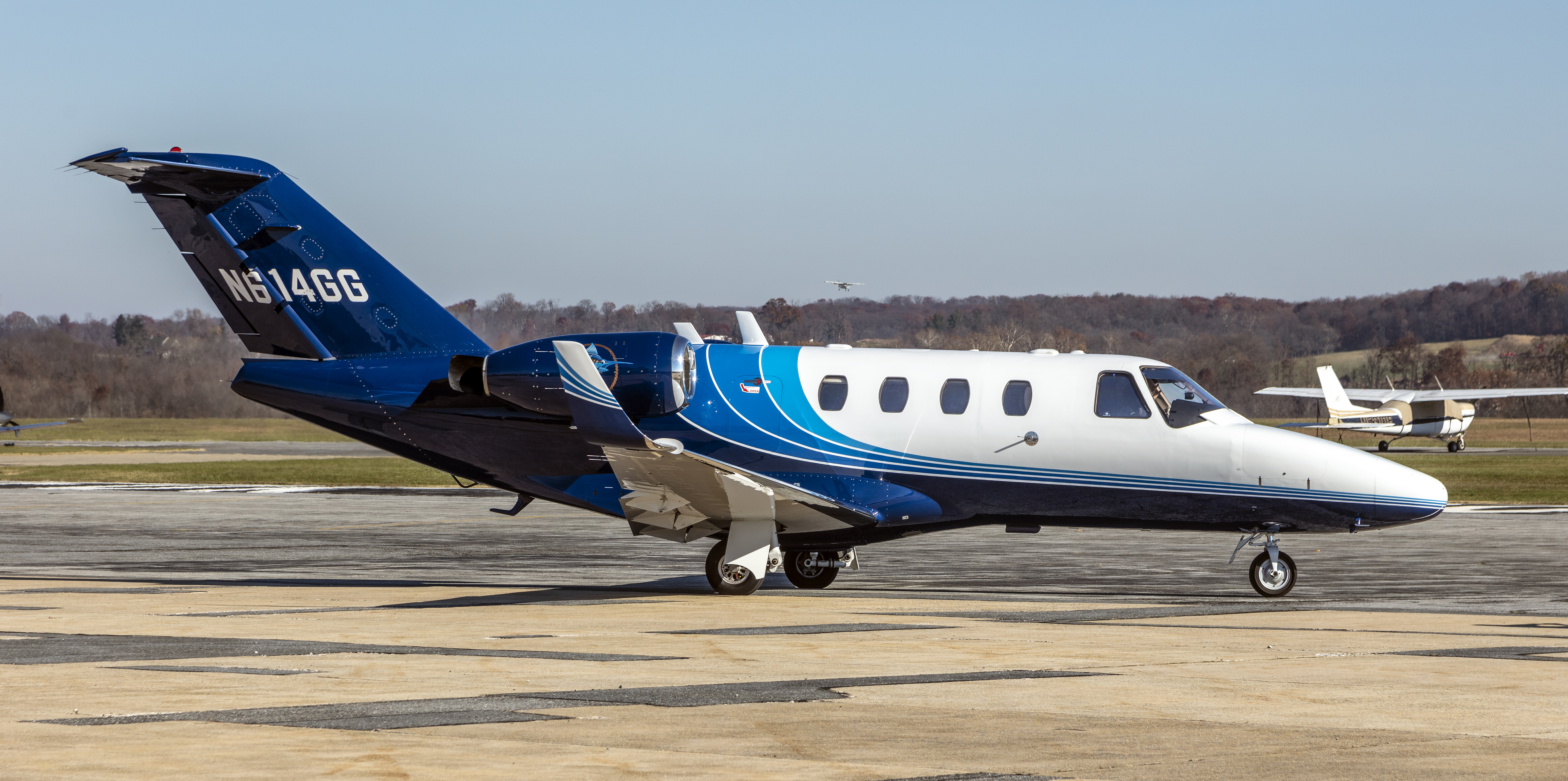
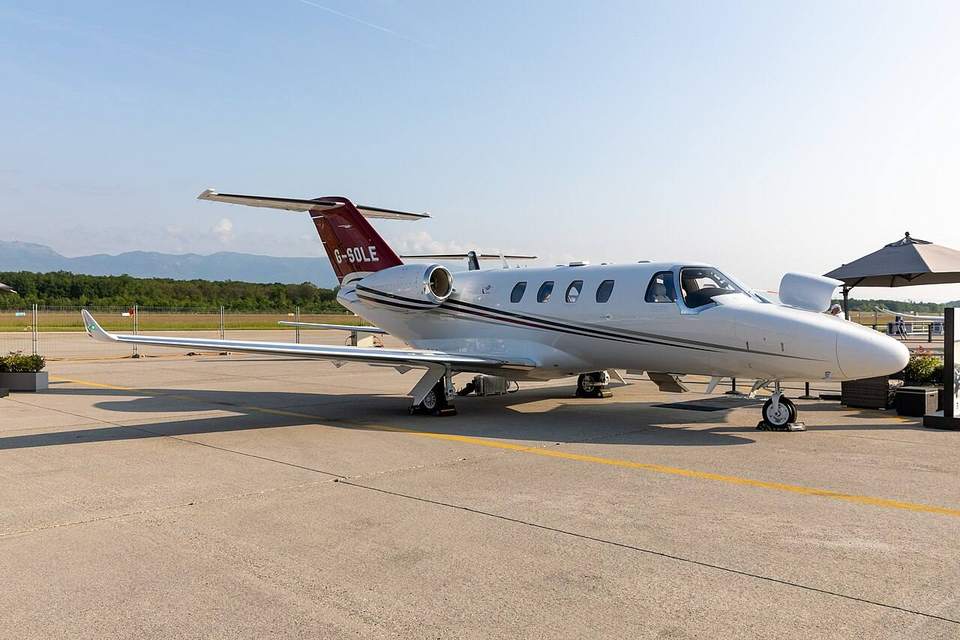
A 2003 Citation CJ1 at Frederick Municipal Airport, Maryland. · Photo: Acroterion, CC BY-SA 4.0, via Wikimedia Commons
Cessna · Light Jet
Citation CJ1 (525)
Second in Cessna's Model 525 line, between the original CitationJet and the CJ1+.
A sensible first jet for two to four people on trips under about 900 nm. Buy one with engines on a pay-per-hour program and an upgraded panel, because the original cockpit misses the newest factory upgrades.
Buy it if
You fly one- to three-hour trips with two to four people, want a jet one pilot can legally fly, and find an example with engines on Williams' pay-per-hour program and modern GPS approaches.
Skip it if
You often fill every seat with bags, need 1,100 nm legs with a full cabin, fly from high, hot airports, or want a factory avionics upgrade path; look at the CJ1+ or a Phenom 100.
Biggest compromise
The CJ1's Collins Pro Line 21 cockpit sits on the wrong side of the upgrade line. Collins' 2025 upgrade and its Pro Line Fusion retrofit cover the CJ1+ and later models only, so staying current means Garmin retrofits (one GPS package costs about $90,000–95,000), and original-panel aircraft may keep losing ground.
The numbers that matter
Purchase price
$2.03M
typical asking · $1.2M–$2.25M
What it costs per year
$829K
at 300 hrs · one professional pilot
How far it flies
1,257 nm
680–775 nm with every seat filled with passengers
How fast
379 kt
high-speed cruise
Seats
5
5 typical, 6 with belted toilet seat
Pilots needed
1
Certified for one pilot with a single-pilot type rating; many owners and insurers still choose two.
Price
What one costs to buy
Typical asking price
$2,030,000
Where asking prices sit
Low
$1.2M
Typical
$2.03M
High
$2.25M
Most asking prices fall inside this band.
Other sites
6-month move
Priced vs call
with a price / call for price
Three of ten aircraft for sale show prices, $1.2M–$2.25M. Aircraft Bluebook values range $1.9M–$2.3M by model year; engine-program status moves price most.
Price vs its family and alternatives
Scroll to explore · select a jet for details
Citation CJ1 (525) · This aircraft
$2.03M
Sits between the CitationJet (525) and the Citation Mustang (510).
For sale now
None listed right now
Cost to own
What it costs per year to run
300hours / year
Per year
Per flight hour
Estimate — your operator will quote actual numbers.
Fuel, airframe maintenance, williams engine program and trip expenses and fees rise as you fly more. One full-time pilot, recurrent training, hangar, insurance, aircraft management and navigation data and weather stay the same however much you fly.
Where the money goes
- One full-time pilot$154,45019%
- Recurrent training$11,0761%
- Hangar$27,7503%
- Insurance$17,3622%
- Aircraft management$42,0005%
- Navigation data and weather$6,8801%
- Fuel$294,37536%
- Airframe maintenance$122,85015%
- Williams engine program$88,04411%
- Trip expenses and fees$63,7508%
Fuel is the biggest single cost at 36% of the total.
The JetGrade
68 out of 100 — Below its class average
Peer group: Cessna Citation Mustang (510), Embraer Phenom 100, Beechcraft Premier I, Cessna Citation CJ1+ (525)
Seven categories at a glance
- - - 70 = typical— This aircraft
Strongest on running costs, weakest on range & payload.
Grades are editorial opinions about the model, not any specific aircraft. Sponsors and affiliates have no input. Reviewed 2026-09-28.
Where it flies
Sample trips and reach
Typical trips on a map
Nonstop
Depends on weight or weather
Fuel stop likely
2 of 6 sample trips are comfortable nonstops.
Sample flight times
- 0.9 hr
Carlsbad → Las Vegas
205 nm · Easy hop with four passengers
- 2.1 hr
Carlsbad → Aspen
625 nm · Hot-and-high; depends on weight and weather
- 2.4 hr
Santa Ana → San José del Cabo
765 nm · Comfortable nonstop with four passengers
- 3.0 hr
Teterboro → West Palm Beach
900 nm · Tight with four; headwinds may force a stop
- 3.6 hr
Dallas → Teterboro
1,190 nm · Needs one stop, typically mid-route
- 7.1 hr
Carlsbad → Teterboro
2,100 nm · One stop in calm air; two with headwinds
Lineage
What came before and after

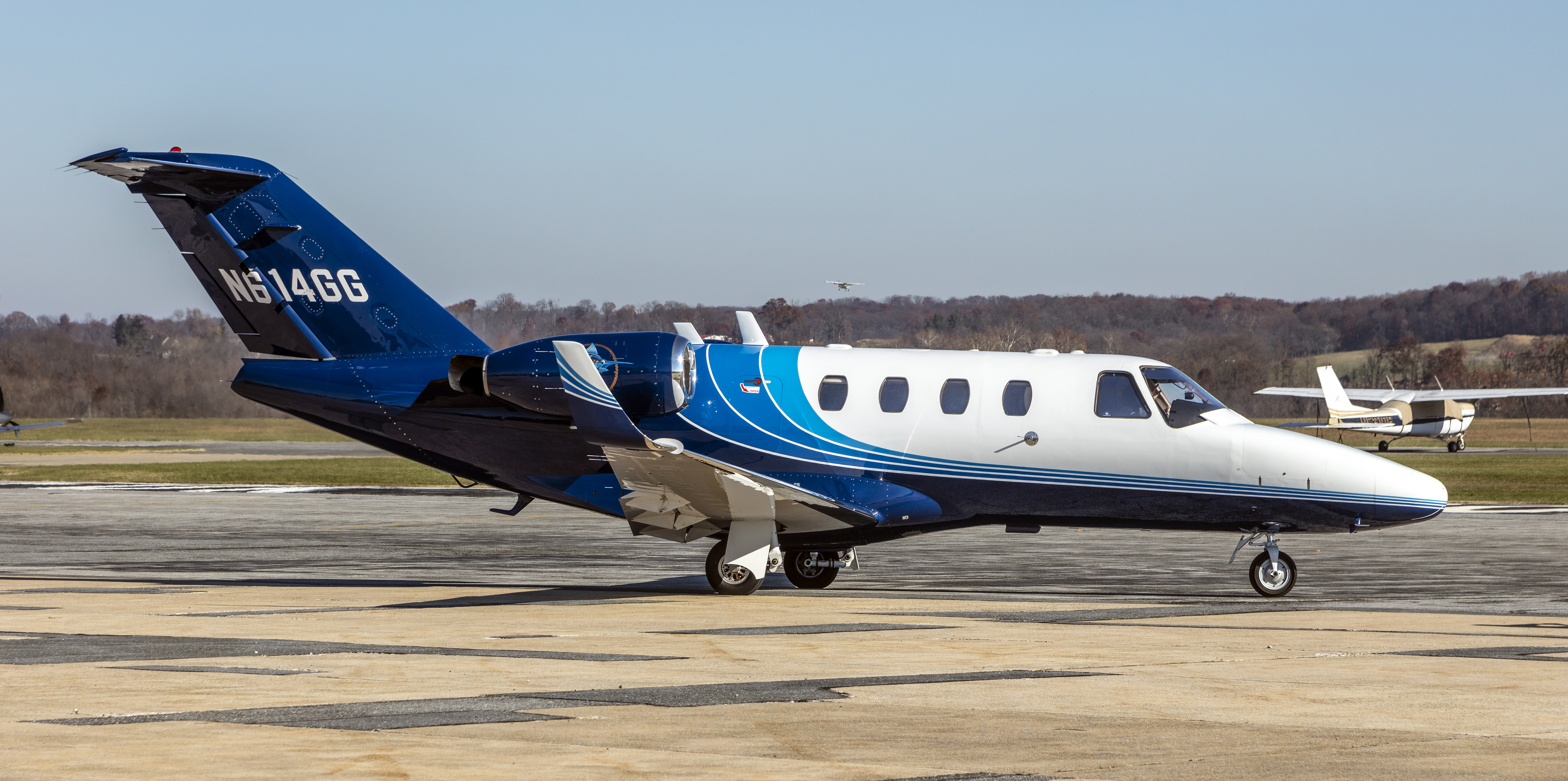
2000–2005
Cessna Citation CJ1 (525)
Same airframe and engines with a Collins Pro Line 21 flat-panel cockpit.
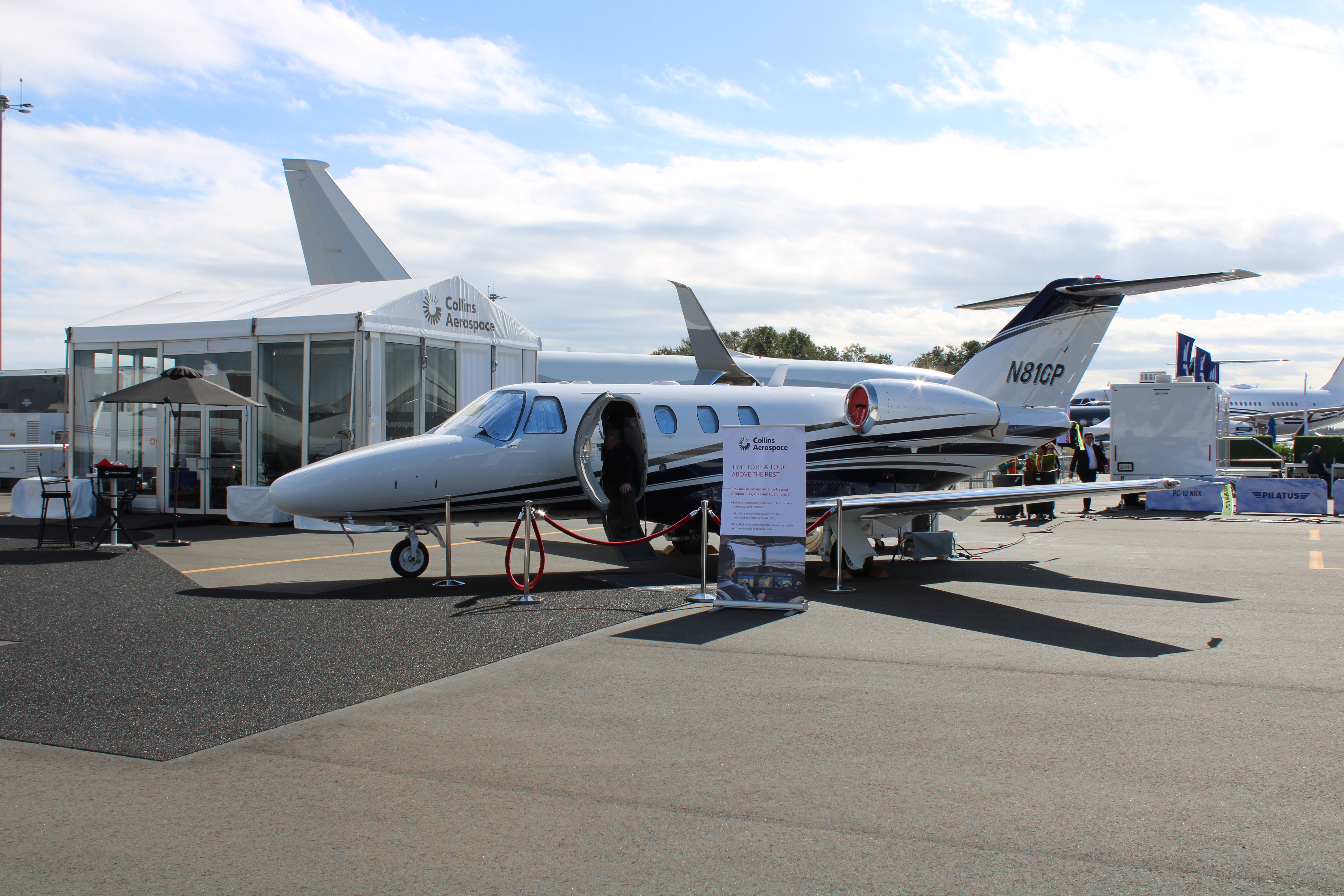
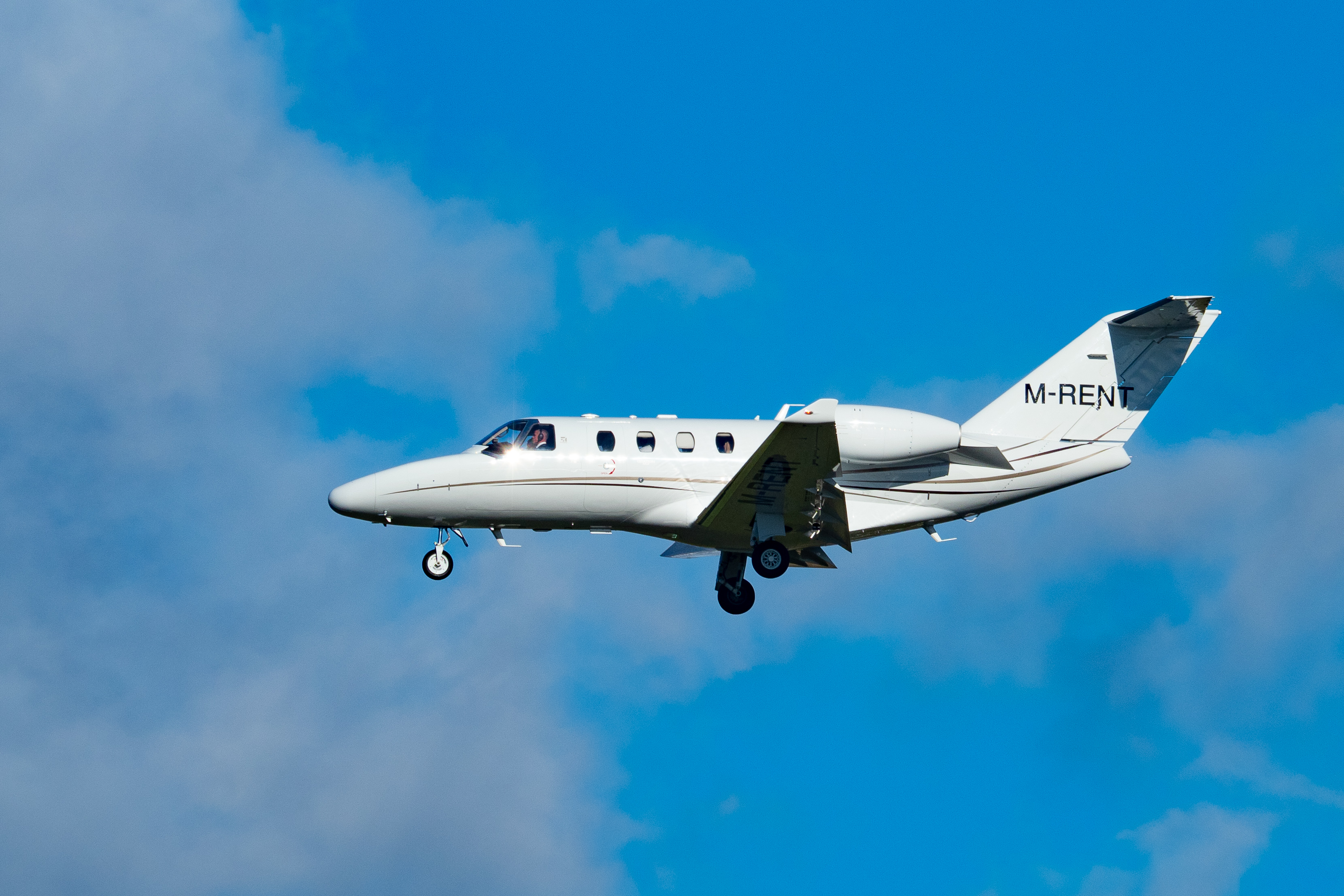
What changed from the Cessna CitationJet (525)
- Collins Pro Line 21 flat-panel displays replace the CitationJet's Honeywell SPZ-5000 cockpit.
- Maximum takeoff weight up 200 lb to 10,600 lb; landing weight up 100 lb to 9,800 lb.
- Same Williams FJ44-1A engines at 1,900 lb of thrust each, still without digital engine controls.
- Same fuselage, straight wing, T-tail and cabin as the CitationJet.
Size and cabin
How big it is, inside and out
Outside
Silhouette · scaled to length
Length
Wingspan
Height
Inside the cabin
Cabin length
Width
Height
Compare
How it stacks up
This aircraft
Citation CJ1 (525)
- JetGrade
- 68
- Price
- $2.03M
- Cost per year
- $829K
- Range
- 1,257 nm
- Speed
- 379 kt
- Seats
- 5
- Cabin length
- 11′ 0″
- Pilots
- 1
- Years built
- 2000–2005
← Before
- JetGrade
- 68
- Price
- $1.3M
- Cost per year
- $860K
- Range
- 1,200 nm
- Speed
- 379 kt
- Seats
- 5
- Cabin length
- 11′ 0″
- Pilots
- 1
- Years built
- 1993–2000
After →
- JetGrade
- 69
- Price
- $2.6M–$3M guide
- Cost per year
- $915K
- Range
- 1,300 nm
- Speed
- 389 kt
- Seats
- 5
- Cabin length
- 11′ 0″
- Pilots
- 1
- Years built
- 2005–2011
Alternative
- JetGrade
- 72
- Price
- $2.1M
- Cost per year
- $850K
- Range
- 1,150 nm
- Speed
- 340 kt
- Seats
- 4
- Cabin length
- 9′ 9″
- Pilots
- 1
- Years built
- 2006–2017
Alternative
- JetGrade
- 72
- Price
- $2.35M
- Cost per year
- $871K
- Range
- 1,178 nm
- Speed
- 390 kt
- Seats
- 4
- Cabin length
- 11′ 0″
- Pilots
- 1
- Years built
- 2008–2013
- Cessna Citation CJ1+ (525) instead: Same cabin with digitally controlled FJ44-1AP engines, a 10-minute engine-out takeoff thrust rating and access to Collins' newest cockpit upgrades, at about $2.4–2.5 million.
- Cessna Citation Mustang 510 instead: Newer Garmin G1000 cockpit and about 95 gallons an hour of fuel burn, but a smaller four-passenger cabin and slower cruise near 340 kt.
- Embraer Phenom 100 instead: Wider cabin, about 5 ft 1 in, and 71 cu ft of baggage from a newer 2008–2013 production span, usually at a higher price.
Gold marks the best figure in each row.
Owning one
What to know before you buy
Engines & inspections
2 × Williams FJ44-1A · 1,900 lbf each
No APUEngine hours until overhaul
- Doc 8 airframe inspection · 300 hr
- Air-conditioning motor brushes · 500 hr
- Doc 10 complete inspection · 1,200 hr
- Cockpit window crack check · 2,400 hr
- Engine hot section inspection · 2,500 hr
- Engine overhaul · 3,500 hr
- Fire bottle pressure test every 60 months
Most CJ1s are on Williams' pay-per-hour TAP program, which covers overhauls and stretches the overhaul interval to 5,000 hours; confirm coverage transfers.
Known issues
Engines outside a program
Without Williams program coverage, overhaul and hot-section bills fall on the owner; overhauls were reported at $250,000–350,000 per engine.
Limited avionics upgrade path
Collins' newest Pro Line 21 upgrades skip the CJ1; modern GPS approaches need Garmin retrofits costing $90,000 or more.
Main gear corrosion
Corrosion on the main gear trailing links and shock struts can mean costly repair or replacement.
Pre-buy checklist
0 of 10 checked
Textron's factory service centers and many independent shops support the 525 series, Williams service centers handle the engines, and FlightSafety and CAE train CJ1 pilots.
Review
The full review
Strengths
- Certified for one pilot, and untouched by the FAA's September 2026 end of single-pilot exemptions for older Citations.
- About 1,124 nm with four passengers and standard fuel reserves, cruising near 379 kt up to 41,000 ft.
- Nine of the ten aircraft for sale in September 2026 list engines on Williams' pay-per-hour program.
Limitations
- Only about 655 lb of payload with full fuel; with every seat filled, range drops to roughly 680–775 nm.
- The original cockpit is excluded from Collins' 2025 Pro Line 21 upgrade; modern GPS approaches mean Garmin retrofits costing $90,000 or more.
- At a 5,000 ft airport on a hot day, a full-weight takeoff needs about 8,170 ft of runway.
The Citation CJ1 is the second version of Cessna's Model 525 light jet, built from 2000 to 2005 between the original CitationJet and the CJ1+. It kept the CitationJet's airframe, cabin and Williams FJ44-1A engines (1,900 lb of thrust each) and added a Collins Pro Line 21 flat-panel cockpit and 200 lb more takeoff weight, for a 10,600-lb maximum. About 198 were built, and roughly 195 were still flying in early 2025.
Pilot's take
Pilot reports describe the CJ1 as a docile, straight-wing jet that is easy to manage alone. Business & Commercial Aviation's 2000 flight report found the cockpit quiet even at takeoff power and noted that single-pilot loadings often need 75–100 lb of nose ballast to stay inside the aft balance limit. The planning numbers that matter are weight and runway rather than speed: about 655 lb of payload with full fuel, and big takeoff penalties at hot, high airports because the engines lack digital controls and an extended takeoff thrust rating.
Who this is for
An owner-pilot stepping up from a turboprop or very light jet, or a small company with one professional pilot, flying 150–350 hours a year on regional trips with two to four passengers.

Ask about this aircraft
Answers come only from our research file on the Cessna Citation CJ1 (525).
Your earlier questionsOwners
Private to verified ownersOwn a Cessna Citation CJ1 (525)? Verify with its FAA registration to join the owners' thread and the real-cost poll.