
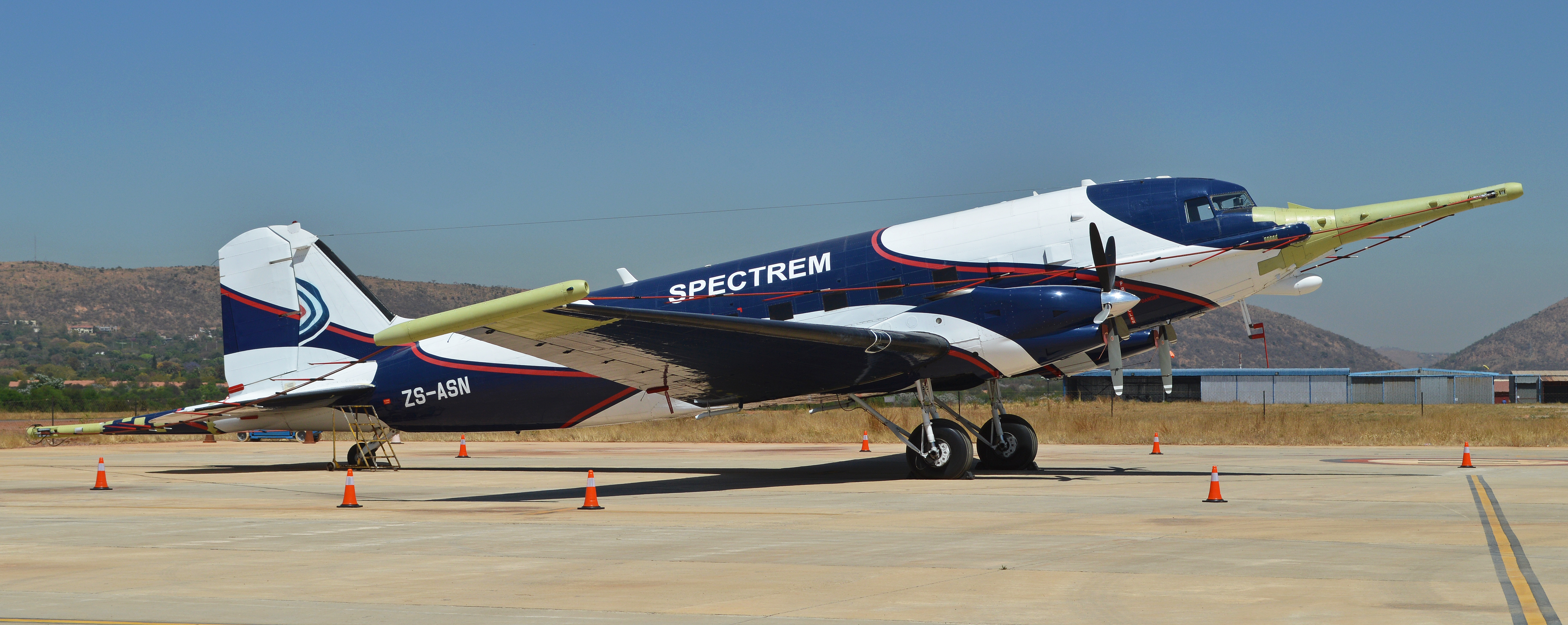
Basler BT-67 ZS-ASN, a South African survey aircraft, at Wonderboom in 2014. · Alan Wilson, CC BY-SA 2.0 (creativecommons.org/licenses/by-sa/2.0), via Wikimedia Commons
Basler · Turboprop
Basler BT-67
A turbine remanufacture of the Douglas DC-3, converted by Basler in Oshkosh, Wisconsin, since 1990.
Few turboprops carry this much into gravel, snow or ice strips. But the BT-67 is a work aircraft: unpressurized, flown by two pilots, burning about 145 gallons an hour, and rarely offered for sale. Buy one for a mission, not for business travel.
Buy it if
You run cargo, survey, scientific, firefighting or polar support flights and need a big cabin, around 16,000 lb of useful load, and the ability to land on gravel, snow or ice.
Skip it if
You want a private aircraft for passengers. The cabin is unpressurized, cruise is about 205 knots, two type-rated pilots are needed, and resale depends on finding another operator with the same kind of mission.
Biggest compromise
The BT-67 trades comfort and liquidity for capability. Without pressurization, flights stay low or everyone needs oxygen, and with about 70 ever built and none publicly listed in October 2026, buying or selling one is a slow, private process closely tied to Basler in Oshkosh, Wisconsin.
The numbers that matter
What it costs per year
$968K
at 300 hrs · two professional pilots
How far it flies
950 nm
About 800 nm with 4 passengers on standard tanks
How fast
215 kt
high-speed cruise
Seats
19
19 typical; up to 38 by layout
Pilots needed
2
Flown by two pilots, both holding a DC-3 type rating.
For sale now
None listed right now
Cost to own
What it costs per year to run
300hours / year
Per year
Per flight hour
Estimate — your operator will quote actual numbers.
Jet fuel, engine overhaul reserve, two engines and landing, navigation and trip costs rise as you fly more. Two pilots, salary and benefits, recurrent training, hangar, hull and liability insurance and charts, tracking and software stay the same however much you fly.
Where the money goes
Partial estimate- Two pilots, salary and benefits$280,00029%
- Recurrent training$45,0005%
- Hangar$90,0009%
- Hull and liability insurance$105,00011%
- Charts, tracking and software$15,0002%
- Jet fuel$329,29534%
- Engine overhaul reserve, two engines$75,7508%
- Landing, navigation and trip costs$27,5003%
Jet fuel is the biggest single cost at 34% of the total.
The JetGrade
69 out of 100 — Below its class average
Peer group: DHC-6 Twin Otter 100 / 200 / 300, DHC-6 Twin Otter 400, Cessna SkyCourier 408, Beechcraft 1900D, Dornier 228-100 / -200
Seven categories at a glance
- - - 70 = typical— This aircraft
Strongest on range & payload, weakest on value & resale.
Grades are editorial opinions about the model, not any specific aircraft. Sponsors and affiliates have no input. Reviewed 2026-10-04.
Where it flies
Sample trips and reach
Typical trips on a map
Nonstop
Depends on weight or weather
Fuel stop likely
1 of 6 sample trips are comfortable nonstops.
Sample flight times
- 1.4 hr
Carlsbad → Las Vegas
205 nm · Short hop at maximum cruise power
- 3.6 hr
Carlsbad → Aspen
625 nm · High terrain; oxygen needed, unpressurized cabin
- 4.2 hr
Santa Ana → San José del Cabo
765 nm · Near the standard-tank limit; long-range tanks help
- 5.1 hr
Teterboro → West Palm Beach
900 nm · One stop on standard tanks
- 6.6 hr
Dallas → Teterboro
1,190 nm · One stop, typically mid-route
- 11.2 hr
Carlsbad → Teterboro
2,100 nm · Two stops on standard tanks
Lineage
What came before and after
1936–1946
Douglas DC-3 / C-47
Piston-engined airliner and military transport; donor airframes for every conversion.

1990–present
Basler BT-67
Rebuilt, stretched DC-3 with PT6A turboprops and new wing spars.
What changed from the Douglas DC-3 / C-47
- Two Pratt & Whitney Canada PT6A-67R turboprops, 1,424 shp each, replace the piston radials.
- Five-blade Hartzell propellers with de-ice boots replace the original three-blade units.
- A 40-inch fuselage plug ahead of the wing adds about a third more cabin volume.
- Every wing spar is replaced; wingtips and outboard leading edges are reshaped.
- Maximum takeoff weight rises to 30,000 lb with a 16,000 lb useful load.
- New four-bus electrical system, servo-assisted ailerons and upgraded engine fire protection.
Size and cabin
How big it is, inside and out
Outside
Silhouette · scaled to length
Length
Wingspan
Height
Inside the cabin
Photo · this model
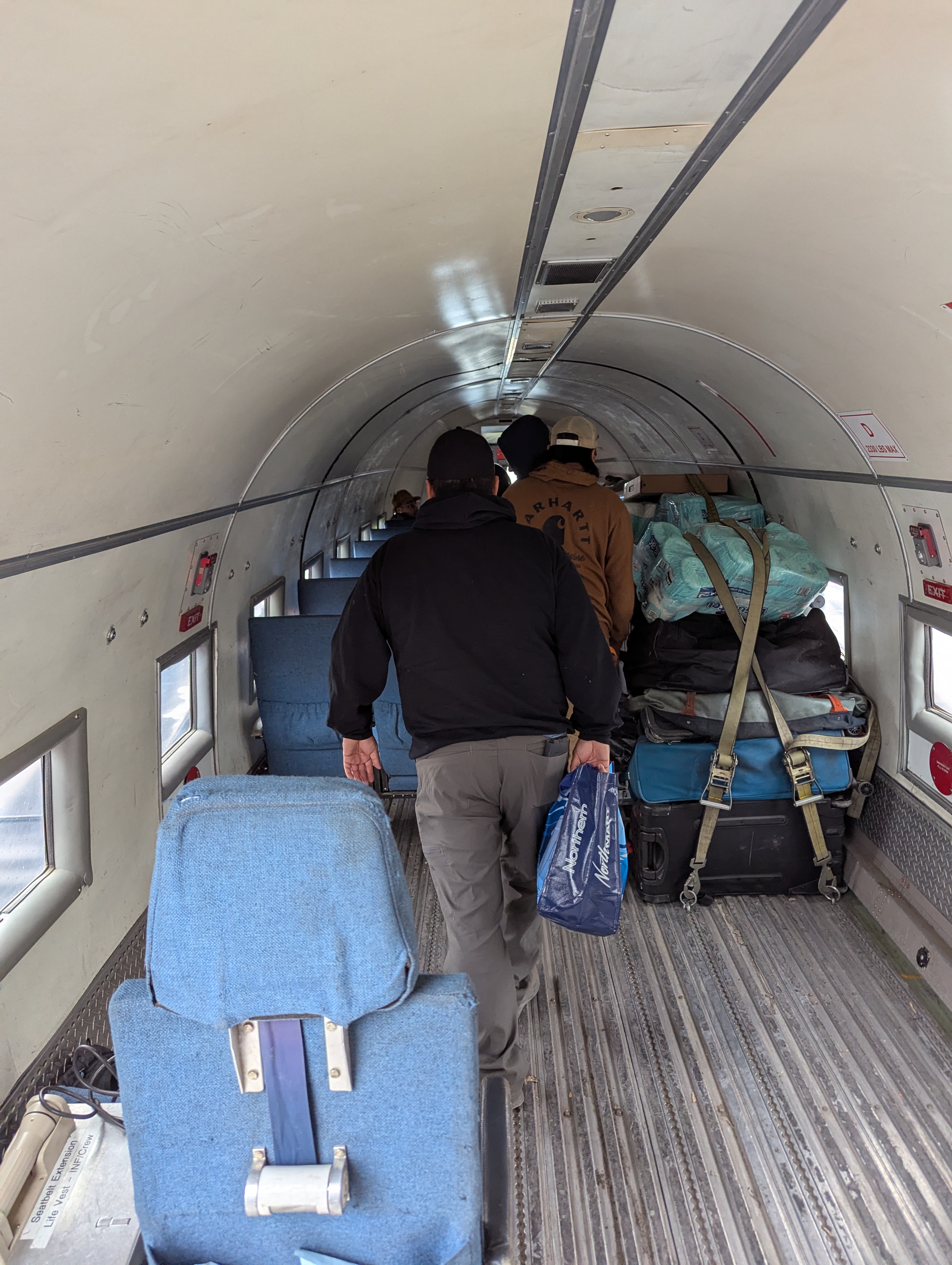
Cabin length
Width
Height
Compare
How it stacks up
This aircraft
Basler BT-67
- JetGrade
- 69
- Cost per year
- $968K
- Range
- 950 nm
- Speed
- 215 kt
- Seats
- 19
- Cabin length
- 42′ 2″
- Pilots
- 2
- Years built
- 1990–now
← Before
Douglas DC-3 / C-47
Not yet graded
Alternative
- JetGrade
- 70
- Cost per year
- $802K
- Range
- 763 nm
- Speed
- 182 kt
- Seats
- 19
- Cabin length
- 18′ 5″
- Pilots
- 1
- Years built
- 2010–2020
Alternative
- JetGrade
- 70
- Cost per year
- $945K
- Range
- 920 nm
- Speed
- 210 kt
- Seats
- 19
- Cabin length
- 23′ 4″
- Pilots
- 1
- Years built
- 2022–now
Alternative
- JetGrade
- 66
- Cost per year
- $1.24M
- Range
- 1,279 nm
- Speed
- 280 kt
- Seats
- 19
- Cabin length
- 25′ 3″
- Pilots
- 1
- Years built
- 1991–2002
- DHC-6 Twin Otter 400 instead: Smaller and cheaper to run, with short-field, ski and float options and a large worldwide support network, but carries far less.
- Cessna SkyCourier 408 instead: A new-production utility twin with a modern cockpit and factory support, built for cargo or 19 passengers, with a smaller cabin and payload.
- Beechcraft 1900D instead: Pressurized, faster and widely supported, better for moving people in comfort, but far less suited to snow, ice or rough strips.
Gold marks the best figure in each row.
Owning one
What to know before you buy
Engines & inspections
2 × Pratt & Whitney Canada PT6A-67R · 1,424 shp each
Engine hours until overhaul
- Center wing spar cap inspection · 300 hr
- Wing attach angle inspection · 450 hr
- Engine hot section inspection · 2,000 hr
- Engine overhaul · 6,000 hr
Pratt & Whitney Canada sets fixed overhaul prices for related PT6A models; ask directly about pay-per-hour coverage for this engine.
Known issues
Original center wing structure
Basler keeps the 1940s center wing, so recurring inspections watch attach angles and spar caps for cracks and corrosion.
Runway excursions and gear damage
Several BT-67s have been damaged in overruns, excursions and gear collapses, mostly on rough, icy or military strips.
Single-source conversion parts
Basler, building about two aircraft a year, is the only source for many conversion-specific parts and repairs.
Pre-buy checklist
0 of 8 checked
Basler Turbo Conversions in Oshkosh, Wisconsin, supports the fleet directly and holds manufacturing approval for thousands of parts. There is no wide service network, so heavy work usually returns to Oshkosh.
Review
The full review
Strengths
- Basler lists a 16,000 lb maximum useful load on a 30,000 lb maximum takeoff weight.
- A 42-foot, 1,225 cubic-foot cabin with 6 ft 6 in headroom takes cargo, stretchers or up to 38 seats.
- Proven on gravel, snow and Antarctic ice, with wheel-ski gear and approval for flight in known icing.
Limitations
- Burns about 145 gallons an hour at its 205-knot standard cruise, so fuel alone tops $1,000 an hour.
- Unpressurized cabin: crews need oxygen above 12,500 feet, so most flights stay low.
- About 70 have been built since 1990 and none were publicly listed in October 2026, so trading one is slow.
The Basler BT-67 starts life as a Douglas DC-3 or military C-47 built during the 1940s. Basler Turbo Conversions, in Oshkosh, Wisconsin, strips each airframe to bare metal, replaces every wing spar, adds a 40-inch fuselage plug ahead of the wing, and fits two Pratt & Whitney Canada PT6A-67R turboprops turning five-blade Hartzell propellers. Basler says about 90% of the aircraft is new when it rolls out. Conversions began in 1990, about 70 have been completed, and Basler still builds roughly two a year, with deliveries as recently as 2025.
Pilot's take
From the cockpit, the BT-67 is a DC-3 with modern turbine power: plenty of thrust for hot days and heavy loads, and propellers that make short, rough-field work routine. It is still a tailwheel aircraft with a 95-foot wingspan, so crosswinds, ground handling and tight ramps demand attention, and the fleet's history of runway excursions says as much. We would plan around the unpressurized cabin, keep crews current on DC-3 handling and ski operations where relevant, and treat Basler's Oshkosh shop as part of the operation rather than an afterthought.
Who this is for
Governments, scientific programs, cargo and survey operators, and firefighting contractors who need a large, tough, rough-field turboprop and will keep it working for years. It does not suit owners looking for a personal or corporate passenger aircraft.

Ask about this aircraft
Answers come only from our research file on the BT-67 (turbine DC-3).
Your earlier questionsOwners
Private to verified ownersOwn a Basler Basler BT-67? Verify with its FAA registration to join the owners' thread and the real-cost poll.