
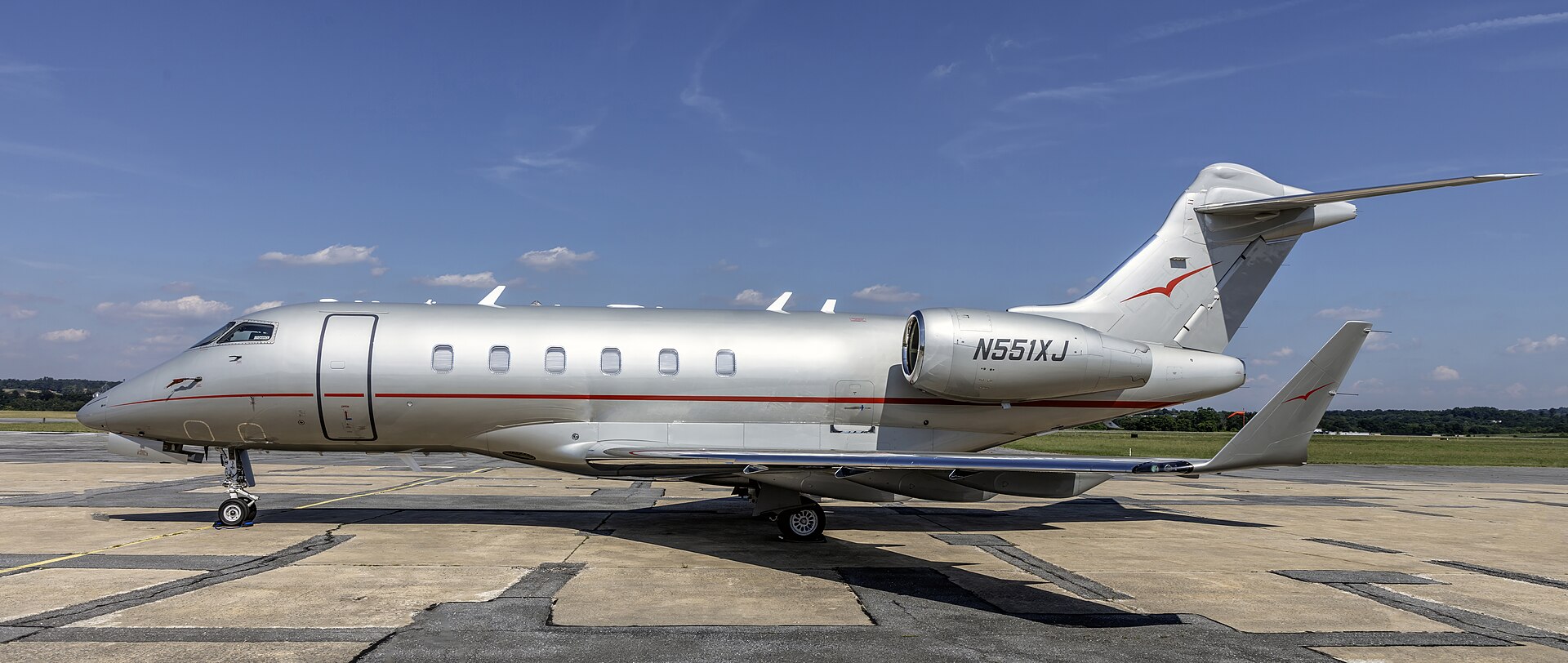
A Challenger 300 on the ramp at Frederick Municipal Airport, Maryland, in June 2024. · Photo: Acroterion, CC BY-SA 4.0, via Wikimedia Commons
Bombardier · Super-Midsize Jet
Challenger 300
The original Challenger 300-series model, later followed by the Challenger 350 in 2014 and the 3500 in 2022.
The Challenger 300 is the safe-bet super-midsize: a roomy flat-floor cabin, 3,065 nm with every seat filled, about 443 in service and strong resale. Budget for avionics upgrades on older examples and for the big calendar inspections that come with age.
Buy it if
You fly up to eight people coast to coast, want a wide stand-up cabin with bags you can reach in flight, and value a big fleet that is easy to crew, maintain and resell.
Skip it if
You need Citation X speed, regularly fly the Atlantic westbound nonstop with a full cabin, or cannot absorb seven-figure engine work on an aircraft that is not enrolled in an hourly engine plan.
Biggest compromise
Age. Every Challenger 300 is now 12 to 22 years old, so 96- and 192-month inspections, a landing-gear overhaul and a 7,500-landing inspection are real budget items.
The numbers that matter
Purchase price
$11.87M
typical asking · $10M–$13.95M
What it costs per year
$2.29M
at 300 hrs · two professional pilots
How far it flies
3,065 nm
3,065–3,250 nm with passengers
How fast
470 kt
high-speed cruise
Seats
8
8 typical (9–10 by interior)
Pilots needed
2
Two pilots are required on every flight; all 300-series models share one type rating.
Price
What one costs to buy
Typical asking price
$11,872,500
Where asking prices sit
Low
$10M
Typical
$11.87M
High
$13.95M
Most asking prices fall inside this band.
Other sites
3.6% of the fleet
Priced vs call
with a price / call for price
Only four of 16 aircraft show prices, $10.0–13.95M. Sales over the six months to September 2026 ran about $7.65–13.85M.
Price vs its family and alternatives
Scroll to explore · select a jet for details
Challenger 300 · This aircraft
$11.87M
Sits between the Gulfstream G200 (Galaxy) and the Legacy 500 (EMB-550).
For sale now
None listed right now
Cost to own
What it costs per year to run
300hours / year
Per year
Per flight hour
Estimate — your operator will quote actual numbers.
Fuel, airframe maintenance, engine program, both engines, apu program and trip expenses rise as you fly more. Two professional pilots, recurrent training, hangar, insurance, management and charts, software and connectivity stay the same however much you fly.
Where the money goes
- Two professional pilots$462,41020%
- Recurrent training$50,1002%
- Hangar$66,4503%
- Insurance$32,8521%
- Management$81,0004%
- Charts, software and connectivity$62,5003%
- Fuel$671,16029%
- Airframe maintenance$345,00015%
- Engine program, both engines$247,50011%
- APU program$15,0001%
- Trip expenses$251,40011%
Fuel is the biggest single cost at 29% of the total.
The JetGrade
75 out of 100 — Clearly above its class
Peer group: Gulfstream G200, Cessna Citation X (750), Hawker 4000, Embraer Legacy 500
Seven categories at a glance
- - - 70 = typical— This aircraft
Strongest on cabin & passenger comfort, weakest on range & payload.
Grades are editorial opinions about the model, not any specific aircraft. Sponsors and affiliates have no input. Reviewed 2026-10-29.
Where it flies
Sample trips and reach
Typical trips on a map
Nonstop
8 of 8 sample trips are comfortable nonstops.
Sample flight times
- 0.9 hr
Carlsbad → Las Vegas
205 nm · Short hop with ample margin at any load
- 1.8 hr
Carlsbad → Aspen
625 nm · Routine; summer Aspen departures can be weight-limited
- 2.1 hr
Santa Ana → San José del Cabo
765 nm · Easy nonstop with a full cabin
- 2.4 hr
Teterboro → West Palm Beach
900 nm · Easy nonstop with a full cabin
- 3.0 hr
Dallas → Teterboro
1,190 nm · Nonstop with seats full and margin
- 3.5 hr
Teterboro → San Juan
1,410 nm · Nonstop over water with seats full
- 5.0 hr
Carlsbad → Teterboro
2,100 nm · Nonstop; hot days at Carlsbad can limit fuel
- 5.3 hr
Los Angeles → Honolulu
2,215 nm · Nonstop; strong winter headwinds reduce the margin
Lineage
What came before and after

2004–2014
Challenger 300
Clean-sheet super-midsize with a wide flat-floor cabin for eight.

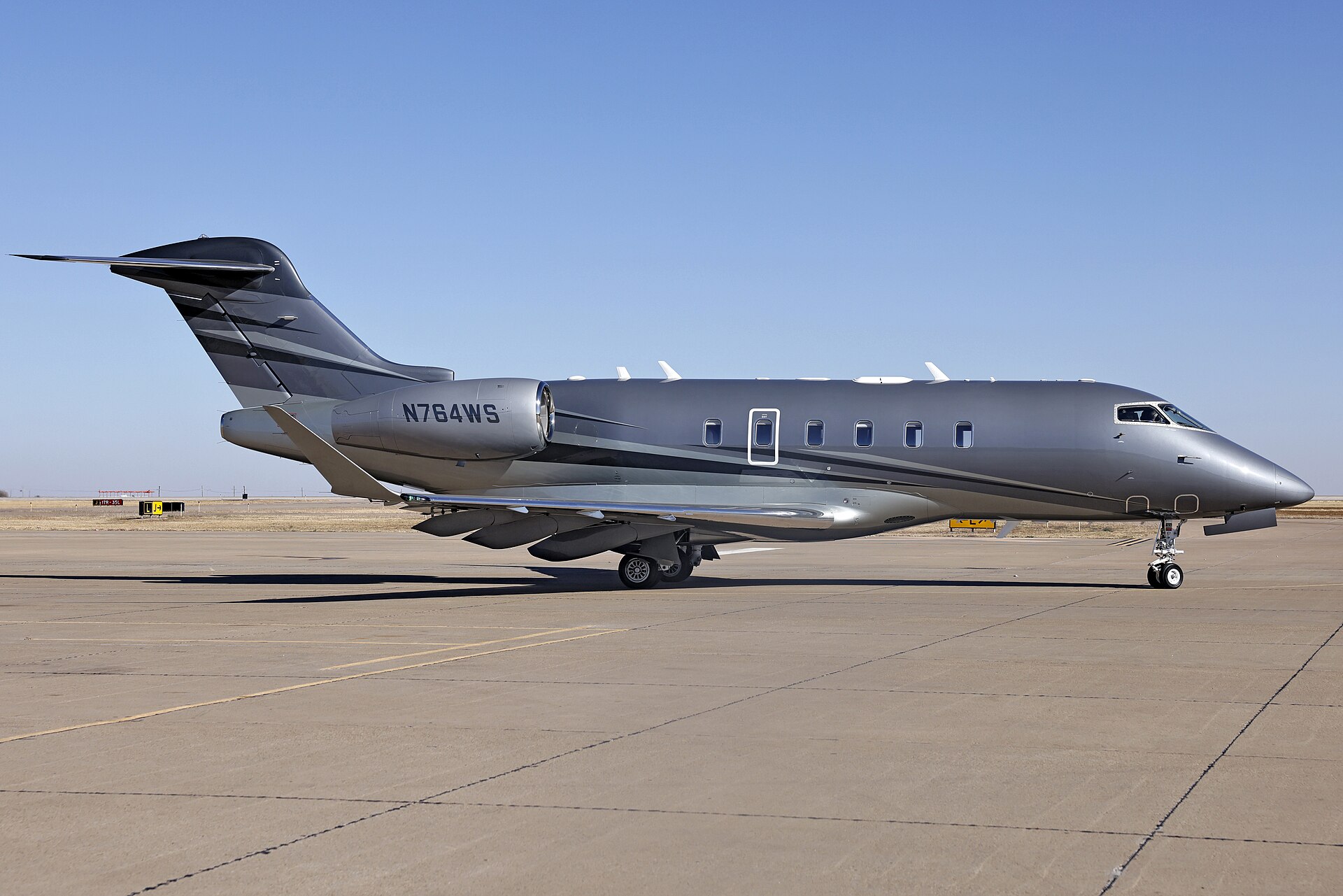
Size and cabin
How big it is, inside and out
Outside
Silhouette · scaled to length
Length
Wingspan
Height
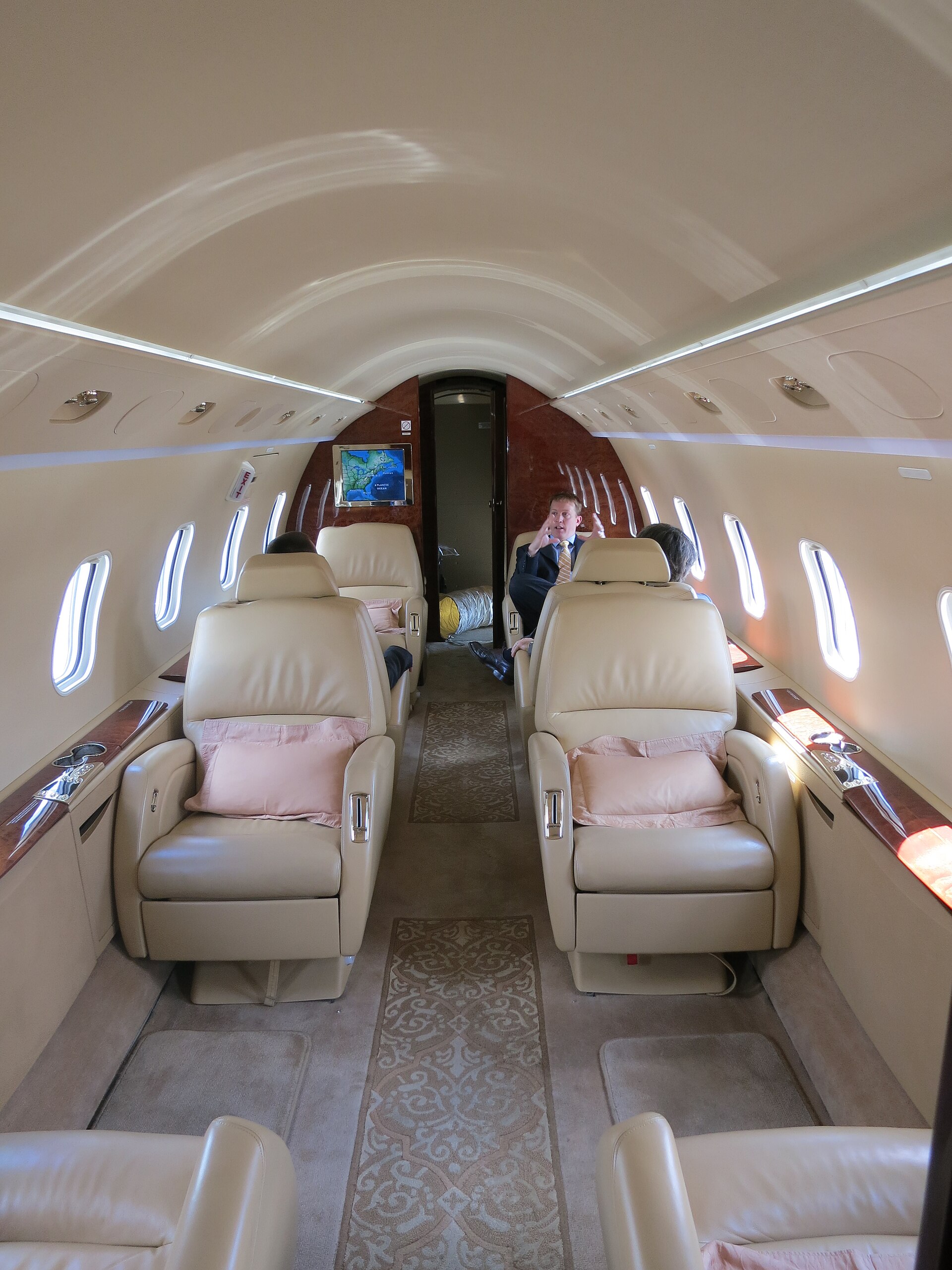
Inside the cabin
Photo · this model
Cabin length
Width
Height
Compare
How it stacks up
This aircraft
Challenger 300
- JetGrade
- 75
- Price
- $11.87M
- Cost per year
- $2.29M
- Range
- 3,065 nm
- Speed
- 470 kt
- Seats
- 8
- Cabin length
- 28′ 7″
- Pilots
- 2
- Years built
- 2004–2014
After →
- JetGrade
- 75
- Price
- $12.9M–$25.9M guide
- Cost per year
- $2.36M
- Range
- 3,200 nm
- Speed
- 470 kt
- Seats
- 9
- Cabin length
- 25′ 2″
- Pilots
- 2
- Years built
- 2014–2022
Alternative
- JetGrade
- 70
- Price
- $3.69M
- Cost per year
- $2.48M
- Range
- 3,400 nm
- Speed
- 470 kt
- Seats
- 8
- Cabin length
- 24′ 5″
- Pilots
- 2
- Years built
- 1999–2011
Alternative
- JetGrade
- 71
- Price
- $11.9M–$17.5M guide
- Cost per year
- $2.36M
- Range
- 3,125 nm
- Speed
- 466 kt
- Seats
- 8
- Cabin length
- 26′ 10″
- Pilots
- 2
- Years built
- 2014–2020
- Bombardier Challenger 350 instead: Same cabin with about 7% more engine thrust, larger canted winglets, bigger windows and Pro Line 21 Advanced standard, for a higher price.
- Gulfstream G200 instead: Similar range and a slightly taller cabin with more baggage space for far less money, but it needs much longer runways.
- Embraer Legacy 500 instead: Newer fly-by-wire design with a 6 ft flat-floor cabin, more baggage room and shorter runway needs, usually priced above a Challenger 300.
Gold marks the best figure in each row.
Owning one
What to know before you buy
Engines & inspections
2 × Honeywell HTF7000 (AS907-1-1A) · 6,826 lbf each
Engine hours until overhaul
- Engine hot-section borescope · 4,800 hr
- Engine compressor inspection · 9,600 hr
- 48-month inspection every 48 months
- 96-month inspection every 96 months
- 192-month inspection every 192 months
- Landing gear overhaul every 96 months
Most aircraft for sale have both engines on Honeywell MSP or JSSI; without a plan, hot-section work has been estimated near $1 million per engine.
Known issues
Engine program status
Without an hourly engine plan, hot-section work on each HTF7000 has been estimated at $0.9–1.1 million.
Big age-driven inspections
The 192-month inspection, gear overhaul and 7,500-landing inspection mean months of downtime and large bills.
Avionics upgrade status
Aircraft without Pro Line 21 Advanced, FANS 1/A or ADS-B Out face costly retrofits and weaker resale.
Pre-buy checklist
0 of 10 checked
Bombardier runs US service centers in Dallas, Tucson, Hartford, Wichita and Miami, is adding Fort Wayne, Indiana, and fields mobile repair trucks; StandardAero handles heavy HTF7000 engine work.
Review
The full review
Strengths
- Flat-floor cabin is 7 ft 2 in wide and 6 ft 1 in tall, wider than a Legacy 500 or Citation X.
- 3,065 nm with all eight seats filled and standard fuel reserves covers coast-to-coast and Los Angeles to Honolulu.
- About 443 in service and 28 sales in six months make it one of the easiest super-midsize jets to resell.
Limitations
- All 106 cu ft of baggage sits inside the cabin; there is no separate outside hold for skis or golf bags.
- Ageing fleet: the 7,500-landing inspection alone takes two to three months, and gear overhauls start at 16 years.
- Aircraft without the Pro Line 21 Advanced upgrade lack FANS datalink and synthetic vision, which hurts resale.
The Challenger 300 is the jet that set the template for the modern super-midsize class. Bombardier launched it as the Continental in 1999, flew it in 2001 and handed the first one to Flexjet in January 2004. About 457 were built through 2014, when the Challenger 350 took over. The 350 is essentially the same airplane with about 7% more engine thrust, larger canted winglets and bigger windows, and the 3500 followed in 2022. All three share one type certificate and one pilot type rating.
Pilot's take
From the front seats, the Challenger 300 is a conventional, well-sorted two-pilot jet. The Pro Line 21 cockpit is straightforward, and aircraft with the Advanced upgrade add synthetic vision, LPV approaches and datalink that make oceanic and European flying far easier. Published climb rates above 4,000 ft per minute and a takeoff distance under 5,000 ft at maximum weight keep most suburban airports in play. Plan around winter headwinds on Hawaii and transatlantic legs, and treat the engine program and the next calendar inspection as part of the purchase price.
Who this is for
Owners and flight departments flying four to eight people on two- to six-hour trips who want a proven super-midsize with a large, standardized fleet, and who will keep it on engine and parts programs to protect resale.

Ask about this aircraft
Answers come only from our research file on the Challenger 300.
Your earlier questionsOwners
Private to verified ownersOwn a Bombardier Challenger 300? Verify with its FAA registration to join the owners' thread and the real-cost poll.