
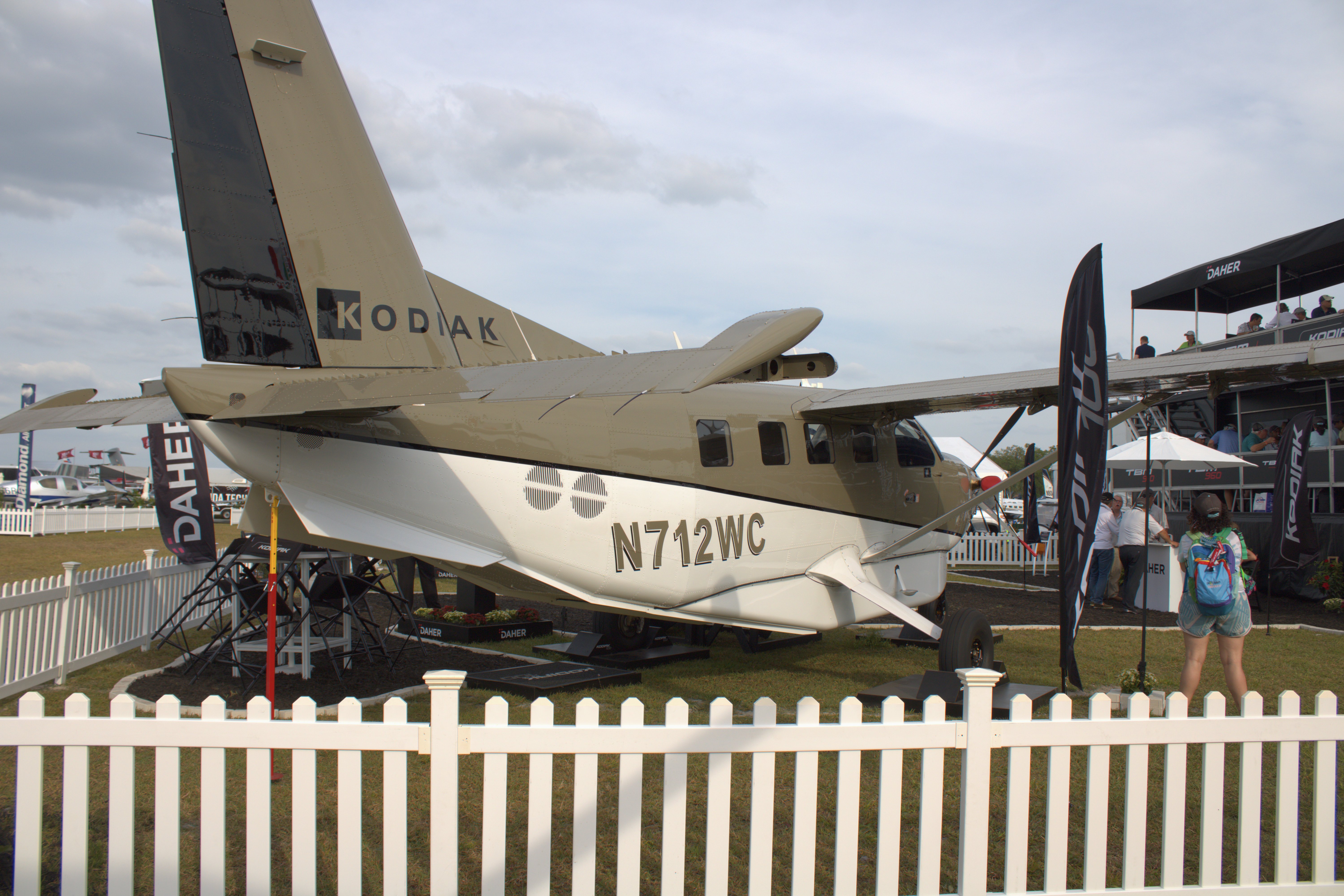
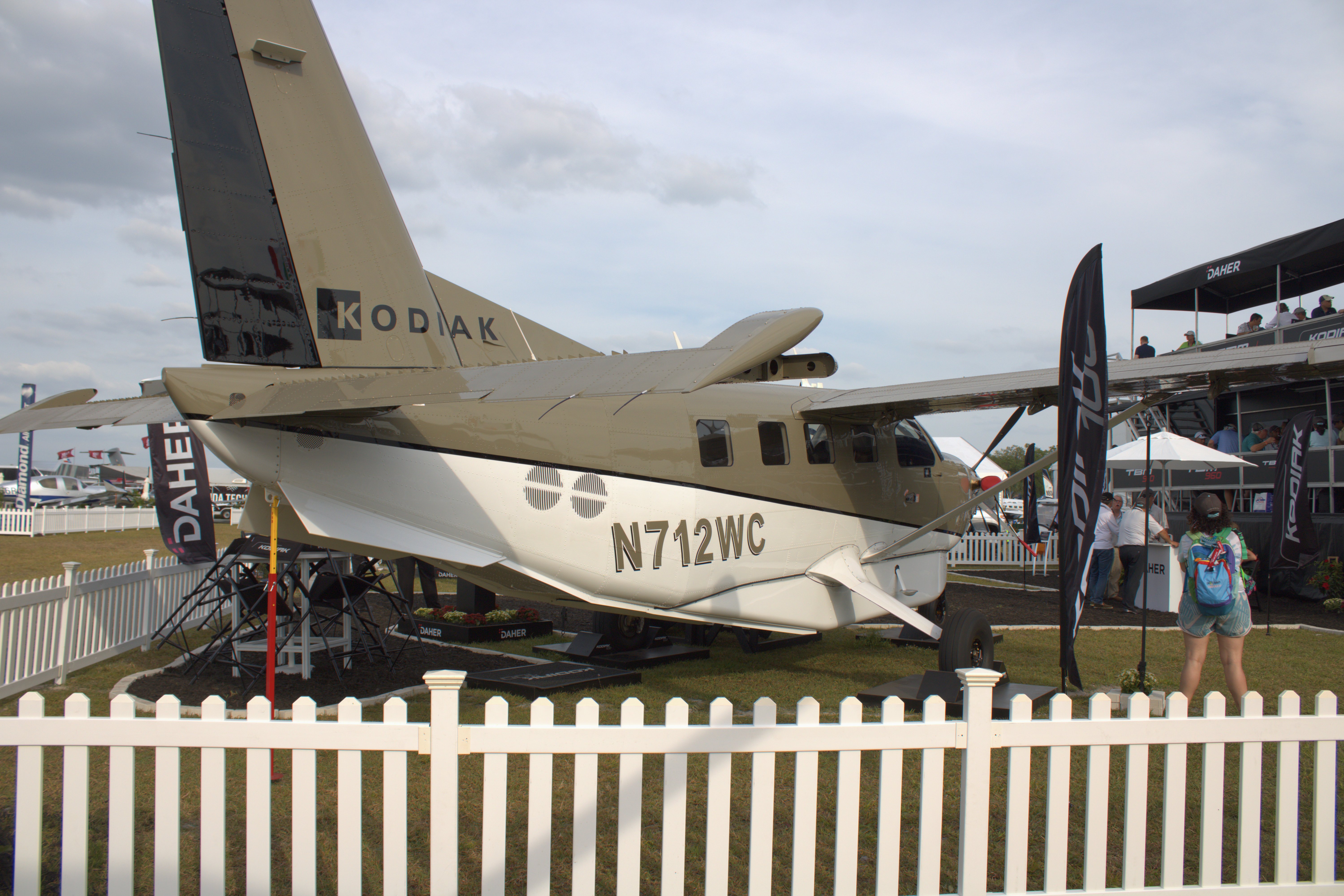
A Kodiak 100 Series III at Sun 'n Fun in Lakeland, Florida, in April 2024. · ZLEA, CC BY-SA 4.0, via Wikimedia Commons
Daher · Turboprop
Kodiak 100 Series III
The current Kodiak 100, third version of the Kodiak utility turboprop, sold alongside the longer, faster Kodiak 900.
The Series III is the most capable Kodiak 100: it leaves the ground in about 934 ft, lifts about 3,100 lb of fuel and load, and runs on one PT6 engine. It is slow and unpressurized; buy it for access and payload, not speed.
Buy it if
You fly into short, rough or high strips, carry people and gear together, want the option of floats, and value a big rear cargo door and simple fixed landing gear more than cruise speed.
Skip it if
Most of your trips run beyond about 600 nm, your passengers expect a toilet or a stand-up cabin, you want to fly above the weather without oxygen, or you want a low purchase price; new ones list near $3.76M.
Biggest compromise
Speed and comfort. The Kodiak cruises at about 174 knots with fixed gear and an unpressurized cabin, so long trips take far longer than in a pressurized single such as a TBM, and climbing much above 12,000 ft means supplemental oxygen for everyone on board.
The numbers that matter
What it costs per year
$185K
at 300 hrs · owner flown
How far it flies
1,132 nm
330–850 nm with passengers
How fast
174 kt
high-speed cruise
Seats
6
6 typical; up to 9 passengers
Pilots needed
1
Certified for one pilot; most are owner-flown or run by government, survey and utility operators.
Price
What one costs to buy
Typical asking price
$0
Other sites
Priced vs call
with a price / call for price
Only two of ten Series III listings show a price, both new 2026 aircraft at $3,761,606; used examples are offered by request.
Price vs its family and alternatives
Scroll to explore · select a jet for details
For sale now
None listed right now
Cost to own
What it costs per year to run
300hours / year
Per year
Per flight hour
Estimate — your operator will quote actual numbers.
Fuel, airframe maintenance and engine overhaul reserve rise as you fly more. Recurrent training, hangar and insurance stay the same however much you fly.
Where the money goes
Partial estimate- Recurrent training$6,0003%
- Hangar$12,6007%
- Insurance$24,50013%
- Fuel$106,17957%
- Airframe maintenance$10,0005%
- Engine overhaul reserve$26,12414%
Fuel is the biggest single cost at 57% of the total.
The JetGrade
70 out of 100 — Typical for its class
Peer group: Cessna Caravan 208, Cessna Grand Caravan EX, Daher Kodiak 900, Pilatus PC-6 Porter, Viking DHC-2 Turbo Beaver
Seven categories at a glance
- - - 70 = typical— This aircraft
Strongest on airport access, weakest on cabin & passenger comfort.
Grades are editorial opinions about the model, not any specific aircraft. Sponsors and affiliates have no input. Reviewed 2026-09-30.
Where it flies
Sample trips and reach
Typical trips on a map
Nonstop
Depends on weight or weather
Fuel stop likely
1 of 6 sample trips are comfortable nonstops.
Sample flight times
- 1.6 hr
Carlsbad → Las Vegas
205 nm · Short hop, well within range
- 4.1 hr
Carlsbad → Aspen
625 nm · Mountain flying; oxygen and weather matter
- 4.9 hr
Santa Ana → San José del Cabo
765 nm · Near its four-passenger limit; headwinds may force stop
- 5.9 hr
Teterboro → West Palm Beach
900 nm · One stop with four aboard; nonstop when lighter
- 7.6 hr
Dallas → Teterboro
1,190 nm · Needs one stop, typically mid-route
- 13.1 hr
Carlsbad → Teterboro
2,100 nm · Two stops typical; a long day
Lineage
What came before and after
2021–present
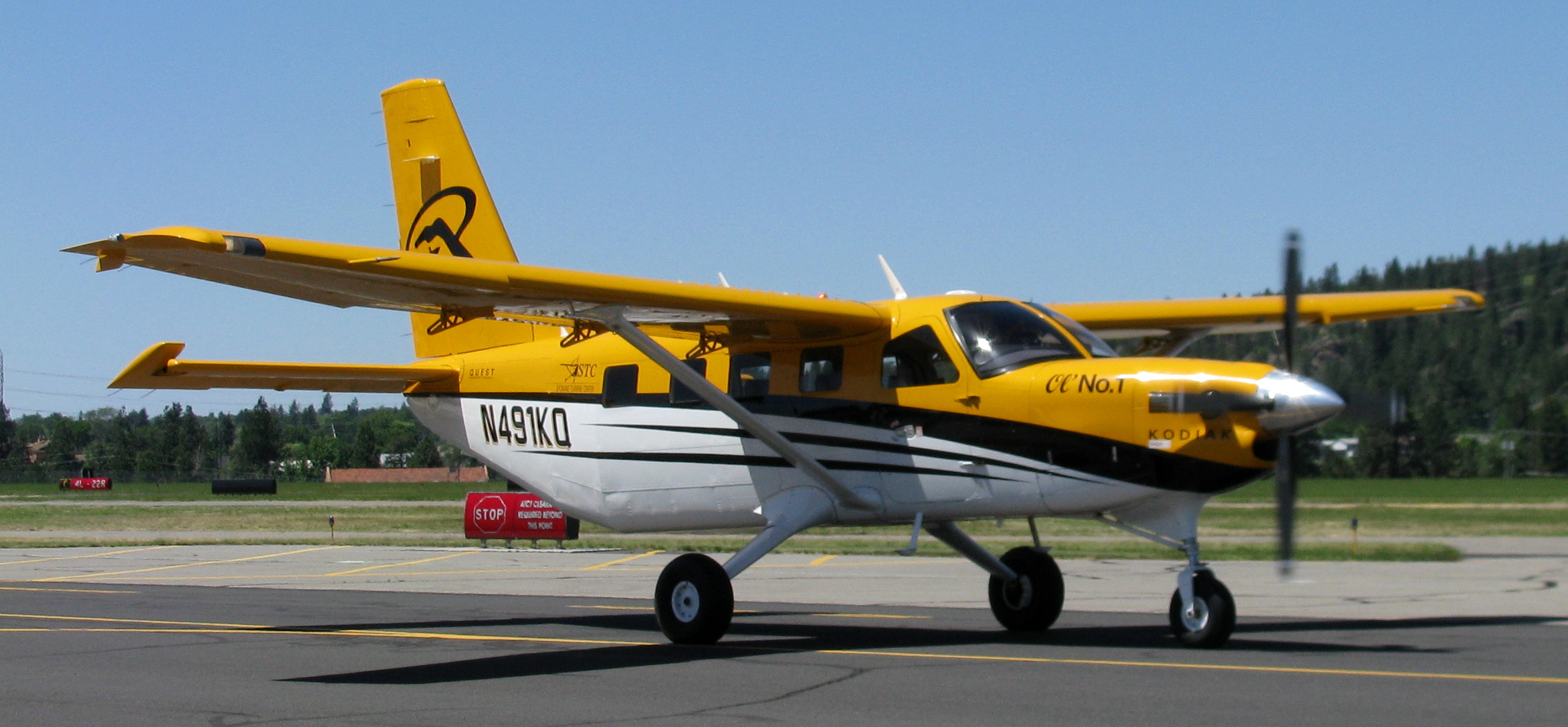
Kodiak 100 Series III
29-inch tires, higher landing weight, air conditioning and radar options.

What changed from the Kodiak 100 Series II
- Larger 29-inch tires for softer, rougher strips.
- Maximum landing weight raised to 7,255 lb, matching maximum takeoff weight.
- Optional eight-seat Executive Edition with club seating and dual-zone air conditioning.
- Envelope protection, level button, SurfaceWatch and synthetic vision standard; Garmin weather radar optional.
- Factory float-ready, with corrosion sealing and more oxygen capacity.
- Five-blade composite Hartzell propeller offered from 2023: about 6 dB quieter, 13 lb lighter.
Size and cabin
How big it is, inside and out
Outside
Silhouette · scaled to length
Length
Wingspan
Height
Inside the cabin
Cabin length
Width
Height
Compare
How it stacks up
This aircraft
Kodiak 100 Series III
- JetGrade
- 70
- Cost per year
- $185K
- Range
- 1,132 nm
- Speed
- 174 kt
- Seats
- 6
- Cabin length
- 15′ 10″
- Pilots
- 1
- Years built
- 2021–now
← Before
- JetGrade
- 73
- Cost per year
- $337K
- Range
- 1,132 nm
- Speed
- 174 kt
- Seats
- 6
- Cabin length
- 15′ 10″
- Pilots
- 1
- Years built
- 2018–2020
Alternative
- JetGrade
- 70
- Cost per year
- $303K
- Range
- 1,129 nm
- Speed
- 210 kt
- Seats
- 6
- Cabin length
- 18′ 11″
- Pilots
- 1
- Years built
- 2022–now
Alternative
- JetGrade
- 77
- Cost per year
- $467K
- Range
- 912 nm
- Speed
- 185 kt
- Seats
- 8
- Cabin length
- 16′ 9″
- Pilots
- 1
- Years built
- 2013–now
Alternative
- JetGrade
- 80
- Cost per year
- $608K
- Range
- 1,889 nm
- Speed
- 290 kt
- Seats
- 6
- Cabin length
- 16′ 11″
- Pilots
- 1
- Years built
- 2020–2025
- Daher Kodiak 900 instead: Same family with a longer cabin and a 900 shp engine; about 210 knots, for roughly $500,000 more when new.
- Cessna Grand Caravan EX instead: Cessna's larger utility turboprop, with more cabin room and Textron's large service network; suits heavier freight and bigger groups.
- Pilatus PC-12 NGX instead: Pressurized, much faster and offered with an enclosed toilet; the pick when passengers fly often and long, and the budget allows.
Gold marks the best figure in each row.
Owning one
What to know before you buy
Engines & inspections
1 × Pratt & Whitney Canada PT6A-34 · 750 shp each
No APUEngine hours until overhaul
- Nose gear fork checks · 200 hr
- Progressive inspection cycle · 400 hr
- Engine overhaul · 3,600 hr
- Five-blade propeller overhaul · 4,000 hr
- Annual inspection every 12 months
New aircraft include Pratt & Whitney's engine service plan for two years or 400 hours; ask whether a used engine is still enrolled.
Known issues
Pitch-trim actuator bulletins
Daher bulletins in 2021 and 2024 required pitch-trim actuator fastener replacement and testing, reaching early Series III aircraft.
2026 flap actuator recall
A March 2026 mandatory bulletin grounded four new Kodiak 100s until faulty flap actuators were replaced free of charge.
Nose gear fork cracks
A 2020 FAA directive requires fork checks every 200 hours unless the redesigned fork is fitted.
Pre-buy checklist
0 of 9 checked
Daher builds the Kodiak in Sandpoint, Idaho, and lists 32 authorized service centers across North America, Europe, Australia, Latin America, Africa and Asia, with round-the-clock technical support.
Review
The full review
Strengths
- Takeoff ground roll of about 934 ft at its 7,255 lb maximum weight, with approval for unimproved strips and floats.
- Useful load of about 3,100 lb in a typically equipped aircraft, loaded through a rear cargo door about 49 inches square.
- One 750 shp PT6A-34 averaging about 45 gallons an hour, with ice protection available for flight into known icing.
Limitations
- Cruises at about 174 knots, so a 900 nm trip takes nearly six hours of flying and usually a fuel stop.
- Unpressurized cabin 4 ft 9 in tall with no toilet; flying high means oxygen for everyone aboard.
- New Series III aircraft list at about $3.76M, up from a $2.28M base price at the 2021 launch.
The Kodiak 100 Series III is the current version of the single-engine utility turboprop that Quest Aircraft first delivered in 2008 and that Daher took over in 2019. Launched in March 2021, it follows the 2018 Series II and sits below the longer, faster Kodiak 900 in Daher's lineup. It is built in Sandpoint, Idaho, around one 750 shp Pratt & Whitney Canada PT6A-34 engine, fixed tricycle landing gear and a strut-braced high wing, and it is certified to be flown by a single pilot.
Pilot's take
The Kodiak flies like a big, honest utility airplane. The high wing and large flaps give slow, stable approaches, and the PT6 with a reversible propeller makes short, rough strips far less dramatic. The G1000 NXi and GFC 700 autopilot, with envelope protection and a level button, keep single-pilot instrument flying manageable. What it asks for is planning: weight and balance matter with a full cabin, oxygen is part of any flight much above 12,000 ft, and at about 174 knots headwinds shape the day. Treat it as a well-mannered truck, not a fast cruiser.
Who this is for
Owner-pilots with backcountry homes, lodges or island strips, plus government, survey, skydiving and tour operators who need to move people and cargo into places most aircraft cannot reach, mostly on trips under about 600 nm.

Ask about this aircraft
Answers come only from our research file on the Daher Kodiak 100 Series III.
Your earlier questionsOwners
Private to verified ownersOwn a Daher Kodiak 100 Series III? Verify with its FAA registration to join the owners' thread and the real-cost poll.