
Silhouette traced from a photo of the closest sister model, the Turbo Commander 690, by DUNCAN KIRK from Coeur d'Alene, United States · CC BY 4.0
Gulfstream American · Turboprop
Commander 900 (690D)
One of the last Commanders: a longer-cabin, higher-pressure version of the Jetprop 840, built from 1982 to 1985.
The Commander 900 is quick for a turboprop and keeps the cabin near 8,100 ft at its 31,000 ft ceiling. The trade-offs are a tiny, 40-plus-year-old fleet, heavy structural inspections and little payload once the tanks are full.
Buy it if
You fly four or five people 300 to 800 nm at a time, want a quick turboprop with a low cabin altitude, and can budget about $796,000 a year at 300 hours with a hired pilot.
Skip it if
You need full tanks and a full cabin at the same time, want plenty of examples to choose from, or would rather avoid fatigue and tail-crack inspections on an airframe over 40 years old.
Biggest compromise
Payload with full tanks. With the 474-gallon fuel system full, a typical equipped 900 has only about 200 lb left for people and bags, so four passengers means leaving fuel behind.
The numbers that matter
Purchase price
$1.44M–$1.44M
guide value (Aircraft Cost Calculator)
What it costs per year
$796K
at 300 hrs · one professional pilot
How far it flies
1,966 nm
864–900 nm with passengers
How fast
286 kt
high-speed cruise
Seats
5
5 typical (up to 10 certified)
Pilots needed
1
Certified for one pilot with no type rating; a high-altitude endorsement is required.
Price
What one costs to buy
Guide value
$1.44M–$1.44M
Other sites
Priced vs call
with a price / call for price
Only one of three listings shows a price: $1,575,000 for a 1983 example with a Garmin panel. Aircraft Cost Calculator's average is $1,440,000.
Price vs its family and alternatives
Scroll to explore · select a jet for details
Commander 900 (690D) · This aircraft
$1.44M–$1.44M guide
Guide value, not a listed asking price.
The most expensive here; the Commander 1000 (695A/695B) is the next step down.
For sale now
None listed right now
Cost to own
What it costs per year to run
300hours / year
Per year
Per flight hour
Estimate — your operator will quote actual numbers.
Fuel, airframe maintenance, engine overhaul reserve and trip costs rise as you fly more. One professional pilot, recurrent training, hangar, insurance and subscriptions and databases stay the same however much you fly.
Where the money goes
- One professional pilot$141,59518%
- Recurrent training$18,0002%
- Hangar$34,5004%
- Insurance$24,0003%
- Subscriptions and databases$8,5001%
- Fuel$184,59923%
- Airframe maintenance$264,00033%
- Engine overhaul reserve$83,25010%
- Trip costs$37,2505%
Airframe maintenance is the biggest single cost at 33% of the total.
The JetGrade
67 out of 100 — Below its class average
Peer group: Commander 840, Commander 1000, King Air E90, Cheyenne IIXL (PA-31T2), MU-2 Marquise (long body)
Seven categories at a glance
- - - 70 = typical— This aircraft
Strongest on speed & trip time, weakest on reliability & support.
Grades are editorial opinions about the model, not any specific aircraft. Sponsors and affiliates have no input. Reviewed 2026-10-08.
Where it flies
Sample trips and reach
Typical trips on a map
Nonstop
Depends on weight or weather
Fuel stop likely
Out of reach
2 of 8 sample trips are comfortable nonstops.
Sample flight times
- 1.2 hr
Carlsbad → Las Vegas
205 nm · Short hop, well within range
- 2.8 hr
Carlsbad → Aspen
625 nm · Mountain airport; hot days may limit weight
- 3.3 hr
Santa Ana → San José del Cabo
765 nm · Nonstop with four; modest fuel margin
- 4.2 hr
Teterboro → West Palm Beach
900 nm · At the edge of range with four; plan a stop
- 5.3 hr
Dallas → Teterboro
1,190 nm · One stop, typically in the Southeast or Midwest
- 6.1 hr
Teterboro → San Juan
1,410 nm · One fuel stop on the way south
- 9.1 hr
Carlsbad → Teterboro
2,100 nm · Two stops across the country
Los Angeles → Honolulu
2,215 nm · Beyond range; no fuel stops over the Pacific
Lineage
What came before and after

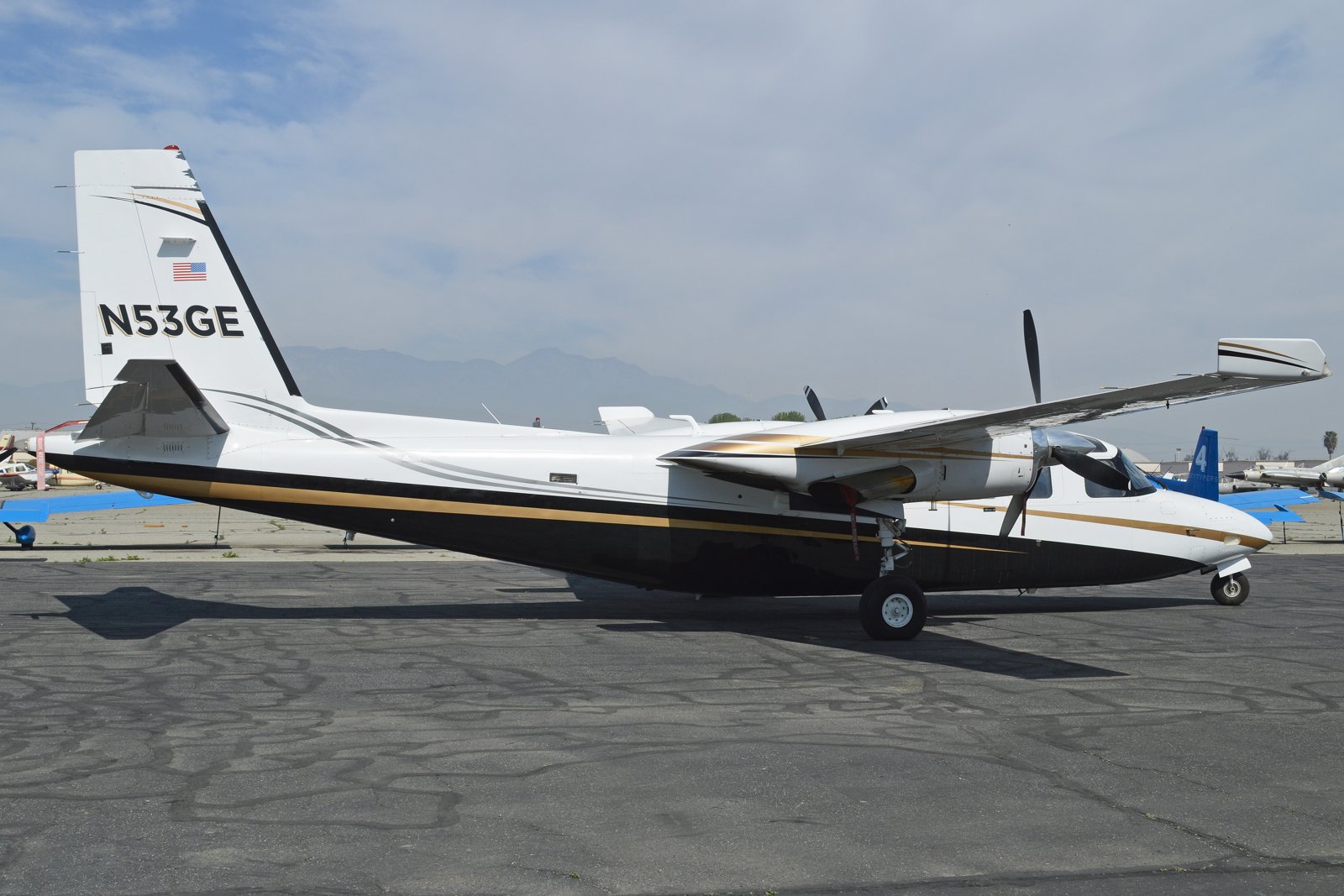


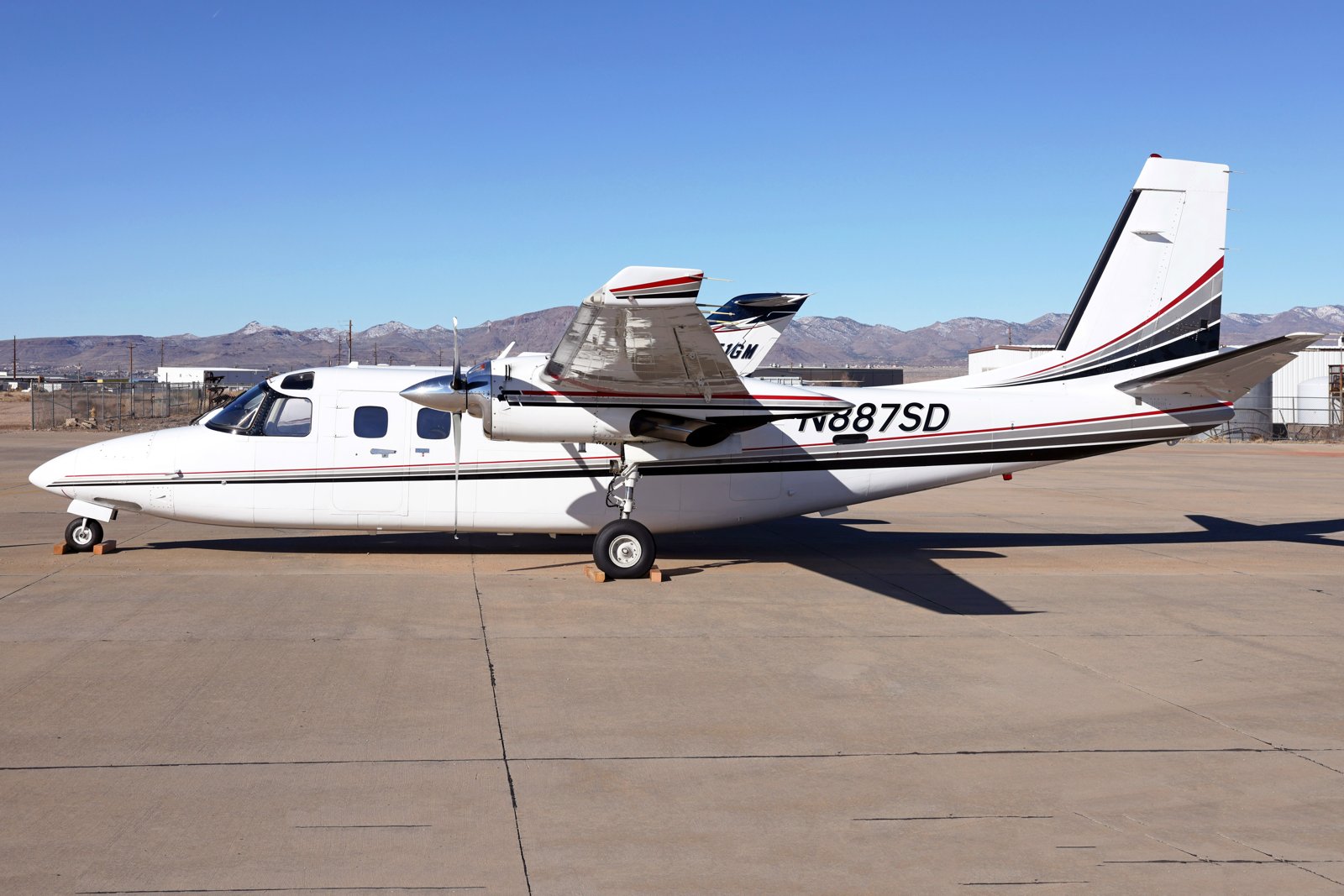
1982–1985
Commander 900
Cabin 3 ft longer than the 840, with 6.7 psi pressurization.
What changed from the Commander 840
- Rear pressure bulkhead moved about 36 in aft, making the cabin about 3 ft longer.
- Aisle floor lowered about 4 in, and the picture window replaced by individual windows.
- Pressurization raised from 5.2 to 6.7 psi for a lower cabin altitude.
- Higher ramp, takeoff, landing and zero-fuel weights than the 840.
- Same Garrett Dash 5 engines, now rated at 748 shp instead of 717.5 shp.
- Higher certified altitude and design speeds; landing lights moved to the nose.
Size and cabin
How big it is, inside and out
Outside
Silhouette · scaled to length
Length
Wingspan
Height
Inside the cabin
Cabin length
Width
Height
Compare
How it stacks up
This aircraft
Commander 900 (690D)
- JetGrade
- 67
- Price
- $1.44M–$1.44M guide
- Cost per year
- $796K
- Range
- 1,966 nm
- Speed
- 286 kt
- Seats
- 5
- Cabin length
- 17′ 3″
- Pilots
- 1
- Years built
- 1982–1985
← Before
- JetGrade
- 68
- Price
- $1.29M
- Cost per year
- $611K
- Range
- 1,780 nm
- Speed
- 290 kt
- Seats
- 6
- Cabin length
- 14′ 3″
- Pilots
- 1
- Years built
- 1979–1985
Alternative
- JetGrade
- 70
- Price
- $1.15M–$1.53M guide
- Cost per year
- $380K
- Range
- 2,080 nm
- Speed
- 308 kt
- Seats
- 5
- Cabin length
- 17′ 3″
- Pilots
- 1
- Years built
- 1981–1985
- Commander 1000 instead: The same longer cabin with factory Garrett Dash 10 engines and more power, from a larger production run.
- Commander 840 instead: The same exterior with a cabin 3 ft shorter but 70 cu ft of baggage space; a 1981 example was listed at $1,295,000.
Gold marks the best figure in each row.
Owning one
What to know before you buy
Engines & inspections
2 × Garrett (Honeywell) TPE331-5-254K · 748 shp each
No APUEngine hours until overhaul
- Periodic inspection · 150 hr
- Elevator bob-weight arm check · 150 hr
- Vertical fin crack inspection · 500 hr
- Engine overhaul, Dash 10 · 5,000 hr
- Landing gear inspection every 60 months
No aircraft for sale lists an engine program. All three for sale in October 2026 had TPE331-10 engines with a 5,000-hour overhaul interval.
Known issues
Structural fatigue inspection program
A 2003 FAA directive, set after fatigue testing, puts most 900s on wing and fuselage inspections of 270 to 416 work-hours.
Tail and rear fuselage cracking
The FAA proposed new crack inspections in November 2025 after earlier fin modifications did not stop cracking across the 690 series.
Vertical fin inspections
Fin crack inspections are due every 500 hours once the fin reaches 2,000 hours unless modified.
Pre-buy checklist
0 of 10 checked
Twin Commander Aircraft, now part of Ontic, holds the type certificate and supports the fleet with parts, kits and nine factory-authorized service centers.
Review
The full review
Strengths
- Pressurized to 6.7 psi, so the cabin stays near 8,100 ft at the 31,000 ft ceiling.
- Maximum cruise of about 286 kt at 10,000 ft, and about 265 kt up at 31,000 ft.
- A 17 ft 3 in cabin, 3 ft longer than the Commander 840's, inside the same exterior.
Limitations
- Only about 200 lb of payload with the 474-gallon tanks full; four passengers means carrying less fuel.
- Just 42 were built and 12 remain on the US register, so good examples are scarce.
- Fatigue inspections, fin checks and a proposed tail-crack directive add cost and downtime.
The Commander 900, certified as the Model 690D in December 1981, was one of the last new Commanders and one of only two designed under Gulfstream ownership. Gulfstream built 42 of them between February 1982 and September 1985 at Bethany and Oklahoma City, Oklahoma. It shares its exterior with the Jetprop 840, but the rear pressure bulkhead moved about 36 inches aft, the aisle floor dropped about four inches and the pressure vessel was strengthened from 5.2 to 6.7 psi. The result is a cabin about 3 ft longer inside the same 43 ft fuselage. Its sibling, the Commander 1000, uses the same cabin with more powerful Garrett Dash 10 engines.
Pilot's take
The 900 flies like the other late Commanders: the high wing gives a clear view of the ground, the airplane is steady in cruise, and the Garrett engines answer the power levers quickly. Plan on climbing into the mid-20s or higher to get the most from the pressurization and the fuel burn. Respect the speed limits in rough air; the FAA added a turbulence placard after two Commander 840 losses during fast descents. Type-specific simulator training is offered for the 690 series and is worth doing every year, because engine-out handling at low speed leaves little room for rust.
Who this is for
An experienced owner-pilot or small company flying four or five people on regional trips, who values speed and a low cabin altitude and will work with a Twin Commander specialist shop on a rare, aging airframe.

Ask about this aircraft
Answers come only from our research file on the Commander 900.
Your earlier questionsOwners
Private to verified ownersOwn a Gulfstream American Commander 900 (690D)? Verify with its FAA registration to join the owners' thread and the real-cost poll.