
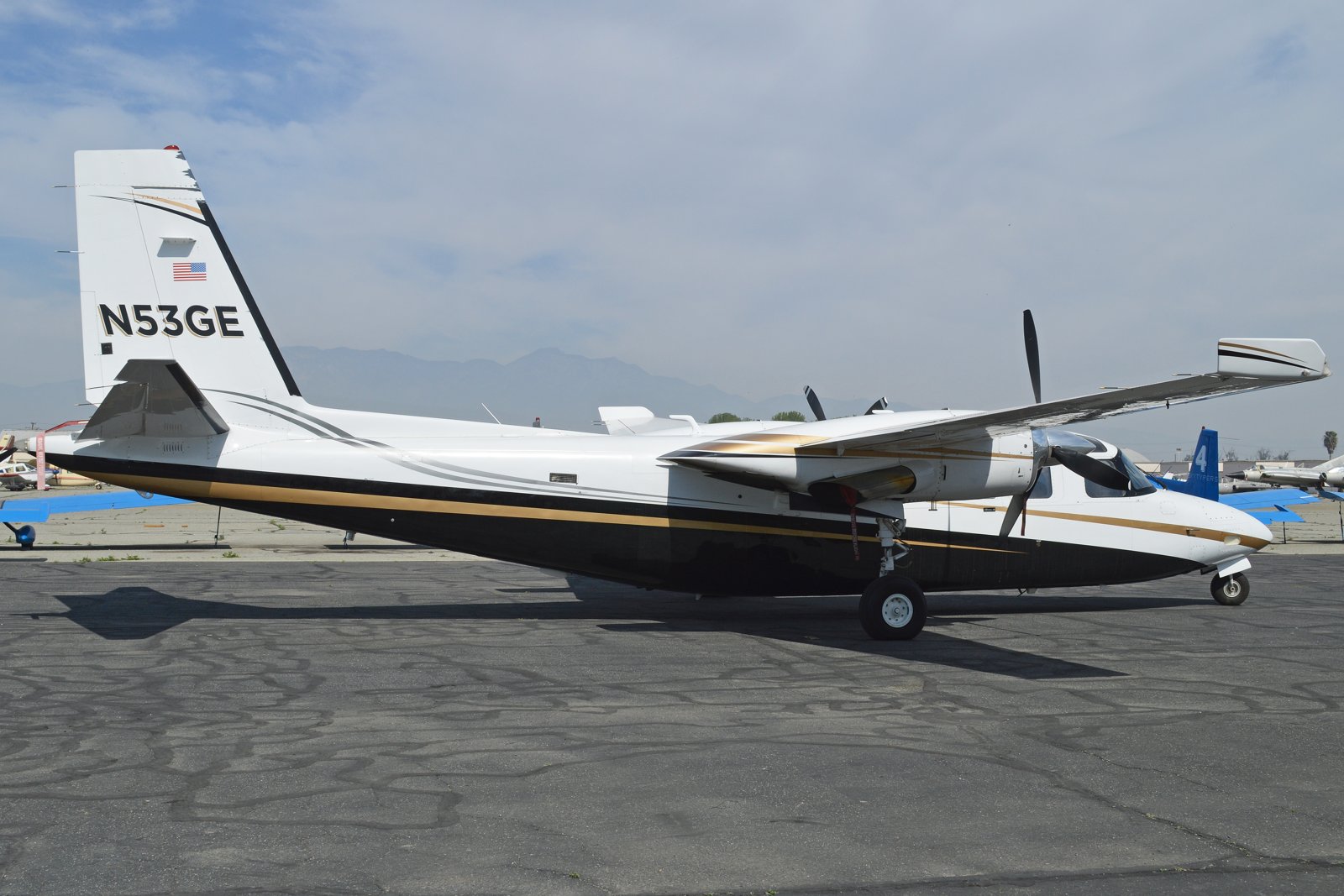
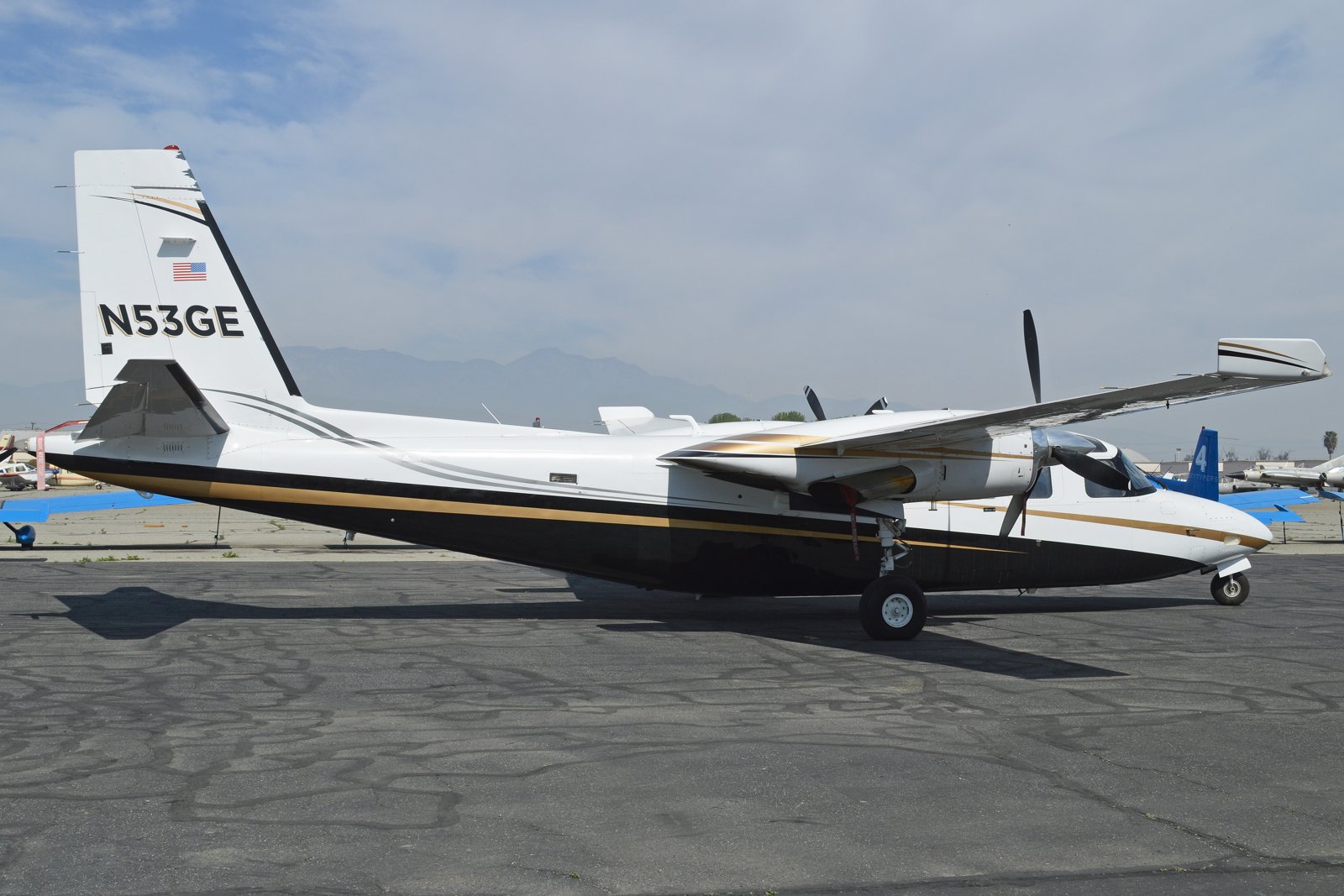
Commander 690B N53GE, built in 1977, at Chino, California, in February 2016. · Alan Wilson, CC BY-SA 2.0, via Wikimedia Commons
Rockwell · Turboprop
Commander 690B
Third and final version of the original 690 Turbo Commander, before Gulfstream's Jetprop 840 and 980.
The 690B gives you twin-turboprop speed and short-runway ability for under $1M, often well under. The price of entry is an aging airframe with serious FAA structural orders that every buyer must confirm are fully done.
Buy it if
You want a pressurized twin turboprop for under $1M, usually fly four to six people on trips under about 1,000 nm, and value short-runway access and quick cruise over cabin height.
Skip it if
You need a stand-up cabin, plan full-cabin trips beyond about 800 nm, or would rather not trace a 45-year-old airframe's structural repairs line by line before you buy.
Biggest compromise
Structure. The 690 series carries FAA orders on the wing-to-fuselage area, the engine mounts and the tail, and the FAA proposed new tail inspections in November 2025.
The numbers that matter
Purchase price
$638K
typical asking · $410K–$825K
What it costs per year
$777K
at 300 hrs · one professional pilot
How far it flies
1,467 nm
800–1,150 nm with passengers
How fast
284 kt
high-speed cruise
Seats
6
6 typical (up to 8)
Pilots needed
1
Flown by one pilot with no type rating needed; insurers expect turbine experience and yearly training.
Price
What one costs to buy
Typical asking price
$637,500
Where asking prices sit
Low
$410K
Typical
$638K
High
$825K
Most asking prices fall inside this band.
Other sites
Priced vs call
with a price / call for price
Four of six listings show prices, from $410,000 to $825,000. Dash 10 engines and Garmin panels lead; the lowest is a stored former utility aircraft.
Price vs its family and alternatives
Scroll to explore · select a jet for details
Commander 690B · This aircraft
$638K
The least expensive here; next up is the Commander 980 (695).
For sale now
None listed right now
Cost to own
What it costs per year to run
300hours / year
Per year
Per flight hour
Estimate — your operator will quote actual numbers.
Fuel, maintenance, engine and propeller reserves and airport fees and miscellaneous rise as you fly more. One professional pilot, recurrent training, hangar and insurance stay the same however much you fly.
Where the money goes
Partial estimate- One professional pilot$143,19018%
- Recurrent training$18,0002%
- Hangar$35,0005%
- Insurance$15,8052%
- Fuel$214,39828%
- Maintenance$268,80035%
- Engine and propeller reserves$70,3509%
- Airport fees and miscellaneous$11,7882%
Maintenance is the biggest single cost at 35% of the total.
The JetGrade
66 out of 100 — Below its class average
Peer group: Beechcraft King Air 200, Cessna Conquest II, Piper Cheyenne II, Mitsubishi MU-2 Marquise
Seven categories at a glance
- - - 70 = typical— This aircraft
Strongest on airport access, weakest on reliability & support.
Grades are editorial opinions about the model, not any specific aircraft. Sponsors and affiliates have no input. Reviewed 2026-10-08.
Where it flies
Sample trips and reach
Typical trips on a map
Nonstop
Depends on weight or weather
Fuel stop likely
3 of 6 sample trips are comfortable nonstops.
Sample flight times
- 1.2 hr
Carlsbad → Las Vegas
205 nm · Short hop, well within range
- 2.8 hr
Carlsbad → Aspen
625 nm · Mountain airport; summer loads depend on weather
- 3.3 hr
Santa Ana → San José del Cabo
765 nm · Comfortably nonstop with four aboard
- 3.8 hr
Teterboro → West Palm Beach
900 nm · Nonstop with four; strong headwinds tighten reserves
- 5.4 hr
Dallas → Teterboro
1,190 nm · Usually one stop with four aboard
- 8.8 hr
Carlsbad → Teterboro
2,100 nm · Needs one stop, typically mid-continent
Lineage
What came before and after


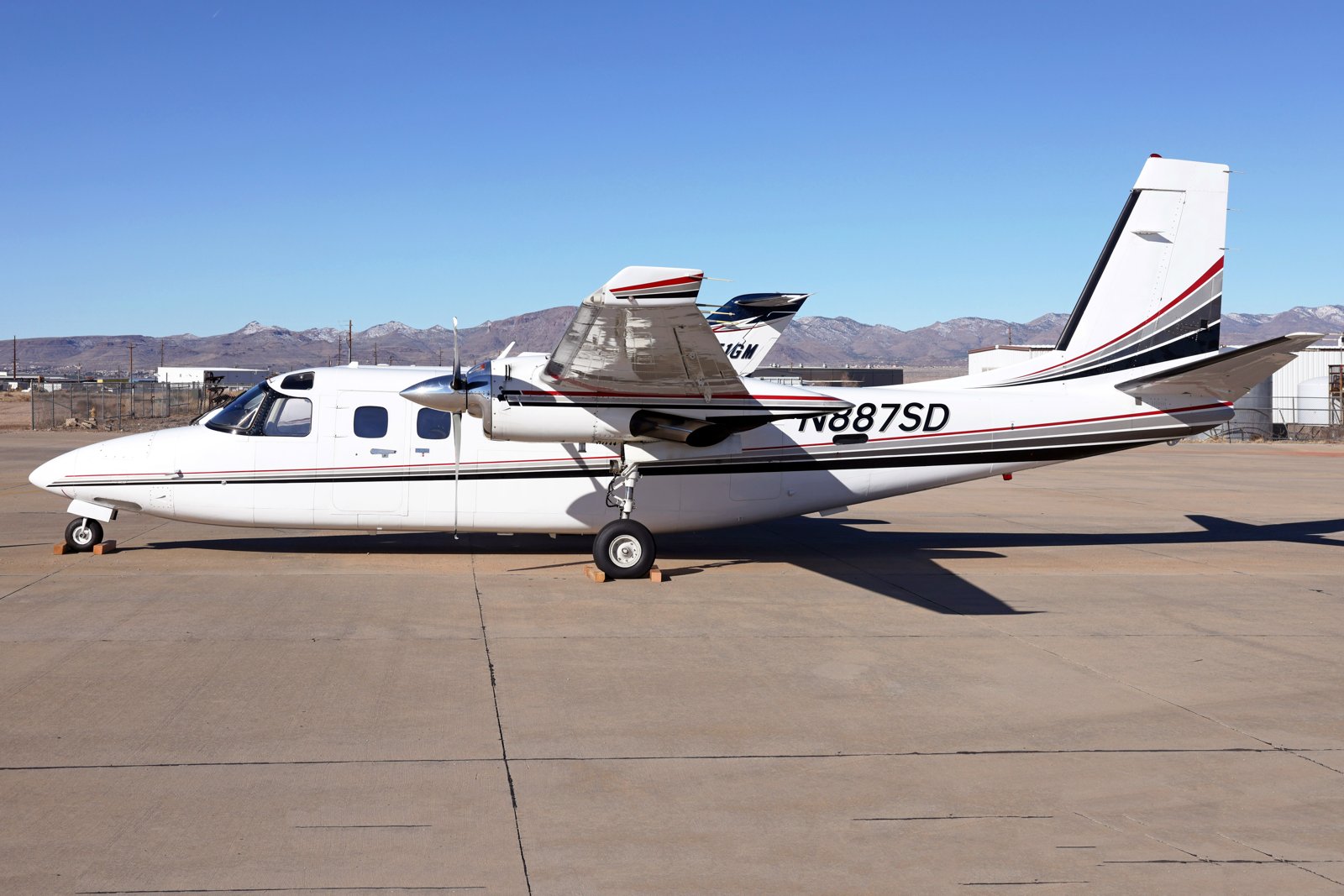
1976–1979
Commander 690B
Quieter cabin, internal lavatory, more weight and baggage space.


What changed from the Commander 690 / 690A
- Takeoff and landing weights rose about 125 lb, to 10,325 lb maximum takeoff.
- Quieter cabin from tuned vibration dampers and added soundproofing.
- Internal lavatory added to the cabin.
- Larger baggage space and interior moisture control.
- Offered with TPE331-5-251K or -252K engines of about 717 shp each.
- Sold in Executive I and Executive II equipment packages.
Size and cabin
How big it is, inside and out
Outside
Silhouette · scaled to length
Length
Wingspan
Height
Inside the cabin
Cabin length
Width
Height
Compare
How it stacks up
This aircraft
Commander 690B
- JetGrade
- 66
- Price
- $638K
- Cost per year
- $777K
- Range
- 1,467 nm
- Speed
- 284 kt
- Seats
- 6
- Cabin length
- 14′ 3″
- Pilots
- 1
- Years built
- 1976–1979
← Before
- JetGrade
- 67
- Cost per year
- $595K
- Range
- 1,471 nm
- Speed
- 285 kt
- Seats
- 6
- Cabin length
- 14′ 3″
- Pilots
- 1
- Years built
- 1971–1976
After →
- JetGrade
- 68
- Price
- $1.29M
- Cost per year
- $611K
- Range
- 1,780 nm
- Speed
- 290 kt
- Seats
- 6
- Cabin length
- 14′ 3″
- Pilots
- 1
- Years built
- 1979–1985
Alternative
- JetGrade
- 69
- Price
- $825K–$825K guide
- Cost per year
- $915K
- Range
- 1,800 nm
- Speed
- 315 kt
- Seats
- 6
- Cabin length
- 14′ 3″
- Pilots
- 1
- Years built
- 1979–1981
Alternative
- JetGrade
- 72
- Price
- $1.28M
- Cost per year
- $729K
- Range
- 1,490 nm
- Speed
- 289 kt
- Seats
- 6
- Cabin length
- 16′ 8″
- Pilots
- 1
- Years built
- 1974–1981
Alternative
- JetGrade
- 72
- Price
- $1.36M
- Cost per year
- $671K
- Range
- 2,000 nm
- Speed
- 314 kt
- Seats
- 7
- Cabin length
- 12′ 10″
- Pilots
- 1
- Years built
- 1977–1986
- Commander 980 (695) instead: Same family with Dash 10 engines and a longer wing; faster and longer-legged, and outside the 690B's wing-to-fuselage order.
- Beechcraft King Air 200 instead: Taller, wider cabin and a far larger support network, at roughly double the asking price and higher fuel burn.
- Cessna Conquest II instead: Same Honeywell engine family in a low-wing cabin with more range; a common cross-shop for owner-flown trips.
Gold marks the best figure in each row.
Owning one
What to know before you buy
Engines & inspections
2 × Honeywell TPE331-5-251K or -252K · 718 shp each
No APUEngine hours until overhaul
- 150-hour inspection · 150 hr
- 450-hour inspection · 450 hr
- Engine hot section inspection · 1,800 hr
- Landing gear inspection · 3,000 hr
- Engine overhaul · 5,400 hr
- Spar corrosion inspection every 36 months
No factory pay-per-hour plan is published for the original engines; owners usually set aside reserves. Dash 10 conversions qualify for capped overhaul plans.
Known issues
Wing-to-fuselage cracking fix
An FAA order requires a permanent structural fix; the FAA estimated $58,090 in labor and parts before repairs. Confirm it is complete.
Tail structure cracking
The FAA proposed 50-hour tail inspections for the whole family in November 2025; the final fix is undecided, so more work may follow.
Engine mount strap corrosion
An FAA order requires inspecting and replacing corroded engine mount straps and modifying both wings. Check the records.
Pre-buy checklist
0 of 9 checked
Twin Commander Aircraft, part of ONTIC in Creedmoor, North Carolina, still holds the design and supplies parts through factory-authorized service centers. Honeywell and its shops support the engines.
Review
The full review
Strengths
- Cruises about 283 knots at 20,000 feet while burning roughly 86 gallons of jet fuel an hour.
- Short-runway friendly: about 2,259 ft to clear a 50-ft obstacle and 2,100 ft to land over one.
- Asking prices of $410,000 to $825,000 buy a pressurized twin turboprop with reversing propellers.
Limitations
- The cabin is 1.36 m (4 ft 6 in) tall and 1.22 m wide, so nobody stands up inside.
- With full fuel, about 577 lb remains for people and bags, roughly three adults.
- FAA structural orders on the wings, engine mounts and tail can add $58,000 or more per aircraft.
The Commander 690B is the last of the original Turbo Commanders, built by Rockwell International from 1976 to 1979. It took the 690A, already a fast pressurized twin turboprop, and refined it: about 125 lb more takeoff and landing weight, a quieter cabin with tuned vibration dampers and more soundproofing, a larger baggage area and an internal lavatory. Roughly 217 were built before Gulfstream American replaced it with the longer-wing Jetprop 840 and the Dash 10-powered Jetprop 980.
Pilot's take
From the left seat, the 690B is a hot-rod with an old soul. The single-shaft Honeywell engines answer the power levers instantly and give strong reverse on landing, and the big wing makes slow approaches feel settled. You need good habits: single-shaft starts are hard on batteries, so ground power helps, and the engine failure drill relies on the automatic drag-reducing system working as designed. Cruise near 280 knots feels quick for a turboprop. We would only fly one whose structural paperwork is complete.
Who this is for
Owner-pilots and small companies moving four to six people on regional trips who want turbine speed and short-runway access on a modest budget, and who will pay for a thorough pre-purchase inspection.

Ask about this aircraft
Answers come only from our research file on the Commander 690B.
Your earlier questionsOwners
Private to verified ownersOwn a Rockwell Commander 690B? Verify with its FAA registration to join the owners' thread and the real-cost poll.