
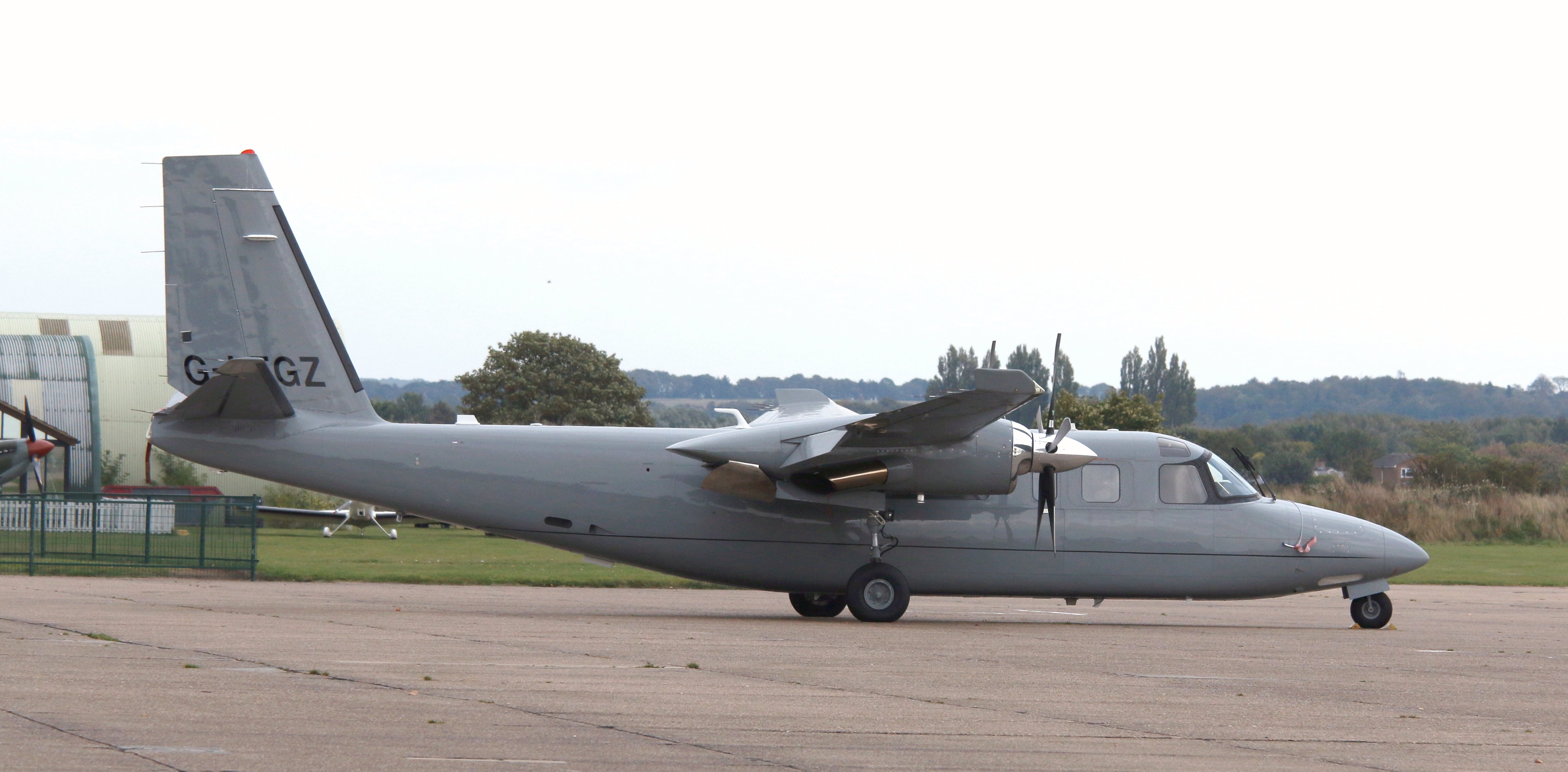
Commander 840 G-LEGZ at Duxford, England, in October 2021. · Photo: Steve Knight from Halstead, United Kingdom, via Wikimedia Commons, CC BY 2.0
Gulfstream American · Turboprop
Commander 840 (690C)
The fourth pressurized Jetprop Commander, between the 690B and the stretched Commander 900.
The 840 delivers 290-knot speed, short-runway manners and a comfortable six-seat cabin for about $1 million, but its 40-year-old airframe, rising engine bills and small fleet make a careful inspection and a healthy maintenance budget essential.
Buy it if
You want a fast pressurized twin you can fly yourself, usually carry four to six people 300–900 nm, use short or rural runways, and have a Twin Commander service center within reach.
Skip it if
You need full seats and 1,500 nm legs, want a stand-up cabin and enclosed lavatory, or cannot absorb a surprise six-figure engine or structural bill on a $1 million airplane.
Biggest compromise
Fuel and people compete for the same weight. With standard tanks full, only about 500 lb is left for passengers and bags, so the published 1,780 nm range becomes roughly 1,000 nm with four aboard.
The numbers that matter
Purchase price
$1.29M
typical asking · $995K–$1.29M
What it costs per year
$611K
at 300 hrs · one professional pilot
How far it flies
1,780 nm
875–1,000 nm with passengers
How fast
290 kt
high-speed cruise
Seats
6
6 typical (up to 9 by interior)
Pilots needed
1
Flown by one pilot; no type rating needed because it weighs under 12,500 lb.
Price
What one costs to buy
Typical asking price
$1,295,000
Where asking prices sit
Low
$995K
Typical
$1.29M
High
$1.29M
Most asking prices fall inside this band.
Other sites
Priced vs call
with a price / call for price
All four 840s advertised in October 2026 have the more powerful Dash 10 engine upgrade; no original-engine examples were offered.
Price vs its family and alternatives
Scroll to explore · select a jet for details
Commander 840 (690C) · This aircraft
$1.29M
Sits between the Commander 980 (695) and the Conquest II (441).
For sale now
None listed right now
Cost to own
What it costs per year to run
300hours / year
Per year
Per flight hour
Estimate — your operator will quote actual numbers.
Fuel, airframe and propeller maintenance, engine overhaul set-aside and trip fees rise as you fly more. One professional pilot, recurrent training, hangar, insurance and databases and tracking stay the same however much you fly.
Where the money goes
- One professional pilot$145,00024%
- Recurrent training$12,5002%
- Hangar$36,0006%
- Insurance$35,0006%
- Databases and tracking$6,7501%
- Fuel$185,76030%
- Airframe and propeller maintenance$105,00017%
- Engine overhaul set-aside$66,66611%
- Trip fees$18,7503%
Fuel is the biggest single cost at 30% of the total.
The JetGrade
68 out of 100 — Below its class average
Peer group: King Air B200, Cessna Conquest II, Piper Cheyenne III, MU-2 Marquise, Merlin IIIB / IIIC
Seven categories at a glance
- - - 70 = typical— This aircraft
Strongest on airport access, weakest on range & payload.
Grades are editorial opinions about the model, not any specific aircraft. Sponsors and affiliates have no input. Reviewed 2026-10-08.
Where it flies
Sample trips and reach
Typical trips on a map
Nonstop
Depends on weight or weather
Fuel stop likely
2 of 6 sample trips are comfortable nonstops.
Sample flight times
- 1.2 hr
Carlsbad → Las Vegas
205 nm · Short hop well inside its range
- 2.7 hr
Carlsbad → Aspen
625 nm · Hot-and-high Aspen; depends on weight and temperature
- 3.2 hr
Santa Ana → San José del Cabo
765 nm · Comfortable nonstop with four aboard
- 3.7 hr
Teterboro → West Palm Beach
900 nm · Near four-passenger limit; headwinds can force a stop
- 5.3 hr
Dallas → Teterboro
1,190 nm · One stop with four aboard, typically mid-Atlantic
- 9.0 hr
Carlsbad → Teterboro
2,100 nm · Two stops with four aboard; one if light
Lineage
What came before and after



1979–1985
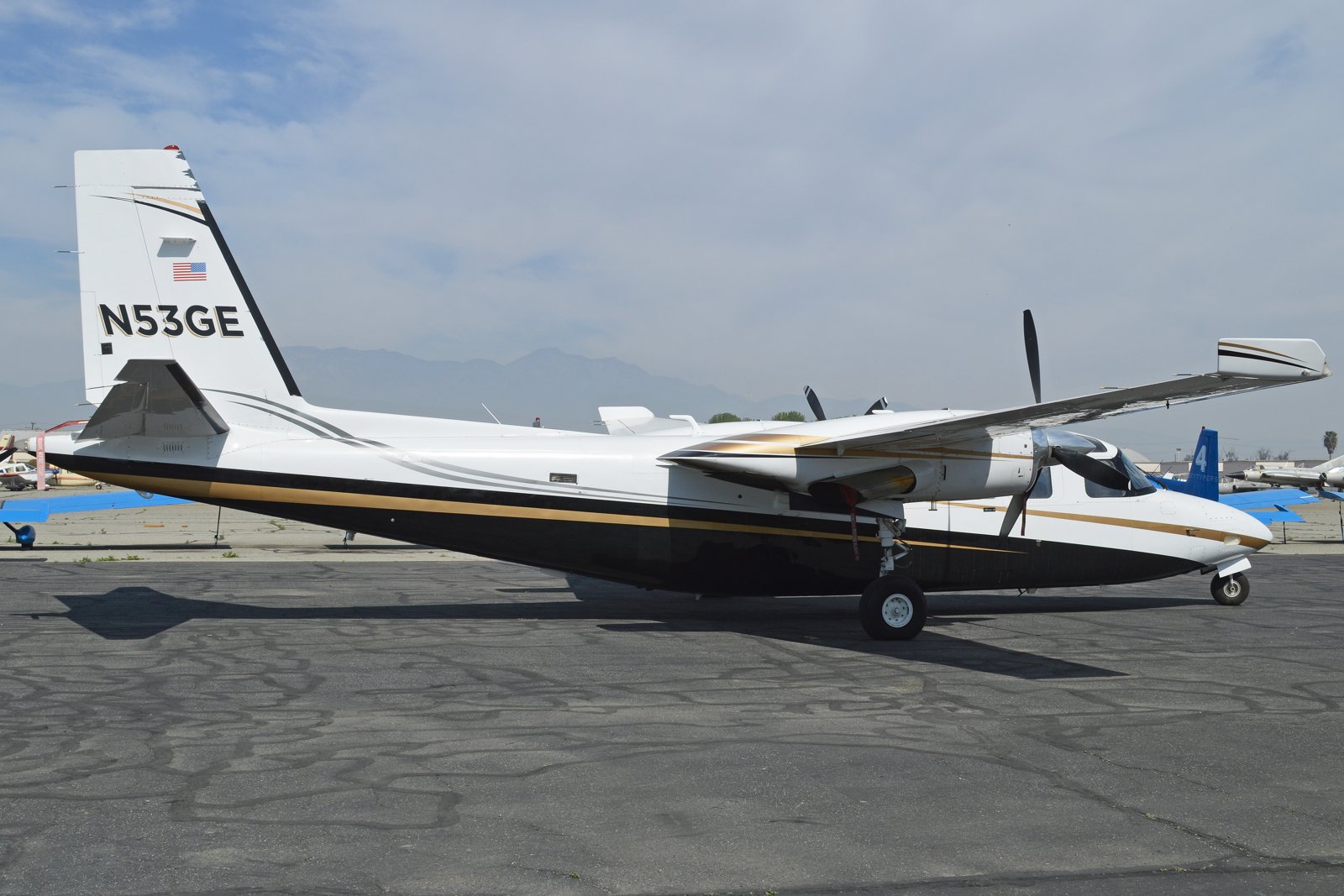
Commander 840
Longer wing with winglets, wet-wing fuel and updated engines.
What changed from the Commander 690B
- Thirty-inch wingtip extensions with small winglets stretch the span to 52 ft 1 in.
- New outboard wet-wing tanks lift standard usable fuel to about 425 gallons, from 384.
- TPE331-5-254K engines, 717.5 shp each, turn new Dowty Rotol 106-inch propellers.
- Two independent fuel systems with inline boost pumps replace the single-tank design.
- Lighter direct-bleed pressurization, a longer baggage floor and approval for 11 seats.
- Redesigned engine nacelles and nose-mounted landing and recognition lights.
Size and cabin
How big it is, inside and out
Outside
Silhouette · scaled to length
Length
Wingspan
Height
Inside the cabin
Cabin length
Width
Height
Compare
How it stacks up
This aircraft
Commander 840 (690C)
- JetGrade
- 68
- Price
- $1.29M
- Cost per year
- $611K
- Range
- 1,780 nm
- Speed
- 290 kt
- Seats
- 6
- Cabin length
- 14′ 3″
- Pilots
- 1
- Years built
- 1979–1985
← Before
- JetGrade
- 66
- Price
- $638K
- Cost per year
- $777K
- Range
- 1,467 nm
- Speed
- 284 kt
- Seats
- 6
- Cabin length
- 14′ 3″
- Pilots
- 1
- Years built
- 1976–1979
After →
- JetGrade
- 67
- Price
- $1.44M–$1.44M guide
- Cost per year
- $796K
- Range
- 1,966 nm
- Speed
- 286 kt
- Seats
- 5
- Cabin length
- 17′ 3″
- Pilots
- 1
- Years built
- 1982–1985
Alternative
- JetGrade
- 69
- Price
- $825K–$825K guide
- Cost per year
- $915K
- Range
- 1,800 nm
- Speed
- 315 kt
- Seats
- 6
- Cabin length
- 14′ 3″
- Pilots
- 1
- Years built
- 1979–1981
Alternative
- JetGrade
- 74
- Price
- $1.85M
- Cost per year
- $827K
- Range
- 1,580 nm
- Speed
- 291 kt
- Seats
- 7
- Cabin length
- 16′ 8″
- Pilots
- 1
- Years built
- 1981–2009
Alternative
- JetGrade
- 72
- Price
- $1.36M
- Cost per year
- $671K
- Range
- 2,000 nm
- Speed
- 314 kt
- Seats
- 7
- Cabin length
- 12′ 10″
- Pilots
- 1
- Years built
- 1977–1986
- Commander 980 instead: The same short cabin with factory Dash 10 engines, so it is faster and stronger at high airports, usually for more money.
- King Air B200 instead: A larger, taller cabin and the deepest support network of any turboprop twin, at higher purchase and running costs.
- Cessna Conquest II instead: Similar TPE331 engines and 290-knot class speed from a larger fleet with broad Cessna factory support.
Gold marks the best figure in each row.
Owning one
What to know before you buy
Engines & inspections
2 × Honeywell (Garrett) TPE331-5-254K · 718 shp each
No APUEngine hours until overhaul
- 150-hour inspection · 150 hr
- Engine overhaul · 5,400 hr
- Landing gear overhaul every 60 months
Overhaul costs are per engine, based on current TPE331 shop pricing. Many 840s now carry the more powerful Dash 10 upgrade.
Known issues
Tail structure fatigue cracks
In November 2025 the FAA proposed a prompt detailed inspection of tail structure on all 690-series Commanders, including the 840.
Engine shop costs climbing
Recent TPE331-10 overhauls average about $487,000 per engine, some above $700,000; budget well ahead.
Aging rubber fuel bladders
The 690 family relies on many rubber fuel cells that harden with age and need periodic replacement.
Pre-buy checklist
0 of 9 checked
Twin Commander Aircraft, now part of Ontic, still holds the type certificate and supplies parts and upgrade kits; authorized service centers and major TPE331 engine shops support the fleet.
Review
The full review
Strengths
- Covers about 1,000 nm with four passengers at 275–290 knots, quick for a twin turboprop of its era.
- Clears a 50 ft obstacle in about 1,830 ft, and reversing propellers shorten landings on tight runways.
- A 4 ft 6 in tall cabin, large windows and a heated 600 lb baggage hold keep six people comfortable.
Limitations
- Full standard tanks leave only about 500 lb of payload, so longer trips mean fewer passengers.
- Original engines begin losing power around 6,000 ft, hurting summer departures from airports like Aspen.
- Engine overhauls now run roughly $400,000–550,000 each, and the FAA proposed a tail inspection in 2025.
The Commander 840 is the 1979 to 1985 version of the Twin Commander turboprop, built first by Rockwell and then by Gulfstream American, with 122 delivered. It took the earlier 690B and added a longer wing with small winglets, extra fuel tanks in the outer wing, two independent fuel systems and an updated version of the Garrett TPE331 engine at 717.5 shaft horsepower a side. In the family it sits between the 690B and the stretched Commander 900, with the Commander 980 offering the same short cabin on more powerful engines.
Pilot's take
The 840 rewards a pilot who knows the TPE331. Starts go best on ground power, and the single-shaft engines call for disciplined handling, but the automatic negative-torque system drives a failed engine's propeller toward feather and cuts drag quickly. The big wing makes slow, stable approaches easy, and reverse thrust stops it short. Expect about 275 knots in the low twenties on original engines; the Dash 10 upgrade is what turns it into a true 300-knot airplane that climbs well out of mountain airports. With a full cabin, plan fuel conservatively.
Who this is for
An experienced owner-pilot or small company flying 200–400 hours a year on regional trips with four to six people, who values speed and runway flexibility over cabin size and has a Twin Commander shop nearby.

Ask about this aircraft
Answers come only from our research file on the Commander 840.
Your earlier questionsOwners
Private to verified ownersOwn a Gulfstream American Commander 840 (690C)? Verify with its FAA registration to join the owners' thread and the real-cost poll.