
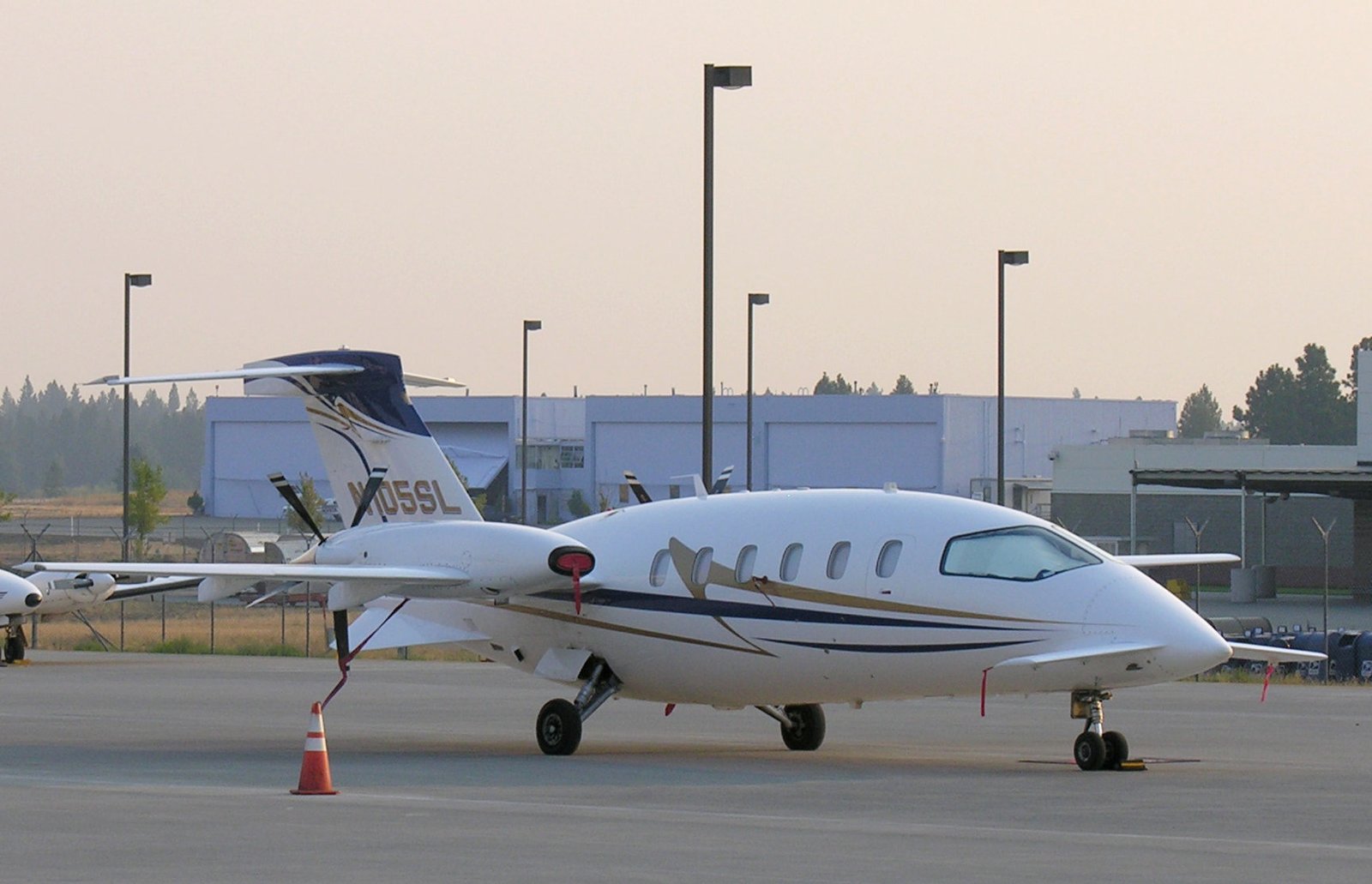
An original P.180 Avanti on the ramp at Spokane, Washington, in 2006. · Photo: Greg Goebel, CC BY-SA 2.0, via Wikimedia Commons
Piaggio · Turboprop
P.180 Avanti (I)
The first production version of Piaggio's three-wing pusher turboprop, built from 1990 to 2005 before the Avanti II.
The first Avanti still delivers near-jet speed, a tall cabin and modest fuel bills for under $2 million. Thin payload, no anti-skid brakes, recurring tail corrosion checks and a maker still rebuilding support make it a buy for informed owners.
Buy it if
You fly two to five people on trips under about 1,200 nm, want jet-like speed without jet fuel bills, and will base the aircraft near a shop that knows Avantis.
Skip it if
You need to fill every seat with full fuel, often use short or snowy runways, or want the deep parts and service network of a King Air.
Biggest compromise
Support and upkeep. Piaggio spent 2018 to 2025 in administration, parts were already thin, and since 2023 the FAA has ordered repeated corrosion and crack inspections on the tail.
The numbers that matter
Purchase price
$1.74M
typical asking · $1.58M–$2.5M
What it costs per year
$1.12M
at 300 hrs · two professional pilots
How far it flies
1,750 nm
About 1,250 nm with four passengers
How fast
395 kt
high-speed cruise
Seats
6
6 typical (up to 9)
Pilots needed
1
Certified for one pilot, and US pilots need no separate type rating to fly it.
Price
What one costs to buy
Typical asking price
$1,737,500
Where asking prices sit
Low
$1.58M
Typical
$1.74M
High
$2.5M
Most asking prices fall inside this band.
Other sites
Priced vs call
with a price / call for price
Four priced listings in October 2026 ran $1.59M to $2.5M; the low-time $2.5M aircraft is mid-inspection. Avanti IIs ask roughly $3.2M to $4M.
Price vs its family and alternatives
Scroll to explore · select a jet for details
P.180 Avanti (I) · This aircraft
$1.74M
The least expensive here; next up is the King Air 300.
For sale now
None listed right now
Cost to own
What it costs per year to run
300hours / year
Per year
Per flight hour
Estimate — your operator will quote actual numbers.
Fuel, airframe maintenance, engine overhaul set-aside and propellers, landing gear and fees rise as you fly more. Two pilots, salary and benefits, training, hangar, insurance and databases and subscriptions stay the same however much you fly.
Where the money goes
- Two pilots, salary and benefits$407,00036%
- Training$35,0003%
- Hangar$37,5003%
- Insurance$27,5002%
- Databases and subscriptions$11,5001%
- Fuel$261,76523%
- Airframe maintenance$180,00016%
- Engine overhaul set-aside$121,50011%
- Propellers, landing gear and fees$37,5003%
Two pilots, salary and benefits is the biggest single cost at 36% of the total.
The JetGrade
67 out of 100 — Below its class average
Peer group: Beechcraft King Air B200, Beechcraft King Air 300, Beechcraft King Air 350, Piper Cheyenne 400LS, Cessna Conquest II (441)
Seven categories at a glance
- - - 70 = typical— This aircraft
Strongest on speed & trip time, weakest on reliability & support.
Grades are editorial opinions about the model, not any specific aircraft. Sponsors and affiliates have no input. Reviewed 2026-10-08.
Where it flies
Sample trips and reach
Typical trips on a map
Nonstop
Depends on weight or weather
Fuel stop likely
3 of 6 sample trips are comfortable nonstops.
Sample flight times
- 1.0 hr
Carlsbad → Las Vegas
205 nm
- 2.2 hr
Carlsbad → Aspen
625 nm · Hot-and-high Aspen; summer loads depend on weather
- 2.6 hr
Santa Ana → San José del Cabo
765 nm
- 3.0 hr
Teterboro → West Palm Beach
900 nm
- 3.9 hr
Dallas → Teterboro
1,190 nm · Near its limit; headwinds or heavy loads need a stop
- 6.7 hr
Carlsbad → Teterboro
2,100 nm · Needs one stop, typically mid-continent
Lineage
What came before and after

1990–2005
P.180 Avanti (I)
The original three-wing pusher: PT6A-66 engines and a Collins tube cockpit.

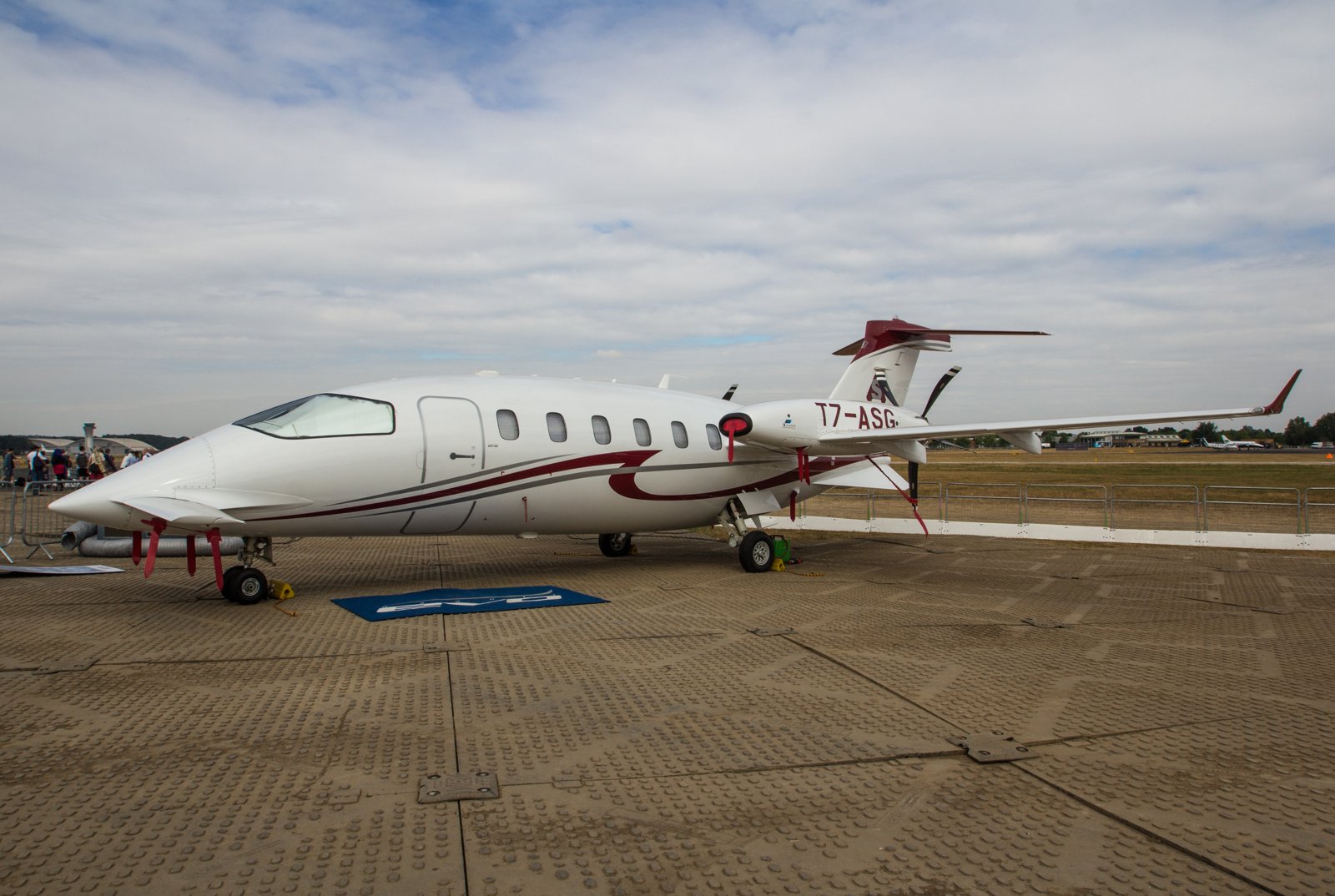
Announced 2026
P.180 Avanti NX
Planned update with new avionics, interior and Wi-Fi.
Size and cabin
How big it is, inside and out
Outside
Silhouette · scaled to length
Length
Wingspan
Height
Inside the cabin
Cabin length
Width
Height
Compare
How it stacks up
This aircraft
P.180 Avanti (I)
- JetGrade
- 67
- Price
- $1.74M
- Cost per year
- $1.12M
- Range
- 1,750 nm
- Speed
- 395 kt
- Seats
- 6
- Cabin length
- 14′ 11″
- Pilots
- 1
- Years built
- 1990–2005
After →
- JetGrade
- 70
- Price
- $1.7M–$3.65M guide
- Cost per year
- $1.01M
- Range
- 1,470 nm
- Speed
- 400 kt
- Seats
- 7
- Cabin length
- 14′ 11″
- Pilots
- 1
- Years built
- 2005–2014
Alternative
- JetGrade
- 73
- Price
- $1.75M–$1.86M guide
- Cost per year
- $1.07M
- Range
- 1,965 nm
- Speed
- 315 kt
- Seats
- 8
- Cabin length
- 16′ 8″
- Pilots
- 1
- Years built
- 1984–1994
- Piaggio P.180 Avanti II instead: Same airframe with Pro Line 21 avionics, standard collision and terrain alerting and a little more speed, at roughly twice the asking price.
- Beechcraft King Air 300 instead: About 80 knots slower but carries far more, with deep parts support, a large owner community and similar annual running costs.
Gold marks the best figure in each row.
Owning one
What to know before you buy
Engines & inspections
2 × Pratt & Whitney Canada PT6A-66 · 850 shp each
Engine hours until overhaul
- A check · 200 hr
- Vertical tail corrosion check · 660 hr
- C check · 1,800 hr
- Engine hot section · 1,800 hr
- D check · 3,600 hr
- Engine overhaul · 3,600 hr
- 5-year inspection every 60 months
- Landing gear overhaul every 144 months
Pratt & Whitney's published fixed-price overhaul offers do not list this engine, so ask whether each engine is on a pay-per-hour plan.
Known issues
Support network rebuilding
Piaggio was in administration from 2018 to 2025; its new owner Baykar says service lost customer trust and is rebuilding support.
Tail corrosion directives
Since 2023 the FAA has required repeated corrosion and crack checks on the vertical and horizontal tail.
Runway directional control
No anti-skid brakes and no nosewheel steering on landing; most recorded accidents are runway loss-of-control events.
Pre-buy checklist
0 of 10 checked
Piaggio's new owner Baykar is rebuilding support after years of administration. In the US, Oklahoma-based Intercontinental Jet Services is an authorized service center; Rheinland Air Service covers Europe.
Review
The full review
Strengths
- Cruises at up to 395 knots at 28,000 ft, about 80 knots faster than a King Air 300.
- Cabin is 5 ft 9 in tall and about 6 ft wide, with a private toilet at the back.
- Piaggio quoted 658 lb of fuel for a 300 nm trip with four passengers, frugal for its speed.
Limitations
- With full tanks it carries only about 1,100 lb of people and bags after the pilot.
- No anti-skid brakes; most recorded mishaps involve losing directional control on the runway.
- Since 2023 the FAA has ordered repeated tail corrosion checks, some every 660 hours or 26 months.
The P.180 Avanti is Piaggio's three-wing twin turboprop: a small fixed front wing, a straight main wing behind the cabin, a T-tail, and two Pratt & Whitney Canada PT6A-66 engines of 850 shp each turning five-blade propellers that push from behind the wing. Development began with Gates Learjet in the early 1980s, Piaggio finished it alone, and certification came in Italy and the US in 1990. About 105 of these original models were built between 1990 and 2005 before the Avanti II took over with Pro Line 21 avionics, followed by the winglet-equipped EVO.
Pilot's take
The Avanti rewards a pilot who flies it by the numbers. It climbs and cruises like a light jet, pitch forces are on the heavy side, and the high wing loading gives a firm, steady ride in bumps. On the ground it asks for more care than a King Air: there is no anti-skid, steering is off-limits on the landing roll, and directional control on wet or snowy pavement depends on rudder, reverse and brakes. We would want type-specific training, conservative runway margins and a mechanic who knows the airplane.
Who this is for
An owner-pilot or small flight department that values speed and fuel efficiency, flies one to five people on regional trips, and will manage an older, specialized airframe with a trusted Avanti shop.

Ask about this aircraft
Answers come only from our research file on the P.180 Avanti (I).
Your earlier questionsOwners
Private to verified ownersOwn a Piaggio P.180 Avanti (I)? Verify with its FAA registration to join the owners' thread and the real-cost poll.