
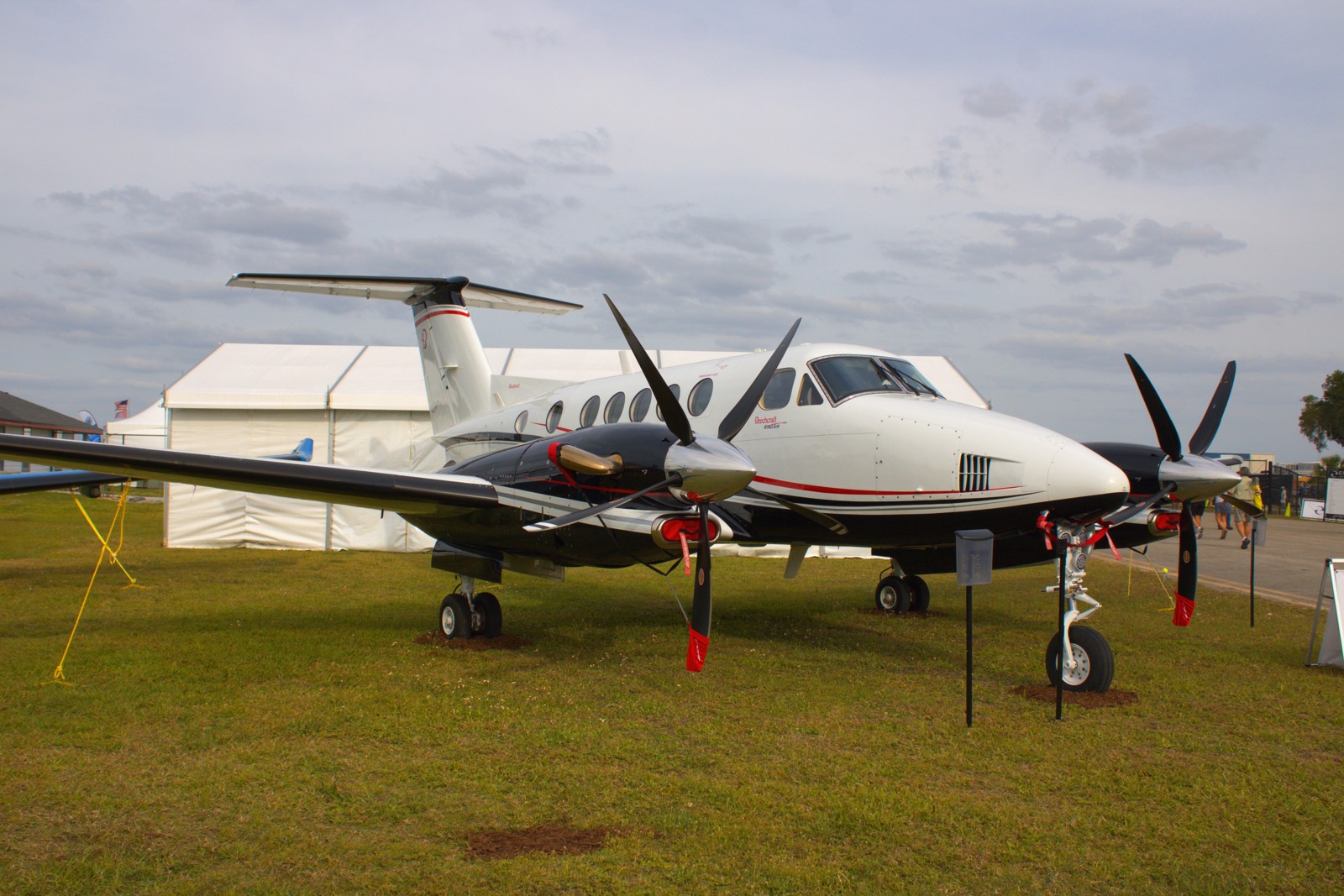
A King Air 300LW, the 12,500 lb version, on display at Sun 'n Fun in April 2024. · ZLEA · CC BY 4.0 (https://creativecommons.org/licenses/by/4.0) · resized
Beechcraft · Turboprop
King Air 300
The first King Air 300-series model: B200 cabin with bigger engines, replaced by the stretched 350.
The best value in fast King Airs: B200-size cabin, 350-class engines and payload, at roughly B200 prices. Buy one with its wing modification done, a modern panel and well-documented engines, and it will carry a full load of people quickly for years.
Buy it if
You fly four to eight people on 300- to 1,200-nm trips, often into shorter or higher airports, and value speed, payload and King Air toughness over cabin size.
Skip it if
Your passengers want to stand up or use a private lavatory, you need 1,500 nm nonstop with a full cabin, or you want a newer airframe with factory support plans.
Biggest compromise
You get 350-class engines and payload inside the shorter B200 cabin. At 4 ft 10 in tall and 16 ft 8 in long, with a belted toilet seat near the door, it feels cramped on long trips with every seat filled, and the youngest airframes are now over 30 years old.
The numbers that matter
Purchase price
$1.75M–$1.86M
guide value (PlanePhD and AircraftCostCalculator)
What it costs per year
$1.07M
at 300 hrs · two professional pilots
How far it flies
1,965 nm
1,350–1,500 nm with passengers
How fast
315 kt
high-speed cruise
Seats
8
8 typical, up to 10 by interior
Pilots needed
1
Certified for one pilot; many insurers and corporate operators prefer two.
Price
What one costs to buy
Guide value
$1.75M–$1.86M
Other sites
7% of the fleet
Priced vs call
with a price / call for price
Most sellers ask buyers to call. One public ask was $1.795 million for an upgraded 1989 example; published guide values run $1.75–1.86 million.
Price vs its family and alternatives
Scroll to explore · select a jet for details
King Air 300 · This aircraft
$1.75M–$1.86M guide
Guide value, not a listed asking price.
Sits between the Cheyenne 400LS (PA-42-1000) and the King Air B200.
For sale now
None listed right now
Cost to own
What it costs per year to run
300hours / year
Per year
Per flight hour
Estimate — your operator will quote actual numbers.
Fuel, maintenance, engine program and other rise as you fly more. Crew, training, hangar, insurance and subscriptions stay the same however much you fly.
Where the money goes
- Crew$407,00038%
- Training$30,0003%
- Hangar$39,4004%
- Insurance$20,0502%
- Subscriptions$10,0001%
- Fuel$264,30025%
- Maintenance$171,00016%
- Engine program$109,50010%
- Other$15,0001%
Crew is the biggest single cost at 38% of the total.
The JetGrade
73 out of 100 — Slightly above its class
Peer group: Beechcraft King Air B200, Beechcraft King Air 350, Cessna Conquest II (441), Piper Cheyenne 400LS, Piaggio P.180 Avanti
Seven categories at a glance
- - - 70 = typical— This aircraft
Strongest on reliability & support, weakest on running costs.
Grades are editorial opinions about the model, not any specific aircraft. Sponsors and affiliates have no input. Reviewed 2026-10-04.
Where it flies
Sample trips and reach
Typical trips on a map
Nonstop
Depends on weight or weather
Fuel stop likely
Out of reach
4 of 8 sample trips are comfortable nonstops.
Sample flight times
- 1.1 hr
Carlsbad → Las Vegas
205 nm · Easy hop with full cabin
- 2.6 hr
Carlsbad → Aspen
625 nm · Hot-and-high; depends on weight and weather
- 3.1 hr
Santa Ana → San José del Cabo
765 nm · Comfortable nonstop with four passengers
- 3.6 hr
Teterboro → West Palm Beach
900 nm · Comfortable nonstop with four passengers
- 4.6 hr
Dallas → Teterboro
1,190 nm · Comfortable nonstop eastbound with four passengers
- 5.4 hr
Teterboro → San Juan
1,410 nm · Near maximum range; often flown with one stop
- 8.2 hr
Carlsbad → Teterboro
2,100 nm · Needs one stop, typically mid-continent
Los Angeles → Honolulu
2,215 nm · Beyond range over open ocean
Lineage
What came before and after


1984–1994
King Air 300
Bigger engines, four-blade props, 14,000 lb in the B200 body.

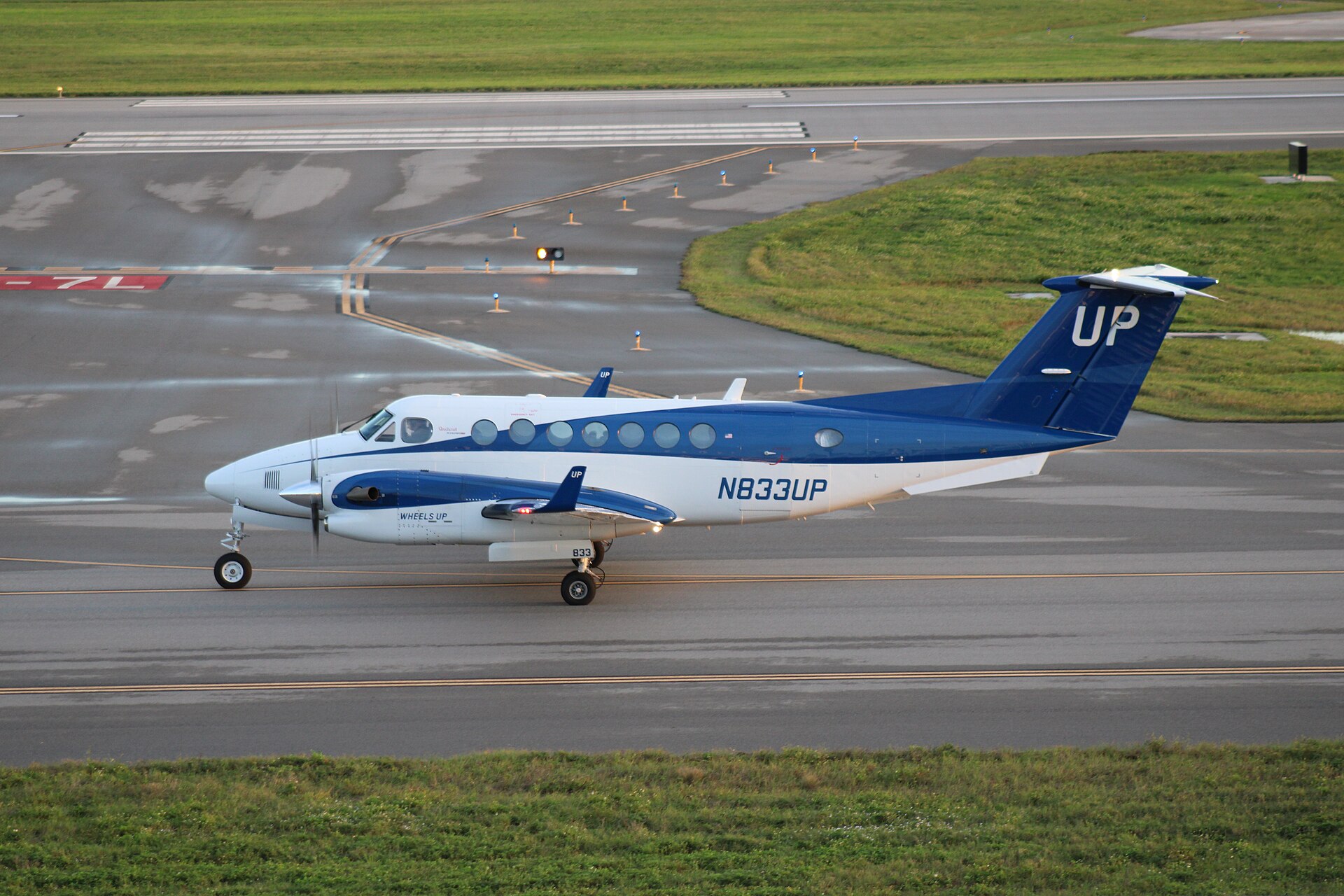
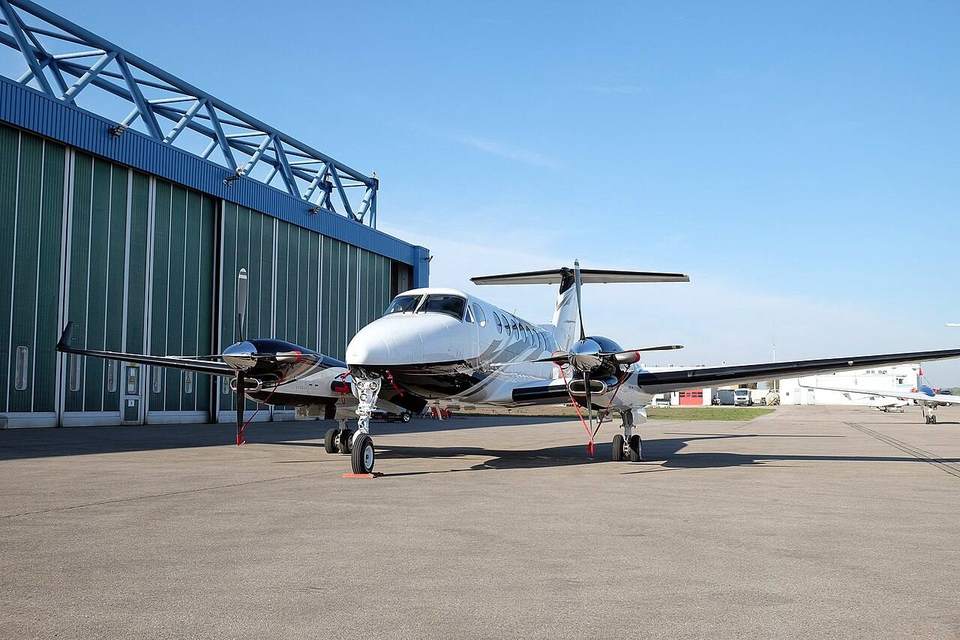
What changed from the King Air B200
- PT6A-60A engines at 1,050 horsepower each, up from 850, in more efficient pitot-style cowlings.
- Four-blade propellers replaced three-blade units, and a multi-bus electrical system was added.
- Maximum takeoff weight rose from 12,500 lb to 14,000 lb; zero-fuel weight to 11,500 lb.
- A 3,000-psi hydraulic landing gear replaced the earlier electro-mechanical system.
- Wing leading edge moved forward five inches.
Size and cabin
How big it is, inside and out
Outside
Silhouette · scaled to length
Length
Wingspan
Height
Inside the cabin
Cabin length
Width
Height
Compare
How it stacks up
This aircraft
King Air 300
- JetGrade
- 73
- Price
- $1.75M–$1.86M guide
- Cost per year
- $1.07M
- Range
- 1,965 nm
- Speed
- 315 kt
- Seats
- 8
- Cabin length
- 16′ 8″
- Pilots
- 1
- Years built
- 1984–1994
← Before
- JetGrade
- 74
- Price
- $1.85M
- Cost per year
- $827K
- Range
- 1,580 nm
- Speed
- 291 kt
- Seats
- 7
- Cabin length
- 16′ 8″
- Pilots
- 1
- Years built
- 1981–2009
After →
- JetGrade
- 76
- Price
- $3.25M
- Cost per year
- $1.13M
- Range
- 1,806 nm
- Speed
- 312 kt
- Seats
- 8
- Cabin length
- 19′ 6″
- Pilots
- 1
- Years built
- 1990–2009
Alternative
- JetGrade
- 66
- Price
- $1.47M–$1.53M guide
- Cost per year
- $851K
- Range
- 1,640 nm
- Speed
- 340 kt
- Seats
- 6
- Cabin length
- 18′ 1″
- Pilots
- 1
- Years built
- 1984–1992
- Beechcraft King Air 350 instead: About three feet more cabin, two extra windows a side and longer range, with the same engines; costs more to buy.
- Beechcraft King Air B200 instead: Same cabin and a lower purchase price, but less power, less payload and a slower cruise.
- Piper Cheyenne 400LS instead: A faster cruiser in a smaller cabin, with a far thinner service network and parts supply.
Gold marks the best figure in each row.
Owning one
What to know before you buy
Engines & inspections
2 × Pratt & Whitney Canada PT6A-60A · 1,050 shp each
No APUEngine hours until overhaul
- Phase inspection · 200 hr
- Starter-generator overhaul · 1,000 hr
- Propeller overhaul · 3,000 hr
- Engine overhaul · 3,600 hr
- Wing fitting modification · 8,300 hr
- Pitot-static and transponder checks every 24 months
Hourly engine plans are common. Confirm the plan's coverage, exclusions, any buy-in cost and whether it transfers to you.
Known issues
Wing attach fitting modification
Earlier airframes need a one-time wing bolt fitting modification at 8,300 to 9,500 hours, which means removing the wings.
Rear fuselage stringer cracks
Stringers near the rear pressure bulkhead are inspected every 500 landings after 2,500; any cracks must be repaired.
Aging original avionics
Original 1980s panels face parts and capability limits; many owners have paid for Garmin G1000 NXi retrofits.
Pre-buy checklist
0 of 9 checked
Textron Aviation runs company-owned service centers and more than 300 authorized facilities worldwide, and most 300 parts and upgrades come through the large King Air network.
Review
The full review
Strengths
- Fastest factory King Air: about 315 knots maximum cruise, with owners reporting 290 knots at gentle power settings.
- Carries about 1,560 lb with full fuel, so six or seven people and bags rarely force a fuel trade-off.
- Certified for one pilot and backed by Textron's network of more than 300 authorized service facilities.
Limitations
- Same cabin as a B200: 4 ft 10 in tall, 16 ft 8 in long, no stand-up room or private lavatory.
- Built 1984–1994; wing-fitting and fuselage-stringer safety directives add inspection and repair exposure on older airframes.
- Two engines burning about 115 gallons an hour put a 300-hour year near $1.07 million.
The King Air 300 is Beechcraft's 1984 answer to owners who wanted more from the King Air 200 series. Beech took the B200 airframe, fitted 1,050-shaft-horsepower Pratt & Whitney Canada PT6A-60A engines in redesigned "pitot" cowlings, added four-blade propellers, a 3,000-psi hydraulic landing gear and a new electrical system, moved the wing leading edge forward five inches and raised maximum takeoff weight from 12,500 lb to 14,000 lb. About 247 were built through 1994, including a 12,500-lb 300LW for countries that capped the class at that weight and 19 aircraft for the FAA's navigation-aid inspection fleet. The stretched King Air 350 replaced it from 1990.
Pilot's take
Pilots tend to call the 300 the hot-rod King Air. The -60A engines and four-blade props give it a strong climb and a cruise from the high 200s to about 300 knots, and it flies much like the B200 most King Air pilots already know. It is certified for one pilot, and single-engine climb is about 870 feet per minute at sea level. Full fuel and a full cabin usually fit together, so weight and balance rarely limits a trip; cabin size does. Original panels are aging, and a modern glass retrofit makes single-pilot work far easier.
Who this is for
Owners, companies, charter and medical operators who move people and gear quickly from shorter runways, and buyers who want most of a King Air 350's speed and payload for less money.

Ask about this aircraft
Answers come only from our research file on the King Air 300.
Your earlier questionsOwners
Private to verified ownersOwn a Beechcraft King Air 300? Verify with its FAA registration to join the owners' thread and the real-cost poll.