
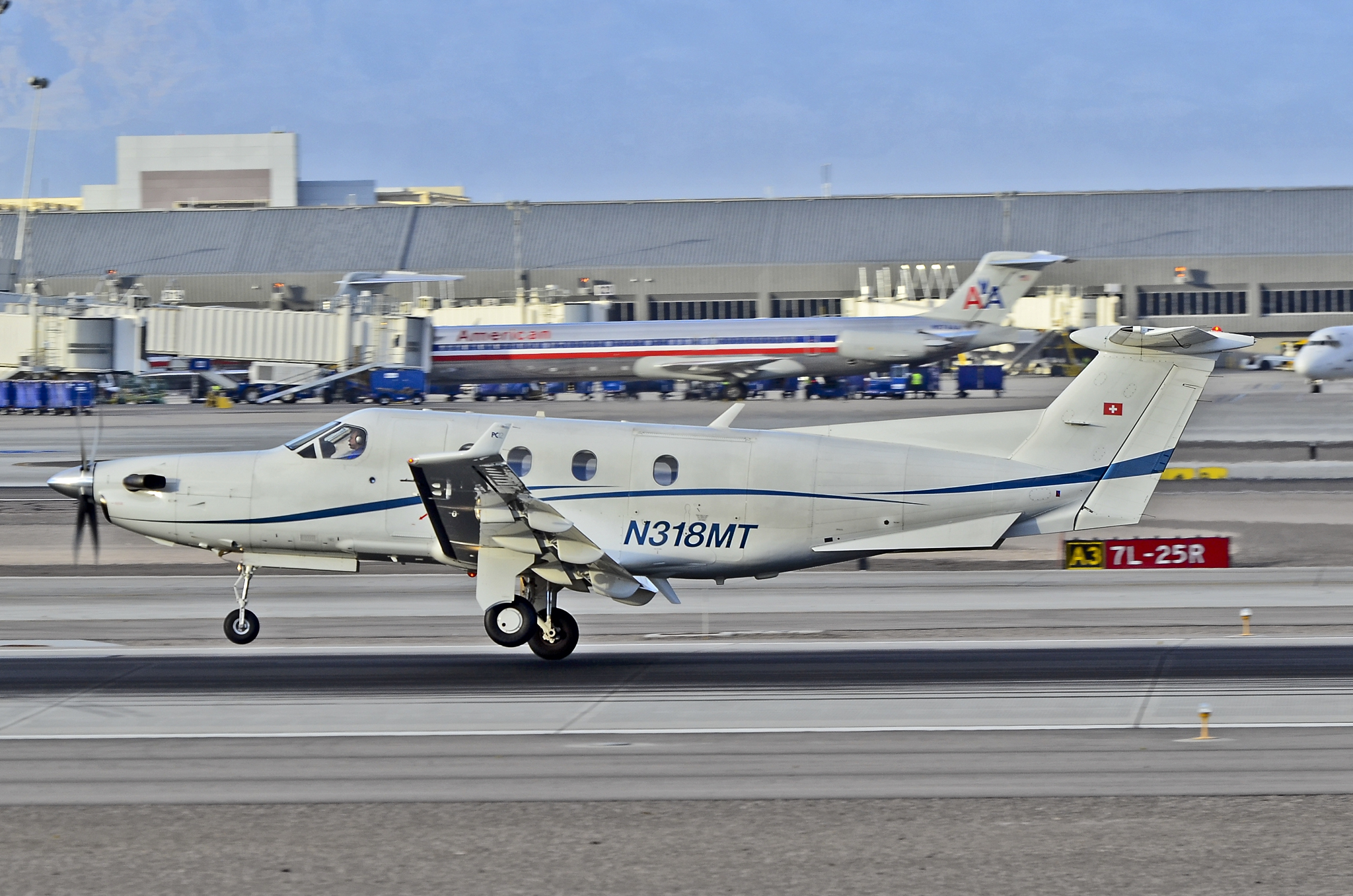
PC-12/45 N318MT, built in 2000, photographed at Las Vegas in January 2013. · Photo: Tomás Del Coro, CC BY-SA, via Wikimedia Commons (original on Flickr)
Pilatus · Turboprop
PC-12/45
The second PC-12 version and most of the legacy fleet, between the original 1994 PC-12 and the heavier PC-12/47.
The PC-12/45 flies a pilot and five passengers about 1,500 nm at roughly 265 kt on one engine, from strips most jets avoid. Asking prices run $2.4M–$3.4M, and hours left on the engine explain most of that spread.
Buy it if
You fly two to six people on trips under about 1,200 nm, use short or gravel strips, haul bulky cargo through the big rear door, or want an aircraft one pilot can legally fly.
Skip it if
You want jet speed or a stand-up cabin, mind a cabin altitude near 10,000 ft at the highest cruise levels, need regular 1,300 nm nonstops with a full cabin, or cannot fund a $350,000–$500,000 engine overhaul.
Biggest compromise
Engine economics. Few PC-12/45s for sale are on a pay-per-hour engine plan, so the next overhaul, about $350,000 to $500,000, usually falls on the buyer.
The numbers that matter
Purchase price
$2.9M
typical asking · $2.44M–$3.4M
What it costs per year
$515K
at 300 hrs · one professional pilot
How far it flies
1,500 nm
About 1,500 nm with a pilot and five passengers and full fuel
How fast
265 kt
high-speed cruise
Seats
6
6 executive, up to 9 commuter
Pilots needed
1
Certified for one pilot; no type rating is needed in the US.
Price
What one costs to buy
Typical asking price
$2,897,500
Where asking prices sit
Low
$2.44M
Typical
$2.9M
High
$3.4M
Most asking prices fall inside this band.
Other sites
2.9% of the fleet
6-month move
Priced vs call
with a price / call for price
Four of 12 aircraft for sale show prices, from $2.435M to $3.395M. Hours left on the engine explain most of the spread.
Price vs its family and alternatives
Scroll to explore · select a jet for details
PC-12/45 · This aircraft
$2.9M
Sits between the King Air C90GTi and the PC-12/47.
For sale now
None listed right now
Cost to own
What it costs per year to run
300hours / year
Per year
Per flight hour
Estimate — your operator will quote actual numbers.
Fuel, airframe maintenance, engine reserve or plan and landing, handling and trip costs rise as you fly more. One professional pilot, recurrent training, hangar, insurance and subscriptions and databases stay the same however much you fly.
Where the money goes
- One professional pilot$99,85719%
- Recurrent training$12,0992%
- Hangar$35,1147%
- Insurance$22,7404%
- Subscriptions and databases$8,0052%
- Fuel$148,68029%
- Airframe maintenance$95,25018%
- Engine reserve or plan$62,25012%
- Landing, handling and trip costs$31,2506%
Fuel is the biggest single cost at 29% of the total.
The JetGrade
77 out of 100 — Clearly above its class
Peer group: Daher TBM 850 (legacy cockpit), Beechcraft King Air C90GTi, Piper M600, Pilatus PC-12/47
Seven categories at a glance
- - - 70 = typical— This aircraft
Strongest on airport access, weakest on speed & trip time.
Grades are editorial opinions about the model, not any specific aircraft. Sponsors and affiliates have no input. Reviewed 2026-09-30.
Where it flies
Sample trips and reach
Typical trips on a map
Nonstop
Depends on weight or weather
Fuel stop likely
4 of 6 sample trips are comfortable nonstops.
Sample flight times
- 1.2 hr
Carlsbad → Las Vegas
205 nm · Short hop, well within range
- 2.9 hr
Carlsbad → Aspen
625 nm · Mountain airport; plan around weather and winds
- 3.4 hr
Santa Ana → San José del Cabo
765 nm
- 3.9 hr
Teterboro → West Palm Beach
900 nm
- 5.6 hr
Dallas → Teterboro
1,190 nm · Nonstop at economy speed with light bags
- 8.8 hr
Carlsbad → Teterboro
2,100 nm · Needs one stop, typically mid-continent
Lineage
What came before and after

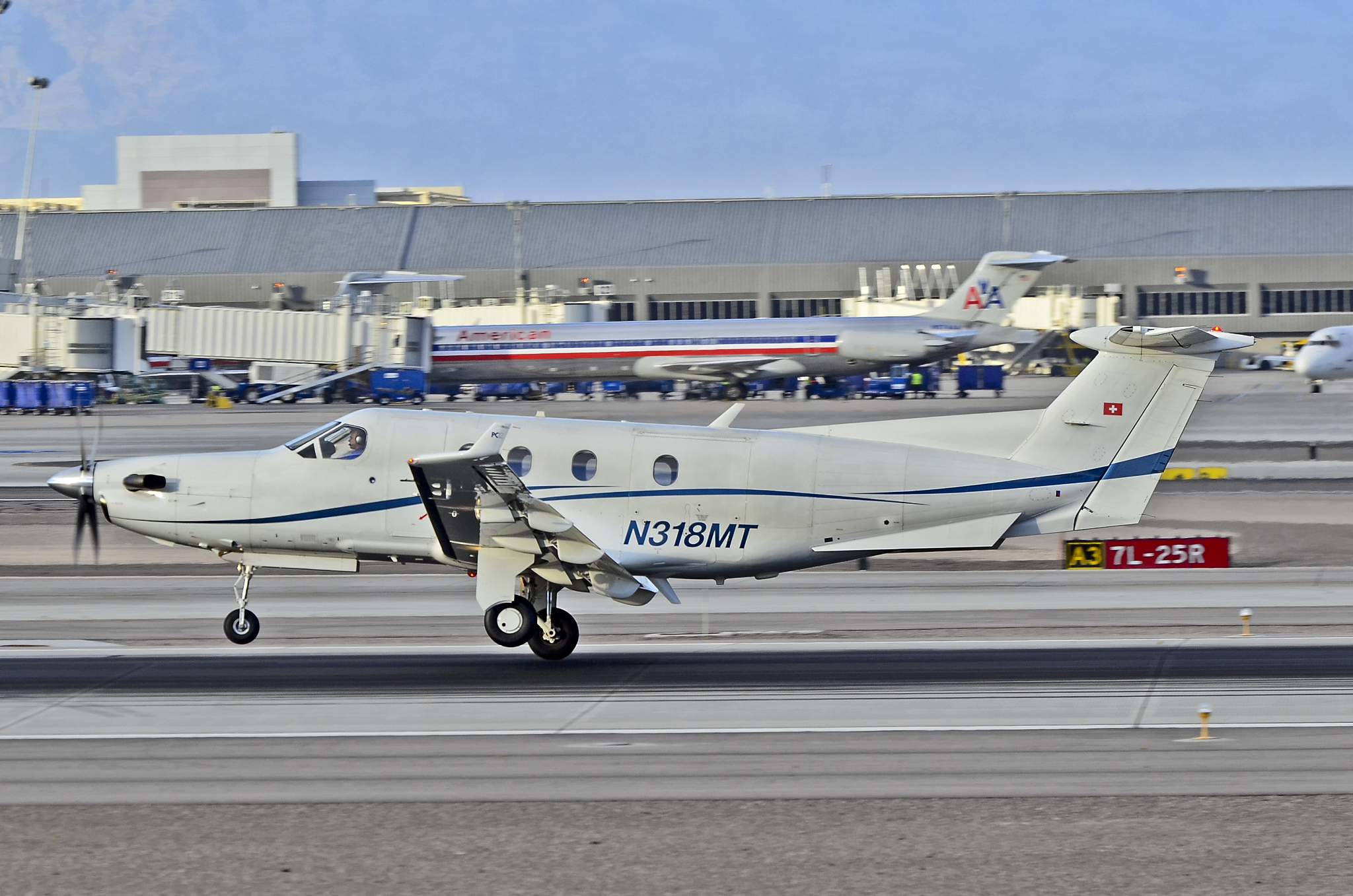
1996–2005
PC-12/45
Takeoff weight raised to 9,921 lb; most early aircraft converted.

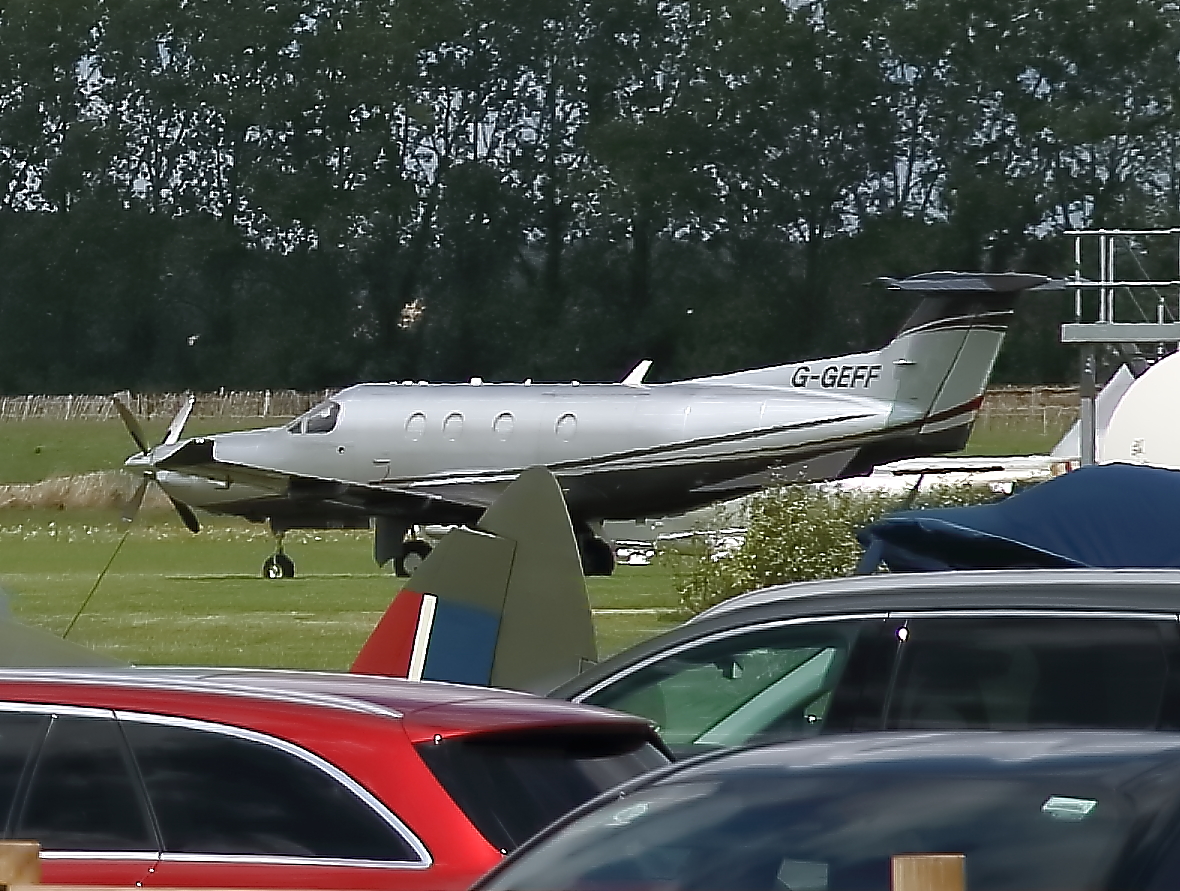

From 2025
PC-12 PRO
Garmin G3000 PRIME cockpit on the NGX airframe and engine.
What changed from the PC-12 (original)
- Maximum takeoff weight rises from 9,039 lb to 9,921 lb, about 880 lb more.
- New passenger seats rated for the higher weight.
- Small winglets and windshield heat added from 1998 production.
- Second pitot-static system and a new engine instrument display on aircraft built from 2001.
- Same Pratt & Whitney Canada PT6A-67B, 1,200 shp for takeoff.
Size and cabin
How big it is, inside and out
Outside
Silhouette · scaled to length
Length
Wingspan
Height
Inside the cabin
Cabin length
Width
Height
Compare
How it stacks up
This aircraft
PC-12/45
- JetGrade
- 77
- Price
- $2.9M
- Cost per year
- $515K
- Range
- 1,500 nm
- Speed
- 265 kt
- Seats
- 6
- Cabin length
- 16′ 11″
- Pilots
- 1
- Years built
- 1996–2005
← Before
- JetGrade
- 74
- Price
- $2M–$3M guide
- Cost per year
- $505K
- Range
- 1,650 nm
- Speed
- 269 kt
- Seats
- 6
- Cabin length
- 16′ 9″
- Pilots
- 1
- Years built
- 1994–1996
After →
- JetGrade
- 79
- Price
- $3M–$4.25M guide
- Cost per year
- $524K
- Range
- 1,660 nm
- Speed
- 265 kt
- Seats
- 6
- Cabin length
- 16′ 11″
- Pilots
- 1
- Years built
- 2006–2008
Alternative
- JetGrade
- 70
- Cost per year
- $573K
- Range
- 1,520 nm
- Speed
- 320 kt
- Seats
- 4
- Cabin length
- 13′ 3″
- Pilots
- 1
- Years built
- 2006–2007
Alternative
- JetGrade
- 66
- Price
- $2.35M–$3.23M guide
- Cost per year
- $734K
- Range
- 1,321 nm
- Speed
- 271 kt
- Seats
- 6
- Cabin length
- 12′ 7″
- Pilots
- 1
- Years built
- 2008–2010
- Pilatus PC-12/47 instead: About 530 lb more takeoff weight and newer winglets on the same cabin; JETNET shows asking prices of about $3.3M–$4.9M.
- Daher TBM 850 instead: Roughly 55 kt faster for owner-pilots who mostly carry two to four people, with a much smaller cabin and no large cargo door.
- Beechcraft King Air C90GTi instead: Two engines for buyers who insist on twin-engine redundancy, at the cost of a second engine to maintain and shorter range.
Gold marks the best figure in each row.
Owning one
What to know before you buy
Engines & inspections
1 × Pratt & Whitney Canada PT6A-67B · 1,200 shp each
No APUEngine hours until overhaul
- 300-hour or annual inspection · 300 hr
- Engine hot section inspection · 1,750 hr
- Engine overhaul · 3,500 hr
- Propeller overhaul · 4,000 hr
- Pitch trim actuator overhaul · 5,000 hr
- Airframe life limit · 20,000 hr
- Main gear actuator bolts every 60 months
Few PC-12/45s for sale are on Pratt & Whitney Canada's pay-per-hour plan, so most buyers fund the next overhaul themselves.
Known issues
Engine time drives value
Few aircraft for sale have an engine plan; an overhaul runs about $350,000–$500,000, so hours left move price sharply.
Nose gear drag link cracking
A November 2025 safety bulletin covers nose gear drag links that cracked in service; a redesigned part is the fix.
Airframe hour limit
The original airframe limit is 20,000 hours; extending it has cost about $275,000 and roughly 100 days.
Pre-buy checklist
0 of 10 checked
Pilatus service centers and independent shops support the legacy fleet, and Garmin cockpit and PT6A-67P engine upgrades are available for these aircraft.
Review
The full review
Strengths
- A 16 ft 11 in cabin with a 53 by 52 in cargo door that takes bikes, skis, stretchers and freight.
- Approved for grass and unpaved strips, and takes off in about 2,450 ft at sea level and full weight.
- Burns about 60 gallons an hour, less than half a typical light jet, and one pilot can legally fly it.
Limitations
- Cruises around 265 kt, roughly 55 kt slower than a TBM 850 and far slower than any jet.
- The cabin sits near 10,000 ft at the 30,000 ft ceiling, and one owner measured 87–88 dBA in the cabin.
- Original Bendix/King screens are aging; a failed display board costs about $10,000, and Garmin panel retrofits started at $179,000.
The PC-12/45 is the second version of Pilatus's single-engine turboprop and the heart of the legacy PC-12 fleet. The original PC-12 was certified in 1994 at a maximum takeoff weight of 9,039 lb. In 1996 Pilatus raised that to 9,921 lb, the 4,500 kg that gives the /45 its name, and most earlier aircraft were later converted to the same weight. Production ran until 2005, when the heavier PC-12/47 took over, followed by the PC-12 NG in 2008, the NGX in 2020 and the PC-12 PRO in 2025. JETNET counts about 585 of these early PC-12s built, with 543 still flying.
Pilot's take
Pilots describe the legacy PC-12 as stable and forgiving, with a big wing, docile low-speed handling and trailing-link gear that smooths rough strips. The trade-off is workload in the older cockpits: the KFC 325 autopilot has quirks, pressurization is partly manual, and the original screens can be hard to troubleshoot. Garmin retrofits change that picture considerably. As a single-engine aircraft often flown in cloud and at night, it rewards disciplined habits: fuel anti-icing additive in the cold, careful weight and balance, and sharp instrument skills. It is an easy airplane to fly well and an easy one to overload.
Who this is for
Owner-pilots, small companies and charter or medical operators flying two to six people 300–1,200 nm, often into short, rough or mountain strips, who value cargo space and single-engine running costs over speed and will budget for the engine.

Ask about this aircraft
Answers come only from our research file on the PC-12/45.
Your earlier questionsOwners
Private to verified ownersOwn a Pilatus PC-12/45? Verify with its FAA registration to join the owners' thread and the real-cost poll.