
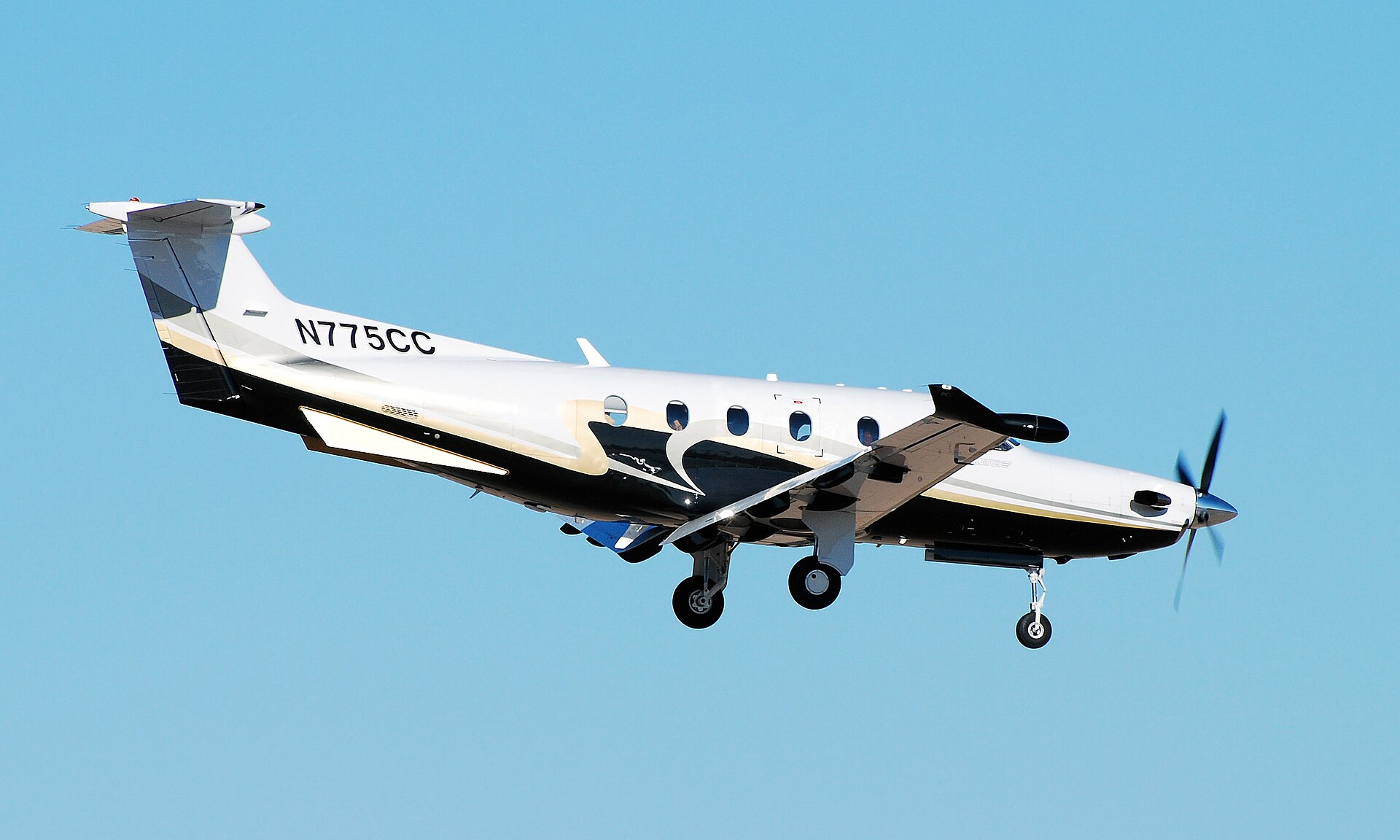
Pilatus PC-12/47 N775CC, photographed in 2011. · Photo: Tomás Del Coro via Wikimedia Commons, CC BY-SA 2.0
Pilatus · Turboprop
PC-12/47
Third version of the original PC-12 and the last with the PT6A-67B engine and legacy cockpit.
The PC-12/47 is the most capable legacy PC-12. Its higher takeoff weight lets it carry about 1,200 lb with full tanks, and the 17 ft cabin swallows people and cargo. The trade-offs are 265-kt cruise, an older cockpit and very few for sale.
Buy it if
You fly four to six people, pets or bulky gear on 300–1,300 nm trips, want single-engine running costs with a real cabin and cargo door, and are comfortable with an older cockpit or a Garmin retrofit.
Skip it if
You need jet speed or a factory glass cockpit, want to choose from many aircraft, or are uneasy flying one engine over water and mountains at night. Only about three were for sale in September 2026.
Biggest compromise
Speed and age. At about 265 kt it is slower than a TBM or any jet, so a 900 nm trip takes around four hours.
The numbers that matter
Purchase price
$3M–$4.25M
guide value (JetSwiss)
What it costs per year
$524K
at 300 hrs · one professional pilot
How far it flies
1,660 nm
1,340–1,604 nm with passengers
How fast
265 kt
high-speed cruise
Seats
6
6 executive seats; up to 9
Pilots needed
1
Certified for one pilot; insurers expect PC-12 specific initial and recurrent training.
Price
What one costs to buy
Guide value
$3M–$4.25M
Other sites
Priced vs call
with a price / call for price
No seller shows an asking price. JetSwiss puts 2006–2008 PC-12/47s at about $3.0M–4.25M; PlanePHD's March 2026 figure is about $3.1M.
Price vs its family and alternatives
Scroll to explore · select a jet for details
PC-12/47 · This aircraft
$3M–$4.25M guide
Guide value, not a listed asking price.
Sits between the PC-12/45 and the PC-12 NG (/47E).
For sale now
None listed right now
Cost to own
What it costs per year to run
300hours / year
Per year
Per flight hour
Estimate — your operator will quote actual numbers.
Fuel, airframe maintenance, engine program and trip costs and propeller reserve rise as you fly more. One professional pilot, recurrent training, hangar, insurance and subscriptions and databases stay the same however much you fly.
Where the money goes
- One professional pilot$110,04521%
- Recurrent training$13,3993%
- Hangar$35,1147%
- Insurance$25,4805%
- Subscriptions and databases$4,0121%
- Fuel$148,68028%
- Airframe maintenance$93,45018%
- Engine program$68,70013%
- Trip costs and propeller reserve$25,5005%
Fuel is the biggest single cost at 28% of the total.
The JetGrade
79 out of 100 — Clearly above its class
Peer group: Pilatus PC-12/45, Daher TBM 850 (legacy cockpit), Beechcraft King Air C90GTi, Piper Meridian PA-46-500TP
Seven categories at a glance
- - - 70 = typical— This aircraft
Strongest on range & payload, weakest on speed & trip time.
Grades are editorial opinions about the model, not any specific aircraft. Sponsors and affiliates have no input. Reviewed 2026-09-30.
Where it flies
Sample trips and reach
Typical trips on a map
Nonstop
Fuel stop likely
5 of 6 sample trips are comfortable nonstops.
Sample flight times
- 1.2 hr
Carlsbad → Las Vegas
205 nm · Short hop, well within range
- 2.9 hr
Carlsbad → Aspen
625 nm · High-elevation airport; weather and weight still matter
- 3.5 hr
Santa Ana → San José del Cabo
765 nm
- 4.0 hr
Teterboro → West Palm Beach
900 nm · About four hours at typical cruise
- 5.1 hr
Dallas → Teterboro
1,190 nm · Within range; strong headwinds can force a stop
- 8.9 hr
Carlsbad → Teterboro
2,100 nm · Needs one stop, typically mid-continent
Lineage
What came before and after

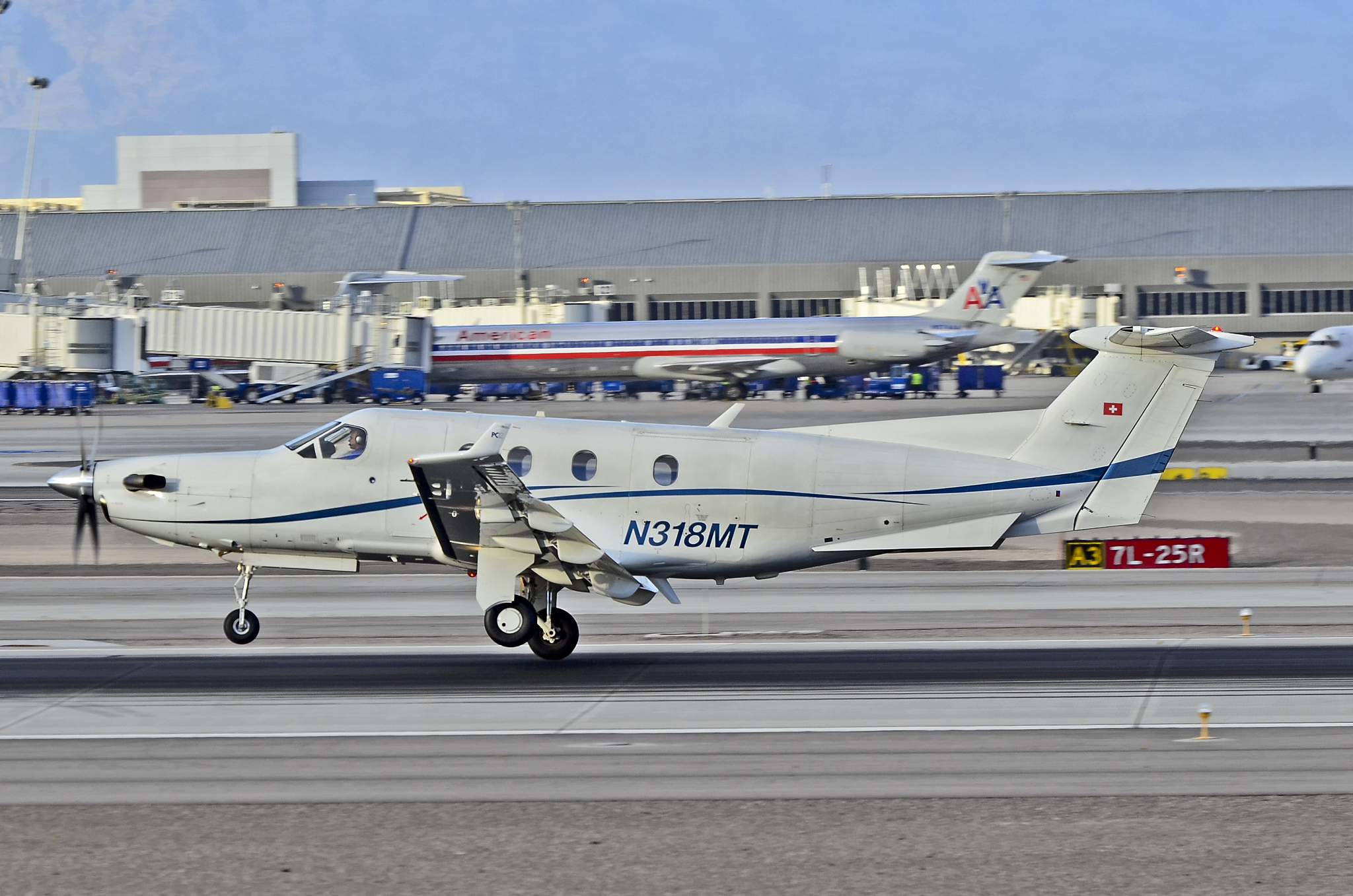

2006–2008
Pilatus PC-12/47
10,450 lb takeoff weight, larger winglets and lighter ailerons.

2025–
Pilatus PC-12 PRO
Garmin G3000 Prime cockpit with autoland and autothrottle.
What changed from the Pilatus PC-12/45
- Maximum takeoff weight rises 529 lb to 10,450 lb; landing and zero-fuel limits unchanged.
- The added weight goes to fuel, so it carries about 1,200 lb with full tanks.
- Larger PC-21-style winglets improve crosswind handling.
- New ailerons with servo tabs lighten roll forces; aileron-rudder interconnect now works full time.
- Revised wingtips, fairings and new dorsal and ventral tail fins.
- New IPECO pilot seats, revised cabin heating and LED lighting.
Size and cabin
How big it is, inside and out
Outside
Silhouette · scaled to length
Length
Wingspan
Height
Inside the cabin
Cabin length
Width
Height
Compare
How it stacks up
This aircraft
PC-12/47
- JetGrade
- 79
- Price
- $3M–$4.25M guide
- Cost per year
- $524K
- Range
- 1,660 nm
- Speed
- 265 kt
- Seats
- 6
- Cabin length
- 16′ 11″
- Pilots
- 1
- Years built
- 2006–2008
← Before
- JetGrade
- 77
- Price
- $2.9M
- Cost per year
- $515K
- Range
- 1,500 nm
- Speed
- 265 kt
- Seats
- 6
- Cabin length
- 16′ 11″
- Pilots
- 1
- Years built
- 1996–2005
After →
- JetGrade
- 79
- Price
- $4.42M
- Cost per year
- $524K
- Range
- 1,830 nm
- Speed
- 280 kt
- Seats
- 6
- Cabin length
- 16′ 11″
- Pilots
- 1
- Years built
- 2008–2020
Alternative
- JetGrade
- 70
- Cost per year
- $573K
- Range
- 1,520 nm
- Speed
- 320 kt
- Seats
- 4
- Cabin length
- 13′ 3″
- Pilots
- 1
- Years built
- 2006–2007
- Pilatus PC-12 NG instead: The same cabin with about 15% more engine power, nearly 20 kt more cruise speed and a Honeywell glass cockpit, at higher prices.
- Pilatus PC-12/45 instead: The same cabin and engine for less money, but 529 lb less takeoff weight means trading fuel for passengers on long trips.
- Daher TBM 850 instead: Roughly 50 kt faster, but with a smaller six-seat cabin, no enclosed lavatory and no large cargo door.
Gold marks the best figure in each row.
Owning one
What to know before you buy
Engines & inspections
1 × Pratt & Whitney Canada PT6A-67B · 1,200 shp each
No APUEngine hours until overhaul
- 300-hour / 12-month inspection · 300 hr
- Engine hot-section inspection · 1,750 hr
- Engine overhaul · 3,500 hr
- Propeller overhaul · 4,000 hr
- Ten-year wing inspection every 120 months
- Pitch trim actuator overhaul every 60 months
- Main gear bolt life limit every 60 months
Pratt & Whitney's pay-per-hour plan covers overhaul, hot-section and unscheduled work; one September 2026 listing quotes about $234 per engine hour.
Known issues
Tail spar crack inspections
A 2024 directive requires repeat crack checks where the horizontal stabilizer's lower spar attaches; cracks mean costly structural repairs.
Nose gear drag link fatigue
Older and improved drag links look identical, and a 2025 safety bulletin describes one breaking in flight. Confirm part numbers.
Engine overhaul exposure
Off an hourly plan, overhaul was estimated at $350,000–500,000 in 2015–2019 reports, plus about $50,000 per hot-section inspection.
Pre-buy checklist
0 of 10 checked
Pilatus lists 28 authorized service centers in the US and 67 worldwide, and Garmin offers display and autopilot retrofits for the legacy cockpit.
Review
The full review
Strengths
- Carries about 1,200 lb with full tanks, thanks to 529 lb more takeoff weight than the PC-12/45.
- A 16 ft 11 in flat-floor cabin with a forward lavatory and a 53 by 52 in cargo door.
- About 1,600 nm with four passengers at economy cruise, burning roughly 60 gallons an hour on a typical trip.
Limitations
- Maximum cruise of about 265 kt, so a 900 nm trip takes around four hours.
- The original Bendix/King displays are aging; Garmin display retrofits started at $179,000 in 2013, plus autopilot.
- Tail spar and nose gear directives call for repeat inspections and careful records review before purchase.
The PC-12/47 is the third version of Pilatus's single-engine PC-12 and the last of the so-called legacy models. Built from 2006 to 2008, it kept the PC-12/45's cabin, Pratt & Whitney Canada PT6A-67B engine and Bendix/King cockpit, but raised maximum takeoff weight from 9,921 lb to 10,450 lb. It also gained larger winglets, new ailerons with servo tabs that lighten roll forces, extra tail fins and new pilot seats. In 2008 the PC-12 NG replaced it with a stronger engine and a Honeywell glass cockpit.
Pilot's take
Pilots describe the PC-12 as stable and forgiving, with a 67 kt stall at maximum weight and generous runway margins. The /47's servo-tabbed ailerons make roll forces noticeably lighter than the /45's, and the larger winglets help in crosswinds. It is still a single-pilot airplane with a busy legacy panel, so workload in weather rewards good autopilot habits; several loss-of-control accidents in cloud have involved autopilot confusion. Two disciplines matter most: adding fuel icing inhibitor whenever the flight manual calls for it, and loading within weight and balance limits, since ice, an aft center of gravity and overweight takeoffs have featured in fatal accidents.
Who this is for
Owner-pilots stepping up from pistons, families with dogs and gear, and small companies or charter operators flying four to six people 300–1,300 nm, often from shorter runways, who value cabin and payload over speed.

Ask about this aircraft
Answers come only from our research file on the Pilatus PC-12/47.
Your earlier questionsOwners
Private to verified ownersOwn a Pilatus PC-12/47? Verify with its FAA registration to join the owners' thread and the real-cost poll.