
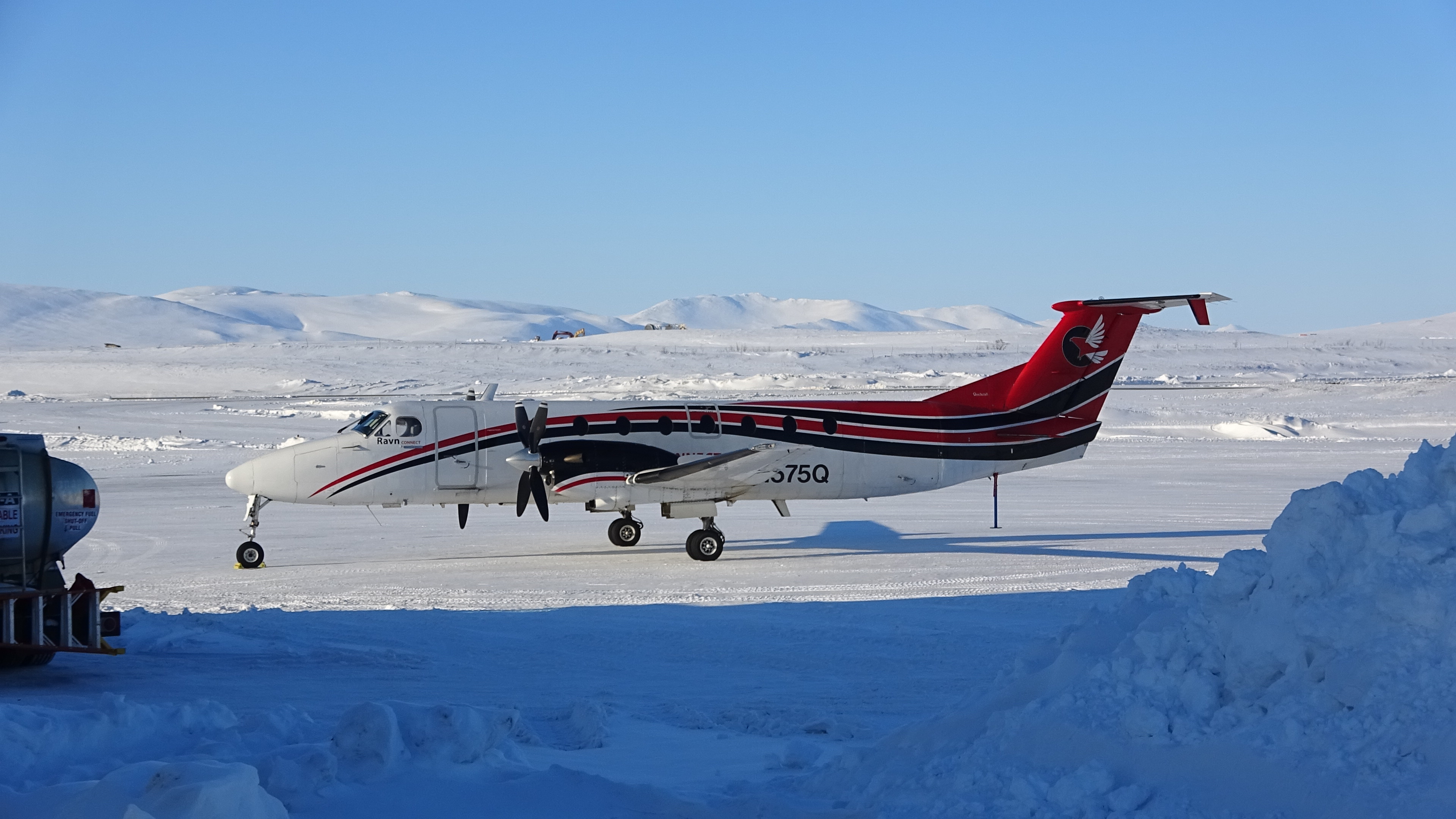
A 1900C, registered N575Q, in Alaska airline service at Nome in March 2016. · Quintin Soloviev · CC BY-SA 4.0 (https://creativecommons.org/licenses/by-sa/4.0) · resized
Beechcraft · Turboprop
Beechcraft 1900C
The first production 1900 airliner, between three early Model 1900s and the stand-up-cabin 1900D.
The 1900C moves 19 people or about 4,300 pounds of payload cheaply per seat, but its low cabin, airline-level cycles and costly engine overhauls make it a utility tool, not a private aircraft for most buyers.
Buy it if
You need to move work crews, teams or freight on regional legs, can staff two professional pilots, and value a huge cargo door and proven Pratt & Whitney engines over cabin comfort.
Skip it if
You want a private aircraft for family or executive travel. The cabin is too low to stand in, airline cabins have no lavatory, and a 1900D or King Air 350 carries fewer compromises.
Biggest compromise
Engine and structural exposure. 78 million at 2026 flat rates, and many airframes carry tens of thousands of airline landings.
The numbers that matter
What it costs per year
$938K
at 300 hrs · two professional pilots
How far it flies
1,425 nm
450–900 nm with passengers
Seats
19
19 airline seats; about 12 executive
Pilots needed
1
Certified for one pilot; passenger charter with ten or more seats needs two.
Price
What one costs to buy
Typical asking price
$0
Other sites
Priced vs call
with a price / call for price
No 1900C for sale shows a public price. One online valuation service puts a typical example near $1.45M; engine times swing real prices widely.
Price vs its family and alternatives
Scroll to explore · select a jet for details
Beechcraft 99 Airliner (99, A99, B99, C99)
$463K–$468K guide
Guide value, not a listed asking price.
See the Beechcraft 99 Airliner (99, A99, B99, C99)For sale now
None listed right now
Cost to own
What it costs per year to run
300hours / year
Per year
Per flight hour
Estimate — your operator will quote actual numbers.
Fuel, airframe maintenance, engine program or reserve and propeller overhauls rise as you fly more. Two pilots, recurrent training, hangar, insurance and subscriptions stay the same however much you fly.
Where the money goes
- Two pilots$255,00027%
- Recurrent training$25,0003%
- Hangar$45,0005%
- Insurance$35,0004%
- Subscriptions$8,5001%
- Fuel$303,78032%
- Airframe maintenance$127,50014%
- Engine program or reserve$120,30013%
- Propeller overhauls$17,5002%
Fuel is the biggest single cost at 32% of the total.
The JetGrade
66 out of 100 — Below its class average
Peer group: Beechcraft 1900D, Fairchild Metro III / 23, BAe Jetstream 31 / 32, DHC-6 Twin Otter 100 / 200 / 300
Seven categories at a glance
- - - 70 = typical— This aircraft
Strongest on range & payload, weakest on cabin & passenger comfort.
Grades are editorial opinions about the model, not any specific aircraft. Sponsors and affiliates have no input. Reviewed 2026-10-04.
Where it flies
Sample trips and reach
Typical trips on a map
Nonstop
Depends on weight or weather
Fuel stop likely
2 of 6 sample trips are comfortable nonstops.
Sample flight times
- 1.2 hr
Carlsbad → Las Vegas
205 nm · Short hop, well within range
- 3.0 hr
Carlsbad → Aspen
625 nm · Hot-and-high; depends on weight and weather
- 3.5 hr
Santa Ana → San José del Cabo
765 nm · Wet-wing aircraft comfortably nonstop with four passengers
- 4.1 hr
Teterboro → West Palm Beach
900 nm · Nonstop only with light loads and good winds
- 5.4 hr
Dallas → Teterboro
1,190 nm · Needs one stop, typically mid-route
- 9.3 hr
Carlsbad → Teterboro
2,100 nm · Needs two fuel stops
Lineage
What came before and after

1982–1983
Beechcraft Model 1900
Three early aircraft with two airstair doors.

1984–1991
Beechcraft 1900C
Production airliner with a rear cargo door; later aircraft got a wet wing.

What changed from the Beech 99 Airliner
- Built by stretching the Super King Air 200 fuselage about 14 feet.
- Pressurized 19-seat cabin, versus an unpressurized 15-seat Beech 99.
- Two 1,100-horsepower PT6A-65B engines turning four-blade composite propellers.
- Large rear cargo door replaces the original 1900's second airstair.
- Wet-wing 1900C-1 holds about 667 usable gallons, up from 425.
- T-tail with small stabilons and tailets for stability across a long cabin.
Size and cabin
How big it is, inside and out
Outside
Silhouette · scaled to length
Length
Wingspan
Height
Inside the cabin
Cabin length
Width
Height
Compare
How it stacks up
This aircraft
Beechcraft 1900C
- JetGrade
- 66
- Cost per year
- $938K
- Range
- 1,425 nm
- Speed
- 275 kt
- Seats
- 19
- Cabin length
- 25′ 3″
- Pilots
- 1
- Years built
- 1984–1991
← Before
Beechcraft 99 Airliner (99, A99, B99, C99)
- JetGrade
- 64
- Price
- $463K–$468K guide
- Cost per year
- $562K
- Range
- 911 nm
- Speed
- 249 kt
- Seats
- 15
- Pilots
- 1
- Years built
- 1968–1986
After →
- JetGrade
- 66
- Cost per year
- $1.24M
- Range
- 1,279 nm
- Speed
- 280 kt
- Seats
- 19
- Cabin length
- 25′ 3″
- Pilots
- 1
- Years built
- 1991–2002
Alternative
- JetGrade
- 65
- Price
- $810K–$1.09M guide
- Cost per year
- $840K
- Range
- 1,600 nm
- Speed
- 290 kt
- Seats
- 19
- Cabin length
- 25′ 5″
- Pilots
- 1
- Years built
- 1981–2001
Alternative
- JetGrade
- 76
- Price
- $3.25M
- Cost per year
- $1.13M
- Range
- 1,806 nm
- Speed
- 312 kt
- Seats
- 8
- Cabin length
- 19′ 6″
- Pilots
- 1
- Years built
- 1990–2009
- Beechcraft 1900D instead: Same basic design with a stand-up cabin, winglets and more powerful engines; costs more but is far easier to fly passengers in and to resell.
- Fairchild Metro III / 23 instead: Another pressurized 19-seat commuter with Garrett engines and a similarly low cabin; worth comparing where local shops already support it.
- Beechcraft King Air 350 instead: For executive travel: a cabin finished for private owners, a lavatory and an active resale market, with fewer seats.
Gold marks the best figure in each row.
Owning one
What to know before you buy
Engines & inspections
2 × Pratt & Whitney Canada PT6A-65B · 1,100 shp each
No APUEngine hours until overhaul
- Wing rear spar inspection · 200 hr
- Rear bulkhead inspection · 600 hr
- Vertical tail spar inspection · 1,200 hr
- Engine hot section inspection · 2,000 hr
- Engine overhaul · 6,000 hr
Pay-per-hour engine plans are available and transfer on sale; enrollment and engine times drive what a 1900C is worth.
Known issues
Wing rear spar cracking
Rear spar caps can crack; aircraft without the permanent FAA-mandated kit need inspections every 200 hours.
Engine overhaul exposure
Two factory exchange PT6A-65B engines cost about $1.78 million at 2026 flat rates, so engine times drive value.
Very high airframe cycles
Most flew short airline legs; one advertised example shows over 86,000 landings, so structural records matter.
Pre-buy checklist
0 of 10 checked
Pratt & Whitney Canada and Textron Aviation still support the PT6A-65B and the 1900 airframe, and a large cargo fleet keeps specialist structural and engine shops familiar with the type.
Review
The full review
Strengths
- Carries 19 passengers, or about 1,910 pounds of baggage across nose, cabin and a large rear cargo door.
- Two 1,100-horsepower Pratt & Whitney PT6A-65B engines with a 6,000-hour overhaul interval and worldwide support.
- Pressurized for flight up to 25,000 feet, so it can climb over weather that traps unpressurized commuters.
Limitations
- Cabin is only 4 feet 9 inches tall, so passengers stoop to their seats.
- With all 19 seats filled, practical range with standard fuel reserves is only about 450 nautical miles.
- Few are for sale and almost none show public prices, which makes values hard to judge.
The Beechcraft 1900C is a 19-seat pressurized twin turboprop that Beech built from 1984 to 1991 for regional airlines. It began as a stretched Super King Air 200, with the fuselage lengthened about 14 feet, a T-tail, and a large rear cargo door in place of the original 1900's second airstair. Beech built about 250, including 174 later aircraft, often called the 1900C-1, with a wet wing that holds about 667 usable gallons instead of the 425 gallons carried in the earlier bladder tanks. The 1900D that followed in 1991 added a stand-up cabin, winglets and more power.
Pilot's take
From the cockpit, the 1900C flies like a big King Air: honest handling, strong PT6 engines and a stable instrument platform. The catch is loading. The long cabin lets the center of gravity move aft quickly, and a 1987 accident was traced to improper loading, so weight and balance discipline is not optional. Expect analog instruments unless a glass retrofit has been done, a workload best shared by two pilots, and a type rating for anyone at the controls. On short regional legs with a full load it is a dependable tool; as a personal aircraft it asks a lot.
Who this is for
Cargo and charter operators, energy and mining companies moving crews, survey and special-mission operators, and organizations that value payload and a big cargo door over passenger comfort.

Ask about this aircraft
Answers come only from our research file on the 1900C.
Your earlier questionsOwners
Private to verified ownersOwn a Beechcraft Beechcraft 1900C? Verify with its FAA registration to join the owners' thread and the real-cost poll.