
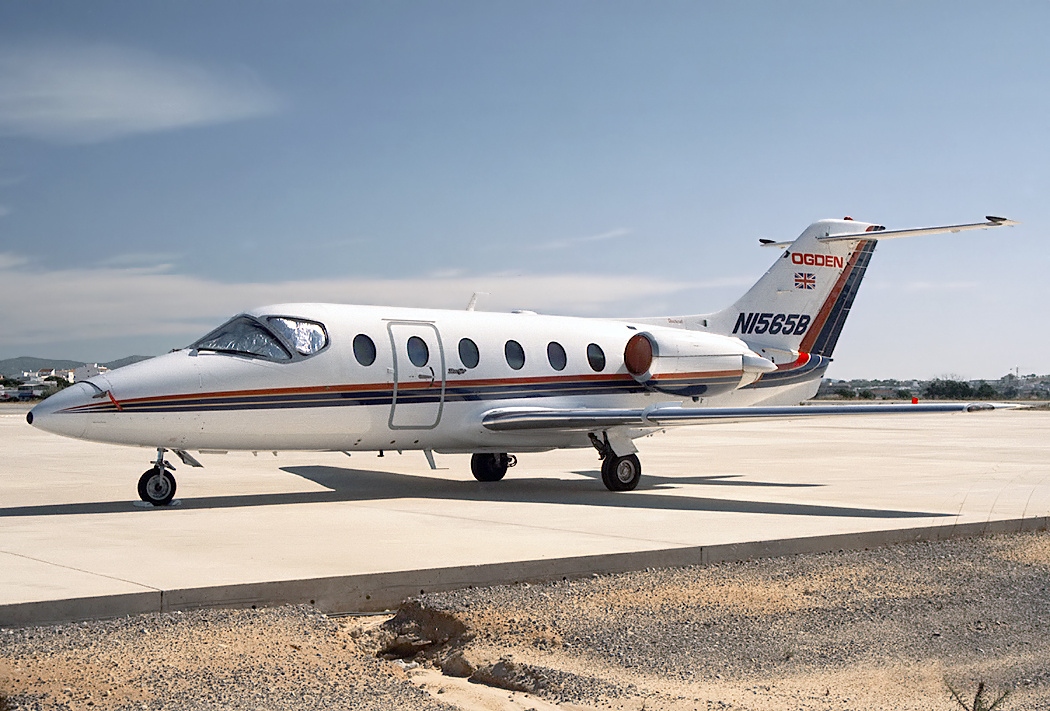
The last Beechjet 400 built, photographed at Faro, Portugal, in 1994. · Photo: Pedro Aragão via Wikimedia Commons, CC BY-SA 3.0
Beechcraft · Light Jet
Beechjet 400
The third step in the Diamond-to-Hawker 400 line, and the first version built by Beech.
A quick airframe held back by its age. It flies faster than most jets of its era, but short range with passengers, a small cabin, repeating inspections and a shrinking fleet make the later 400A the easier jet to own.
Buy it if
You want jet speed on regional trips of up to about 900 nm, have pilots who know the type, and can find a well-documented example with the tail and pitch trim inspections already current.
Skip it if
You need to fly four passengers more than about 1,100 nm nonstop, want a modern cockpit, use short runways, or care about easy resale. The 400A fixes several of these for more money.
Biggest compromise
Weight and fuel. With full tanks it can carry only about 550 lb of people and bags, so filling seats means leaving fuel behind and stopping sooner.
The numbers that matter
What it costs per year
$1.29M
at 300 hrs · two professional pilots
How far it flies
1,100 nm
850–1,100 nm with passengers
How fast
461 kt
high-speed cruise
Seats
7
7 seats in the typical layout
Pilots needed
2
Flown by two pilots; there is no single-pilot version of this jet.
Price
What one costs to buy
Typical asking price
$0
Other sites
Priced vs call
with a price / call for price
Both Beechjet 400s for sale show price on request. A broker guide covering this jet and the newer 400A runs $500,000 to $1.3M, with the 400 at the low end.
Price vs its family and alternatives
Scroll to explore · select a jet for details
Diamond I (MU-300)
$250K–$400K guide
Guide value, not a listed asking price.
See the Diamond I (MU-300)For sale now
None listed right now
Cost to own
What it costs per year to run
300hours / year
Per year
Per flight hour
Estimate — your operator will quote actual numbers.
Fuel, airframe maintenance, engine program or reserve and landing, handling and trip costs rise as you fly more. Two professional pilots, recurrent training, hangar, insurance, management company and charts, weather and records stay the same however much you fly.
Where the money goes
- Two professional pilots$295,73223%
- Recurrent training$24,6862%
- Hangar$29,4482%
- Insurance$17,1491%
- Management company$48,0004%
- Charts, weather and records$9,9541%
- Fuel$463,71036%
- Airframe maintenance$178,14914%
- Engine program or reserve$153,50412%
- Landing, handling and trip costs$67,5005%
Fuel is the biggest single cost at 36% of the total.
The JetGrade
60 out of 100 — Below its class average
Peer group: Cessna Citation II (550), Cessna Citation S/II (S550), Learjet 31, Learjet 35 / 35A, Mitsubishi Diamond IA
Seven categories at a glance
- - - 70 = typical— This aircraft
Strongest on speed & trip time, weakest on reliability & support.
Grades are editorial opinions about the model, not any specific aircraft. Sponsors and affiliates have no input. Reviewed 2026-09-29.
Where it flies
Sample trips and reach
Typical trips on a map
Nonstop
Depends on weight or weather
Fuel stop likely
3 of 6 sample trips are comfortable nonstops.
Sample flight times
- 0.9 hr
Carlsbad → Las Vegas
205 nm · Short hop, well within range
- 1.9 hr
Carlsbad → Aspen
625 nm · Hot-and-high; depends on weight and weather
- 2.3 hr
Santa Ana → San José del Cabo
765 nm · Nonstop with four passengers in still air
- 2.6 hr
Teterboro → West Palm Beach
900 nm · Nonstop with four; strong headwinds cut margin
- 3.4 hr
Dallas → Teterboro
1,190 nm · Near the limit; lighter loads or tailwinds needed
- 5.9 hr
Carlsbad → Teterboro
2,100 nm · Needs one stop, typically mid-continent
Lineage
What came before and after
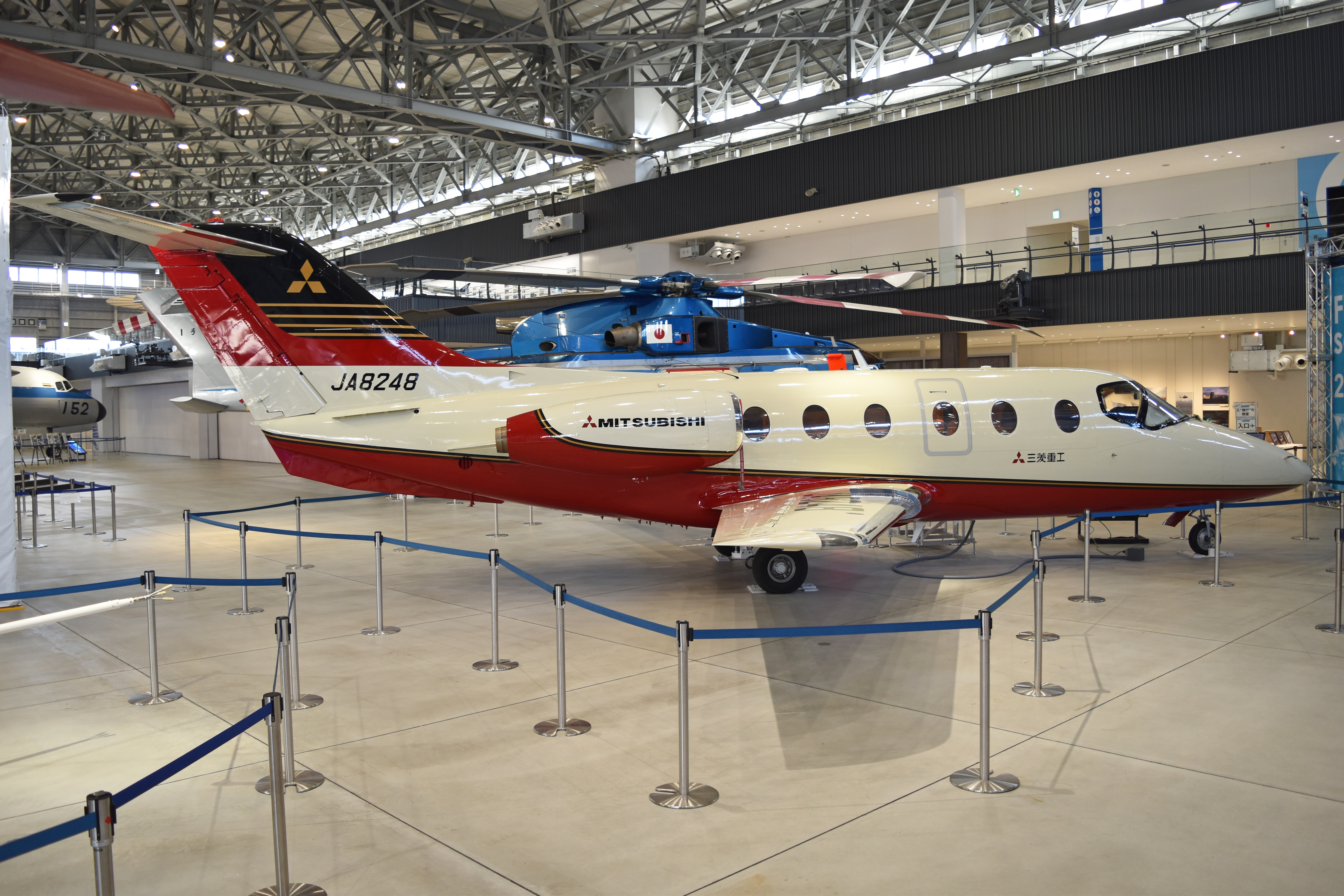
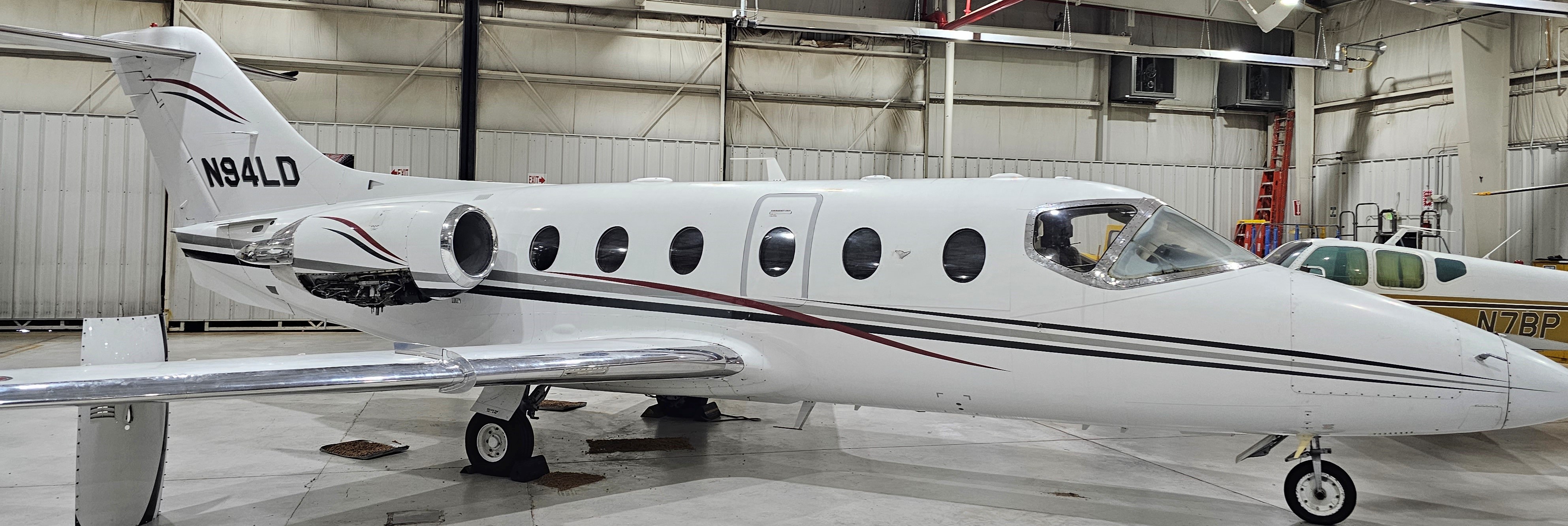
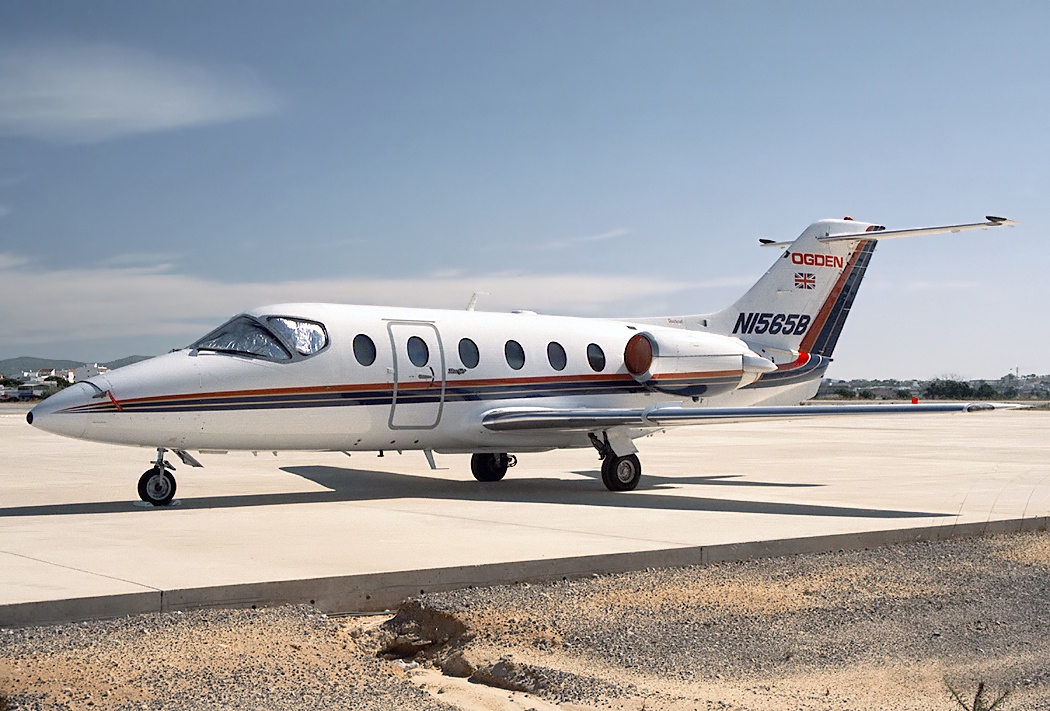
1986–1989
Beechcraft Beechjet 400
Beech-built version with JT15D-5 engines and a Beech-designed interior.


What changed from the Mitsubishi Diamond IA
- JT15D-5 engines rated at 2,900 lb thrust each replaced the Diamond IA's JT15D-4D.
- Maximum takeoff weight set at 15,780 lb, below the Diamond IA's 16,230 lb.
- More fuel capacity than the Diamond IA for longer legs.
- New Beech-designed interior styled after the company's King Air cabins.
- Assembled by Beech in Wichita after it bought the design from Mitsubishi in 1985.
Size and cabin
How big it is, inside and out
Outside
Silhouette · scaled to length
Length
Wingspan
Height
Inside the cabin
Cabin length
Width
Height
Compare
How it stacks up
This aircraft
Beechjet 400
- JetGrade
- 60
- Cost per year
- $1.29M
- Range
- 1,400 nm
- Speed
- 461 kt
- Seats
- 7
- Cabin length
- 14′ 5″
- Pilots
- 2
- Years built
- 1986–1989
← Before
- JetGrade
- 61
- Price
- $361K–$361K guide
- Cost per year
- $1.26M
- Range
- 1,200 nm
- Speed
- 421 kt
- Seats
- 7
- Cabin length
- 15′ 6″
- Pilots
- 2
- Years built
- 1984–1985
After →
- JetGrade
- 68
- Price
- $1.2M
- Cost per year
- $1.33M
- Range
- 1,885 nm
- Speed
- 458 kt
- Seats
- 7
- Cabin length
- 15′ 7″
- Pilots
- 2
- Years built
- 1990–2003
Alternative
- JetGrade
- 71
- Price
- $949K
- Cost per year
- $937K
- Range
- 1,840 nm
- Speed
- 385 kt
- Seats
- 6
- Pilots
- 2
- Years built
- 1984–1988
Alternative
- JetGrade
- 67
- Price
- $581K–$920K guide
- Cost per year
- $1.31M
- Range
- 2,196 nm
- Speed
- 451 kt
- Seats
- 6
- Cabin length
- 12′ 11″
- Pilots
- 2
- Years built
- 1974–1993
- Beechcraft Beechjet 400A instead: Same engines and speed with a longer cabin, aft toilet, Collins Pro Line 4 cockpit, higher weights and a much larger fleet, for more money.
- Cessna Citation S/II (S550) instead: Slower, but a roomier straight-wing cabin, shorter runway needs and Cessna's large service network.
- Learjet 35 / 35A instead: A similar-era twin with similar speed and much longer range, at the cost of a narrower cabin.
Gold marks the best figure in each row.
Owning one
What to know before you buy
Engines & inspections
2 × Pratt & Whitney Canada JT15D-5 · 2,900 lbf each
No APUEngine hours until overhaul
- Airframe inspection, 200-hour level · 200 hr
- Engine mount bracket crack check · 200 hr
- Airframe inspection, 1,200-hour level · 1,200 hr
- Engine hot section inspection · 1,750 hr
- Pitch trim actuator replacement · 1,800 hr
- Stabilizer rib X-ray or borescope · 2,400 hr
- Engine overhaul · 3,500 hr
- Airframe inspection, 5,000-hour level · 5,000 hr
Several pay-per-hour plans cover the JT15D-5, but older engines usually need a buy-in payment and some plans exclude engines past their second overhaul.
Known issues
Stabilizer rib cracking
A mandatory X-ray or borescope check repeats every 2,400 hours; one shop found cracked ribs needing replacement on most jets it inspected.
Pitch trim actuator wear
The pitch trim actuator must be replaced every 1,800 flight hours after thread wear was found; check when the next is due.
High-altitude engine flameouts
Several jets in this family lost both engines near storms at high altitude; revised procedures and an engine fix are now required.
Pre-buy checklist
0 of 10 checked
Textron Aviation holds the type certificate and supports the family, and independent shops still overhaul the JT15D engines. Simulator training centers on the later 400A, so crews should confirm training for this cockpit.
Review
The full review
Strengths
- Normal cruise of about 446 knots, quicker than most light jets of its era; Teterboro to Palm Beach takes about 2.6 hours.
- Two Pratt & Whitney Canada JT15D-5 engines of 2,900 lb thrust each, a family still supported by overhaul shops.
- Among the least expensive ways into a twin-engine jet; a broker guide for the 400 family starts near $500,000.
Limitations
- About 550 lb of payload with full fuel, so four passengers means less fuel and roughly 1,100 nm of range.
- Stabilizer rib checks every 2,400 hours and a new pitch trim actuator every 1,800 hours add cost and downtime.
- Only 65 were built and far fewer still fly, which thins parts, training and resale options.
The Beechjet 400 is where Beech's light-jet story begins. Mitsubishi designed the airplane as the Diamond, and in 1985 Beech bought the program, moved assembly to Wichita and delivered the first Beechjet 400 in 1986. Sixty-five airframes carry the 400 name, including a handful of Diamond IIs converted at the factory, before the improved 400A replaced it in 1990. The 400A, the Hawker 400XP and today's re-engined conversions all grew from this airframe.
Pilot's take
The Beechjet 400 suits pilots who like a quick, responsive jet. Spoilers handle roll control instead of ailerons, which gives a firm, precise feel at speed but takes practice for pilots coming from Citations. The JT15D-5 engines are simple and well understood, and most examples have thrust reversers that help on wet runways. The cockpit is the weak point: displays and radios vary from jet to jet, many date from the 1980s, and training devices mostly reflect the later 400A. High-altitude icing procedures deserve respect after several engine flameouts in this family. For crews who know the type, it remains a capable regional machine.
Who this is for
A small operator or experienced owner group with pilots who know the Beechjet, flying two to four people on regional trips, who values speed over cabin space and is ready to manage an older jet's maintenance.

Ask about this aircraft
Answers come only from our research file on the Beechcraft Beechjet 400.
Your earlier questionsOwners
Private to verified ownersOwn a Beechcraft Beechjet 400? Verify with its FAA registration to join the owners' thread and the real-cost poll.