
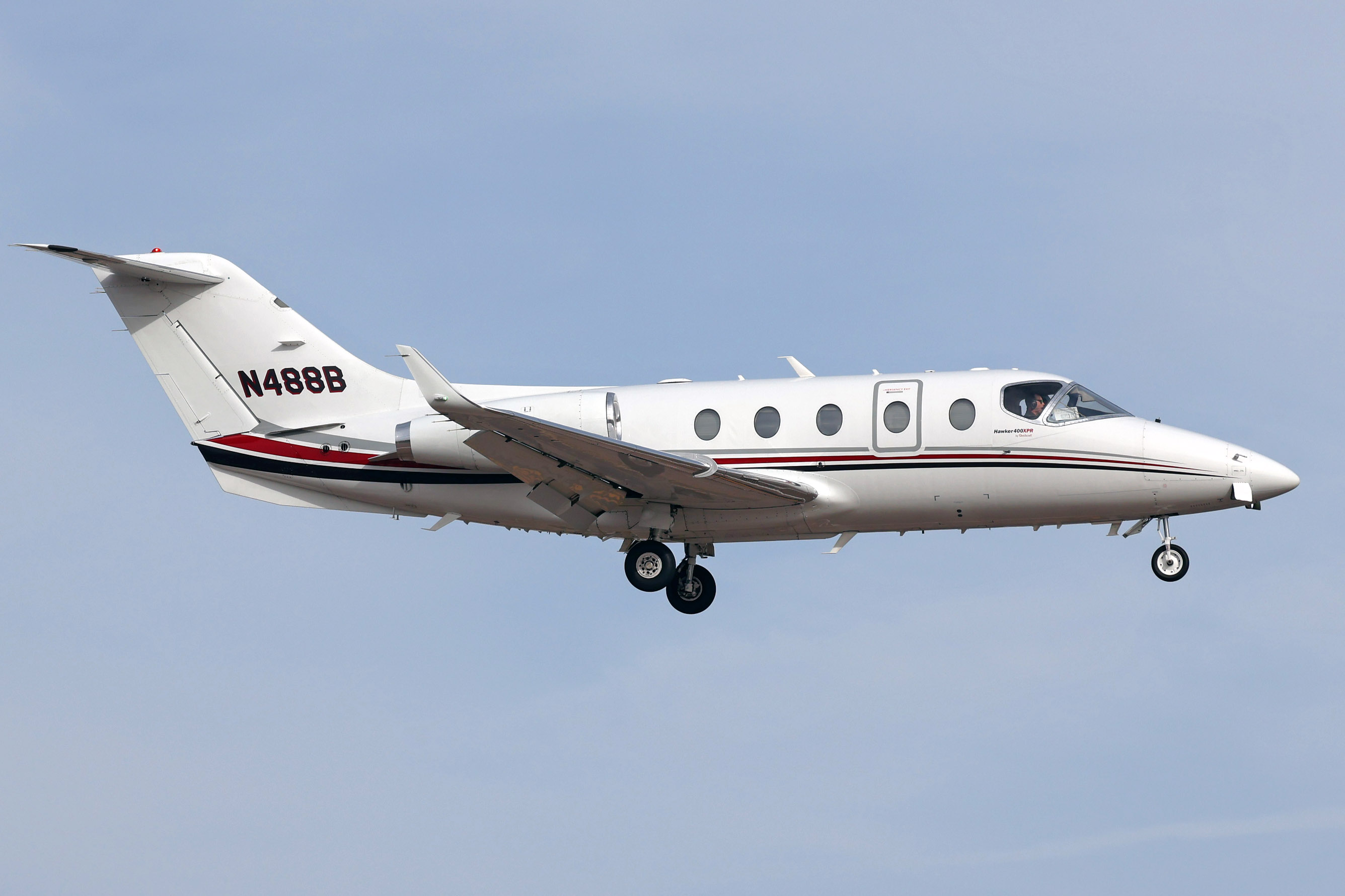
Hawker 400XPR N488B at Scottsdale, Arizona, in April 2026. · "N488B Hawker 400XP, Scottsdale 04-19-26" by Duncan Kirk, CC BY 4.0, via Wikimedia Commons
Beechcraft · Light Jet
Hawker 400XPR
The final factory version of the Beechjet and Hawker 400 line, created by upgrading existing airframes.
The 400XPR turns a proven light jet into a 1,950 nm four-passenger airplane with a fast climb and a 45,000 ft ceiling. The catch is rarity: only a handful exist, so price, resale and upgrade parts need careful checking.
Buy it if
You want a light jet that flies four people about 1,950 nm nonstop, climbs above the weather quickly and cruises near 447 kt, and you plan to hire two pilots anyway.
Skip it if
You want to fly the jet yourself as a single pilot, may need to resell quickly, or want a large market of identical aircraft to compare prices against.
Biggest compromise
Scarcity. Only a handful of conversions exist, every one currently for sale hides its price, and the upgrade's unique parts come through Textron and Williams.
The numbers that matter
Purchase price
$1.85M–$3.65M
guide value (Business Jet Traveler)
What it costs per year
$1.15M
at 300 hrs · two professional pilots
How far it flies
2,160 nm
1,313–1,950 nm with passengers
How fast
447 kt
high-speed cruise
Seats
7
7 typical (up to 9)
Pilots needed
2
Operated with two pilots; plan the budget around a two-person crew.
Price
What one costs to buy
Guide value
$1.85M–$3.65M
Other sites
Priced vs call
with a price / call for price
All three for sale are price on request. Business Jet Traveler lists used values of $1.85–3.65M; Textron last asked $3.25M, about five years ago.
Price vs its family and alternatives
Scroll to explore · select a jet for details
Hawker 400XPR · This aircraft
$1.85M–$3.65M guide
Guide value, not a listed asking price.
Sits between the Hawker 400XP (400A) and the Nextant 400XTi.
For sale now
None listed right now
Cost to own
What it costs per year to run
300hours / year
Per year
Per flight hour
Estimate — your operator will quote actual numbers.
Fuel, airframe maintenance, scheduled and unscheduled, williams tap engine program and landing, handling and crew travel rise as you fly more. Two pilots (salary and benefits), recurrent training, two pilots, hangar, hull and liability insurance and navigation data, weather and connectivity stay the same however much you fly.
Where the money goes
- Two pilots (salary and benefits)$312,19527%
- Recurrent training, two pilots$32,3383%
- Hangar$29,3783%
- Hull and liability insurance$22,5002%
- Navigation data, weather and connectivity$14,9811%
- Fuel$351,93631%
- Airframe maintenance, scheduled and unscheduled$177,45015%
- Williams TAP engine program$157,77314%
- Landing, handling and crew travel$50,0004%
Fuel is the biggest single cost at 31% of the total.
The JetGrade
70 out of 100 — Typical for its class
Peer group: Nextant 400XTi, Hawker 400XP, Cessna Citation CJ2+, Cessna Citation Bravo, Learjet 40
Seven categories at a glance
- - - 70 = typical— This aircraft
Strongest on range & payload, weakest on value & resale.
Grades are editorial opinions about the model, not any specific aircraft. Sponsors and affiliates have no input. Reviewed 2026-09-29.
Where it flies
Sample trips and reach
Typical trips on a map
Nonstop
Depends on weight or weather
Fuel stop likely
Out of reach
5 of 8 sample trips are comfortable nonstops.
Sample flight times
- 0.9 hr
Carlsbad → Las Vegas
205 nm · Short hop at any weight
- 1.8 hr
Carlsbad → Aspen
625 nm · Mountain airport; depends on weight and weather
- 2.2 hr
Santa Ana → San José del Cabo
765 nm · Comfortable nonstop with four passengers
- 2.5 hr
Teterboro → West Palm Beach
900 nm · Easy nonstop with four passengers
- 3.1 hr
Dallas → Teterboro
1,190 nm · Nonstop with four passengers and bags
- 3.8 hr
Teterboro → San Juan
1,410 nm · Nonstop with four passengers in normal winds
- 5.3 hr
Carlsbad → Teterboro
2,100 nm · Needs one stop, typically mid-continent
Los Angeles → Honolulu
2,215 nm · Beyond range; no stop possible over ocean
Lineage
What came before and after
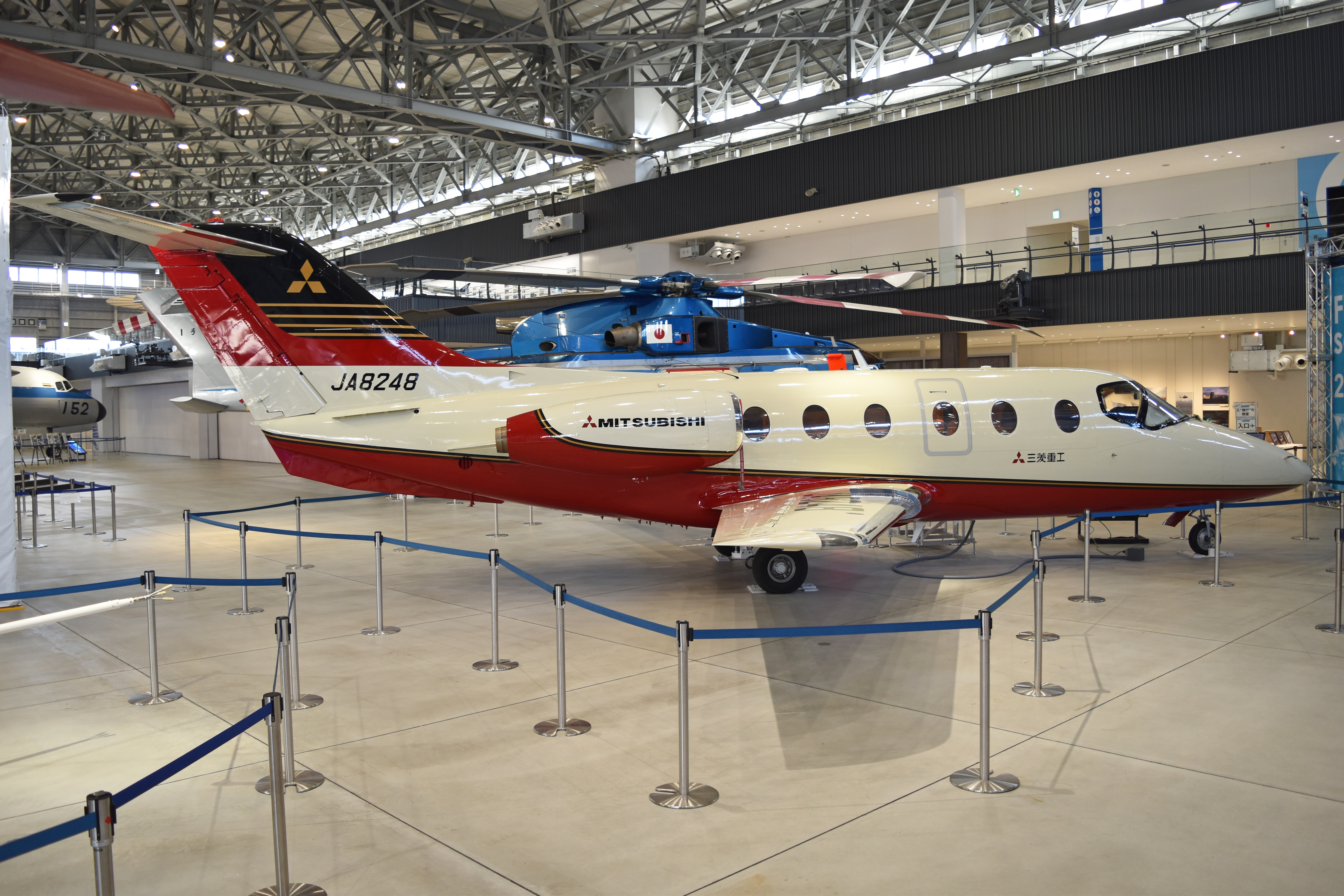
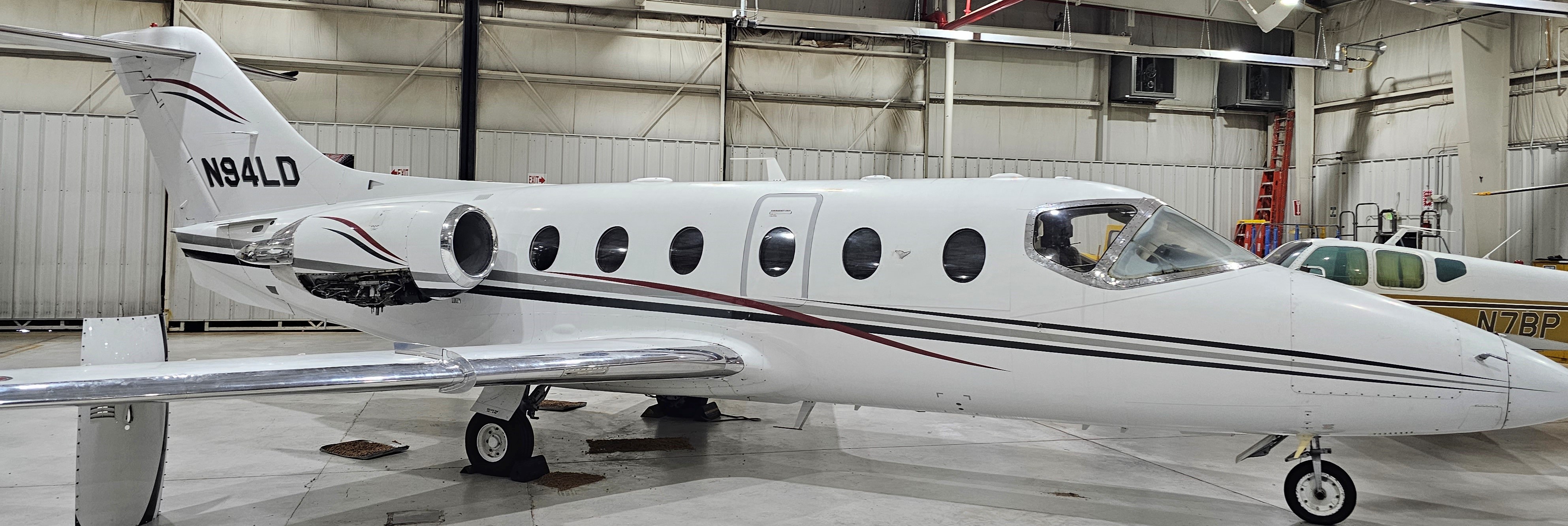
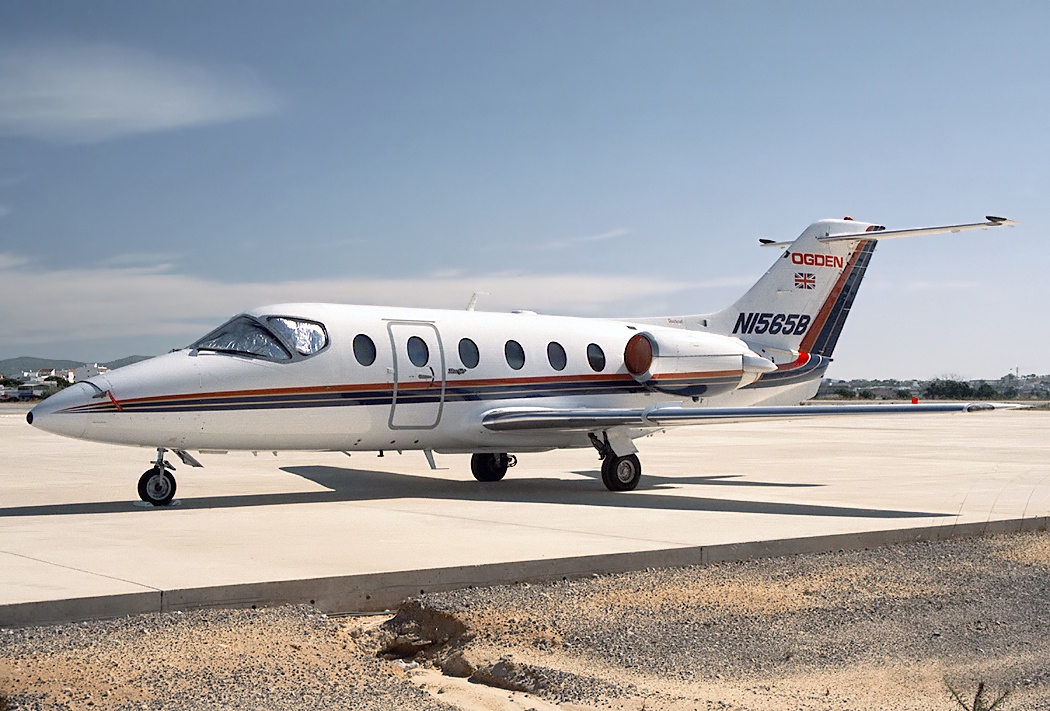


Upgrades from 2016
Hawker 400XPR
Factory re-engine with Williams FJ44s, winglets and newer avionics.
What changed from the Hawker 400XP
- Williams FJ44-4A-32 engines replace JT15D-5s: 3,200 lb thrust each and 5,000-hour overhauls.
- Composite winglets alone add roughly 3–4% range.
- Four-passenger range grows from about 1,460 nm to about 1,950 nm.
- Optional Collins Pro Line 21 or Garmin G5000; some kept the original Pro Line 4.
- Climbs to 37,000 ft in about 11 minutes instead of about 18.
- Same 16,300 lb takeoff weight; full-fuel payload rises from 603 to 688 lb.
Size and cabin
How big it is, inside and out
Outside
Silhouette · scaled to length
Length
Height
Inside the cabin
Cabin length
Width
Height
Compare
How it stacks up
This aircraft
Hawker 400XPR
- JetGrade
- 70
- Price
- $1.85M–$3.65M guide
- Cost per year
- $1.15M
- Range
- 2,160 nm
- Speed
- 447 kt
- Seats
- 7
- Cabin length
- 15′ 6″
- Pilots
- 2
- Years built
- 2016–now
← Before
- JetGrade
- 67
- Price
- $1.79M–$2.1M guide
- Cost per year
- $1.27M
- Range
- 1,510 nm
- Speed
- 450 kt
- Seats
- 7
- Cabin length
- 15′ 6″
- Pilots
- 2
- Years built
- 2003–2010
Alternative
- JetGrade
- 72
- Price
- $2.8M–$3.4M guide
- Cost per year
- $1.13M
- Range
- 2,160 nm
- Speed
- 460 kt
- Seats
- 7
- Cabin length
- 15′ 6″
- Pilots
- 2
- Years built
- 2014–2019
Alternative
- JetGrade
- Not yet graded
- Price
- $3.9M
- Range
- 1,613 nm
- Speed
- 418 kt
- Seats
- 5
- Years built
- 2006–2016
- Nextant 400XTi instead: The same Beechjet airframe remanufactured by Nextant with Williams FJ44-3AP engines and similar range; more were built, so comparisons are easier.
- Cessna Citation CJ2+ instead: Certified for a single pilot with a bigger dealer network and resale market, at the cost of roughly 500 nm less range with passengers.
- Hawker 400XP instead: The same cabin for about $2 million if trips stay under roughly 1,200 nm and higher fuel burn is acceptable.
Gold marks the best figure in each row.
Owning one
What to know before you buy
Engines & inspections
2 × Williams FJ44-4A-32 · 3,200 lbf each
No APUEngine hours until overhaul
- Pitch trim jackscrew replacement · 1,800 hr
- Horizontal stabilizer rib inspection · 2,400 hr
- Engine hot section inspection · 2,500 hr
- Engine overhaul · 5,000 hr
Examples on the market are enrolled in Williams' TAP pay-by-the-hour plan; one 2026 listing quotes about $480 an hour for both engines.
Known issues
Rare type, thin resale market
Only a handful were converted, so fair value is hard to prove and selling can take longer than for common light jets.
Tail rib cracking inspections
An FAA-required tail inspection repeats every 2,400 hours; replacing cracked ribs costs about $32,000 by the FAA's estimate.
Pitch trim actuator wear
The trim actuator nut and jackscrew must be replaced every 1,800 hours, about $18,000 each time.
Pre-buy checklist
0 of 9 checked
Textron Aviation service centers support the airframe and the upgrade, and Williams supports the engines. Hundreds of Beechjet and Hawker 400s still fly, so most airframe parts are common.
Review
The full review
Strengths
- About 1,950 nm with four passengers, roughly 500 nm more than a standard Hawker 400XP.
- Climbs to 37,000 ft in about 11 minutes and cruises at up to 447 kt at 45,000 ft.
- Williams engines run 5,000 hours between overhauls and burn about 18% less fuel than the originals.
Limitations
- Needs two pilots, while a Citation CJ2+ or CJ3 can be flown by one.
- Only about 688 lb of payload with full tanks, roughly three adults and light bags.
- So few were converted that prices are private and resale can take time.
The Hawker 400XPR is not a new-build airplane. It is a factory upgrade of the Beechjet 400A and Hawker 400XP, the light-jet family that began as the Mitsubishi Diamond in the early 1980s and was later built by Beechcraft in Wichita. Hawker Beechcraft announced the package in October 2010; after the company's bankruptcy and a change of ownership, Textron Aviation finished certifying all of it in September 2016 and delivered the first fully configured aircraft in July 2017. The upgrade replaces the original Pratt & Whitney Canada JT15D engines with Williams FJ44-4A-32 turbofans, adds composite winglets, and offered Collins Pro Line 21 or Garmin G5000 cockpits along with new paint and interiors.
Pilot's take
From the flight deck, the 400XPR is a familiar Beechjet with far more engine. The FJ44s bring dual FADEC (computer engine control), which simplifies starts and power setting compared with the old JT15Ds, and the factory's engine-out ceiling rises from about 20,600 ft to about 31,000 ft. The airplane still flies like a Beechjet: spoilers rather than ailerons for roll control, a 118 kt reference speed on approach, and a cockpit built for two pilots working together. Training centers already teach the Beechjet and Hawker 400, but crews should learn the specific cockpit fitted, because three different avionics suites exist across the small fleet.
Who this is for
A company or owner already paying two pilots who flies three or four people on 1,000–1,900 nm trips, values climb and high-altitude performance, and will do extra homework on a rare airplane for more range per dollar.

Ask about this aircraft
Answers come only from our research file on the Hawker 400XPR (factory upgrade).
Your earlier questionsOwners
Private to verified ownersOwn a Beechcraft Hawker 400XPR? Verify with its FAA registration to join the owners' thread and the real-cost poll.