
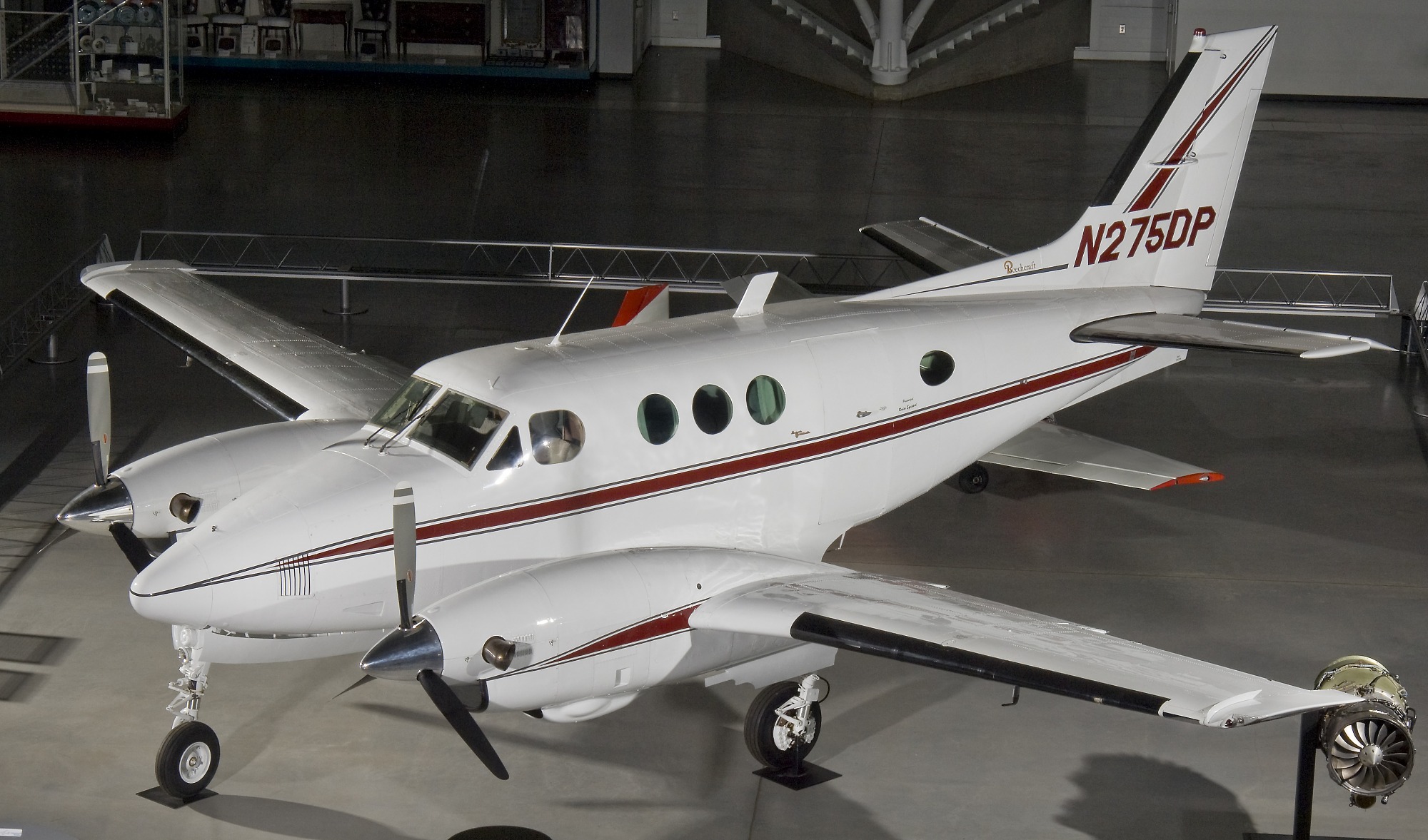
A 1965 King Air 90 at the Smithsonian's Steven F. Udvar-Hazy Center. · Dane Penland / Smithsonian National Air and Space Museum, CC0 1.0
Beechcraft · Turboprop
King Air 90 / A90 (1964–1968)
The first two King Air models, ahead of the B90, C90 and every King Air since.
A real King Air cabin and two turbine engines for the lowest price in the family. The catch is the engines: original PT6A-6 and -20s are hard to overhaul, so buy the engine history first and the airplane second.
Buy it if
You want a roomy pressurized twin for 300 to 700 nm trips with four or five people, can absorb a large engine bill, and find an example with documented wing work and supported engines.
Skip it if
You need about 750 nm or more nonstop with a full cabin, cruise above 230 kt, or a predictable engine budget. A later C90 or E90 costs more but carries far less uncertainty.
Biggest compromise
Engine support. The PT6A-6 on the original 90 and the PT6A-20 on the A90 are early models with scarce parts; some shops will not overhaul the -6, and no flat-rate overhaul price is published.
The numbers that matter
Purchase price
$529K
typical asking · $229K–$699K
What it costs per year
$415K
at 300 hrs · one professional pilot
How far it flies
1,160 nm
700–750 nm with passengers
How fast
216 kt
high-speed cruise
Seats
5
5 typical; up to 7 with a couch
Pilots needed
1
Flown by one pilot; insurers expect King Air-specific initial and recurrent training.
Price
What one costs to buy
Typical asking price
$529,000
Where asking prices sit
Low
$229K
Typical
$529K
High
$699K
Most asking prices fall inside this band.
Other sites
Priced vs call
with a price / call for price
Four priced listings, $229,000 to $699,000. Aircraft with upgraded engines ask the most; a non-flying 1965 project asks the least.
Price vs its family and alternatives
Scroll to explore · select a jet for details
King Air 90 / A90 (1964–1968) · This aircraft
$529K
Sits between the King Air B90 and the King Air C90.
For sale now
None listed right now
Cost to own
What it costs per year to run
300hours / year
Per year
Per flight hour
Estimate — your operator will quote actual numbers.
Fuel and engine overhaul and hot-section reserve rise as you fly more. One professional pilot, hangar and insurance stay the same however much you fly.
Where the money goes
Partial estimate- One professional pilot$91,70022%
- Hangar$24,0006%
- Insurance$15,0004%
- Fuel$191,02546%
- Engine overhaul and hot-section reserve$93,58223%
Fuel is the biggest single cost at 46% of the total.
The JetGrade
63 out of 100 — Below its class average
Peer group: King Air B90, King Air C90, King Air E90, Mitsubishi MU-2B (short-body), Piper Cheyenne I / II
Seven categories at a glance
- - - 70 = typical— This aircraft
Strongest on cabin & passenger comfort, weakest on reliability & support.
Grades are editorial opinions about the model, not any specific aircraft. Sponsors and affiliates have no input. Reviewed 2026-10-04.
Where it flies
Sample trips and reach
Typical trips on a map
Nonstop
Depends on weight or weather
Fuel stop likely
1 of 6 sample trips are comfortable nonstops.
Sample flight times
- 1.4 hr
Carlsbad → Las Vegas
205 nm · Short hop with fuel to spare
- 3.4 hr
Carlsbad → Aspen
625 nm · High mountain airport; weather and weight govern
- 4.1 hr
Santa Ana → San José del Cabo
765 nm · At the four-passenger limit; light bags or stop
- 5.2 hr
Teterboro → West Palm Beach
900 nm · One stop with four aboard
- 6.5 hr
Dallas → Teterboro
1,190 nm · One fuel stop, typically mid-route
- 11.3 hr
Carlsbad → Teterboro
2,100 nm · Two fuel stops with four aboard
Lineage
What came before and after
1960s
Queen Air 80 series
Piston twin whose fuselage and wing became the first King Air.

1964–1968
King Air 90 / A90
The first King Airs: turbine power and a pressurized cabin.


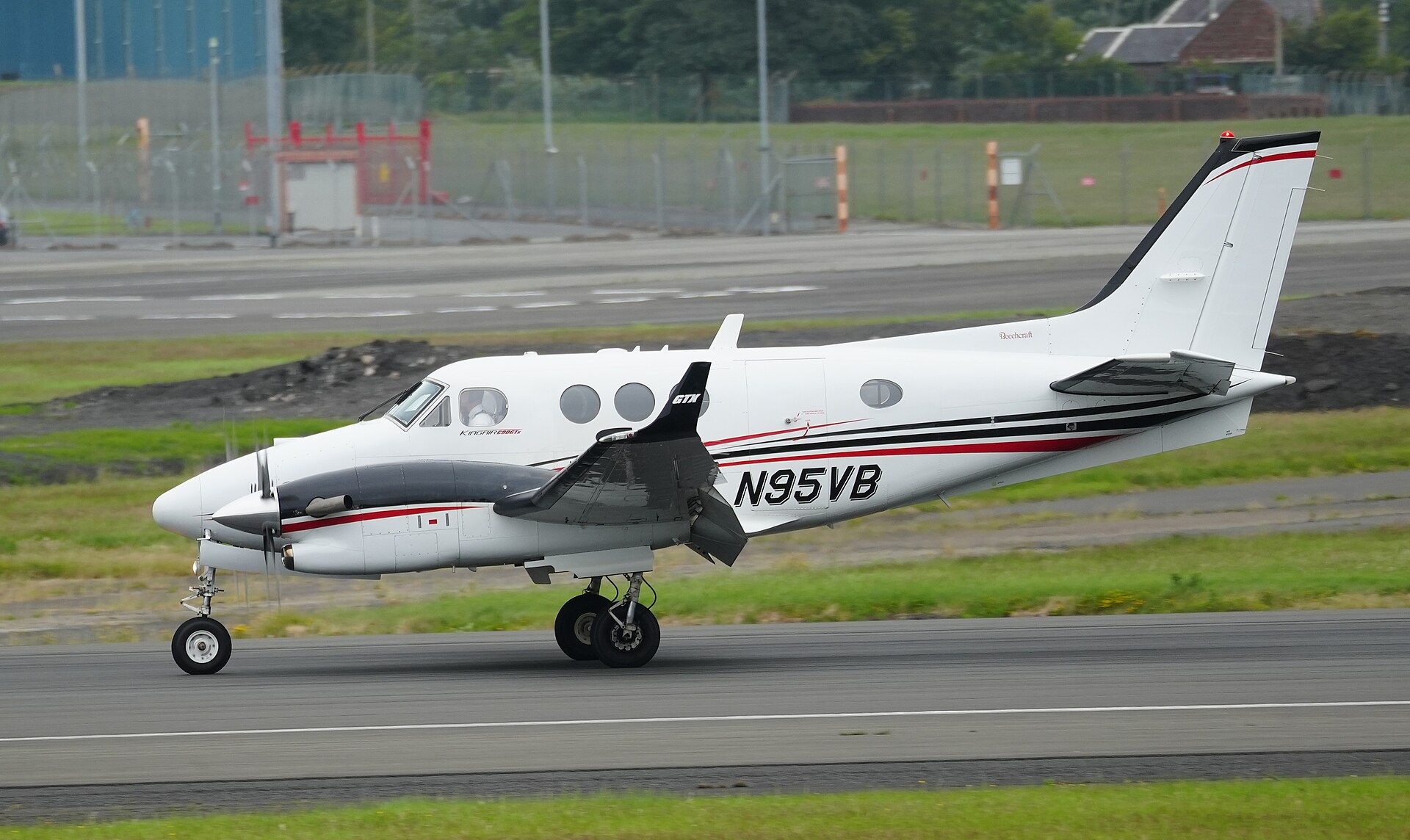
What changed from the Queen Air 80 series
- Two Pratt & Whitney PT6A turboprops replace the Queen Air's piston engines.
- Pressurized cabin, using an engine-driven supercharger, about 3.4 psi on the original 90.
- A90 (1966) moves from the PT6A-6 to the PT6A-20.
- A90 adds reversing propellers for shorter landing rolls.
- A90 maximum takeoff weight rises 300 lb, to 9,300 lb.
- A90 pressurization rises to about 4.0 psi: 8,000 ft cabin at 21,000 ft.
Size and cabin
How big it is, inside and out
Outside
Silhouette · scaled to length
Length
Wingspan
Height
Inside the cabin
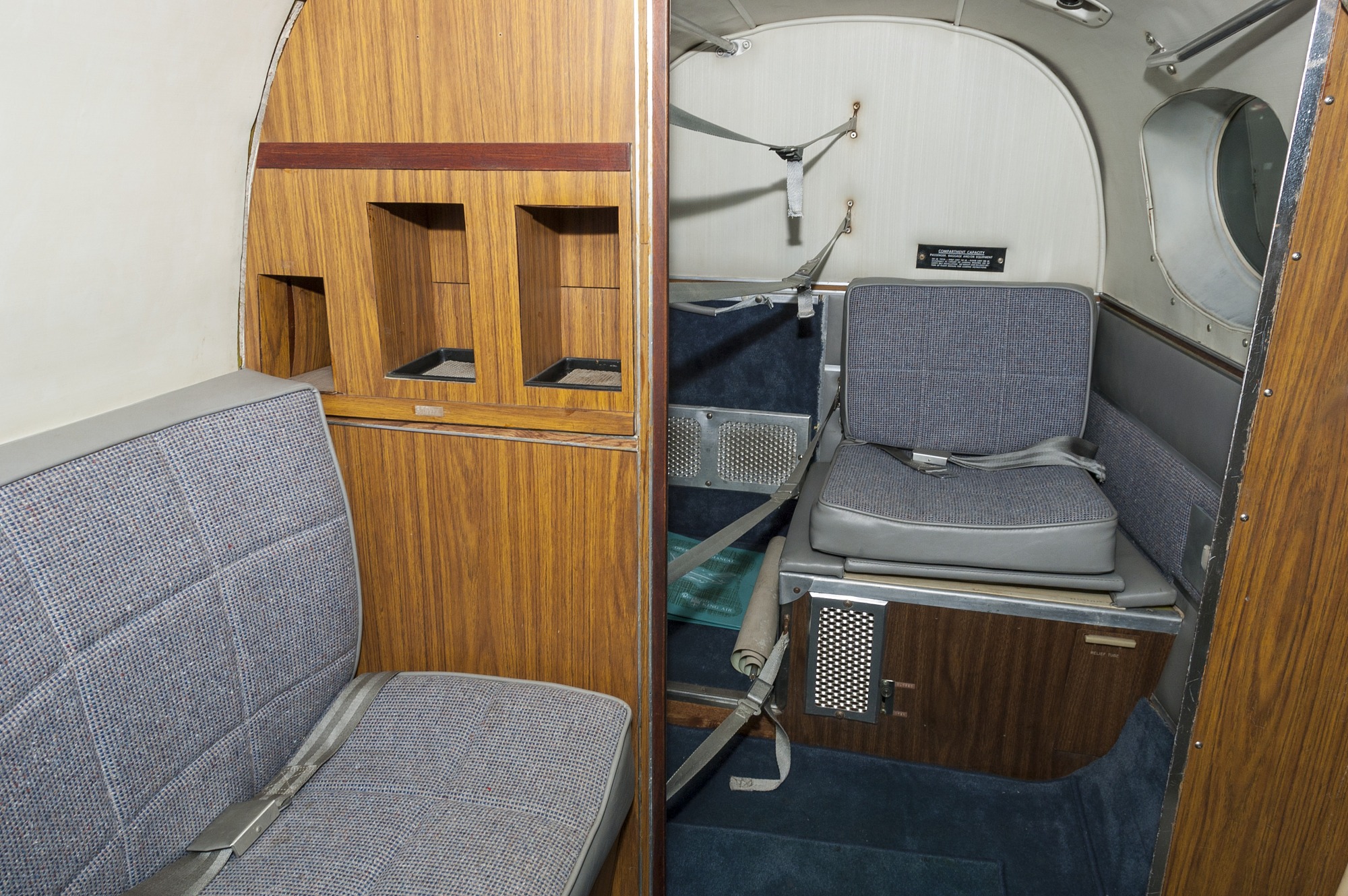
Photo · this model
Cabin length
Width
Height
Compare
How it stacks up
This aircraft
King Air 90 / A90 (1964–1968)
- JetGrade
- 63
- Price
- $529K
- Cost per year
- $415K
- Range
- 1,160 nm
- Speed
- 216 kt
- Seats
- 5
- Cabin length
- 12′ 4″
- Pilots
- 1
- Years built
- 1964–1968
← Before
Queen Air 80 series
Not yet graded
After →
- JetGrade
- 63
- Price
- $383K–$383K guide
- Cost per year
- $512K
- Range
- 1,250 nm
- Speed
- 225 kt
- Seats
- 5
- Cabin length
- 12′ 4″
- Pilots
- 1
- Years built
- 1968–1970
Alternative
- JetGrade
- 69
- Price
- $775K
- Cost per year
- $609K
- Range
- 900 nm
- Speed
- 223 kt
- Seats
- 5
- Cabin length
- 12′ 5″
- Pilots
- 1
- Years built
- 1971–1983
Alternative
- JetGrade
- 72
- Price
- $770K–$860K guide
- Cost per year
- $586K
- Range
- 1,490 nm
- Speed
- 248 kt
- Seats
- 5
- Cabin length
- 12′ 5″
- Pilots
- 1
- Years built
- 1972–1981
Alternative
- JetGrade
- 67
- Cost per year
- $395K
- Range
- 1,550 nm
- Speed
- 300 kt
- Seats
- 4
- Cabin length
- 13′ 4″
- Pilots
- 1
- Years built
- 1990–1999
- King Air C90 instead: Same cabin with the better-supported PT6A-21 engine; the usual vintage King Air buy for a modest premium.
- King Air E90 instead: PT6A-28 engines give more power and better climb at altitude, with the same cabin and owner-pilot appeal.
- Daher TBM 700A instead: A faster single-engine pressurized turboprop with lower fuel burn, if speed matters more than two engines and cabin room.
Gold marks the best figure in each row.
Owning one
What to know before you buy
Engines & inspections
2 × Pratt & Whitney Canada PT6A-20 (A90); PT6A-6 (original 90) · 550 shp each
No APUEngine hours until overhaul
- Engine control cross-shaft (A90) · 100 hr
- Beechcraft phase inspections · 200 hr
- Nose gear fork · 200 hr
- Main gear torque knees · 1,000 hr
- Starter-generator overhaul · 1,000 hr
- Engine hot section inspection · 1,800 hr
- Engine overhaul · 3,600 hr
No pay-per-hour plan or flat-rate overhaul price is published for these engines; the closest supported model, the PT6A-21, overhauls for $319,000–$404,000.
Known issues
Original engine overhaul support
PT6A-6 and -20 parts are scarce; some shops will not overhaul the -6, and no flat-rate price exists.
Wing bolts and spar fittings
Pre-C90A wings use bolted fittings; a 2020 FAA directive can mean fitting replacement near $20,000 per side.
Pressurization system age
An engine-driven supercharger pressurizes the cabin; leaks cause most faults, and diagnosis needs a King Air specialist.
Pre-buy checklist
0 of 10 checked
Textron Aviation and many independent King Air shops support the airframe, and salvage parts are plentiful. Parts for the original PT6A-6 and -20 engines are the weak spot.
Review
The full review
Strengths
- The same club cabin as later 90s: 12 ft 4 in long, 4 ft 10 in tall, four facing seats.
- Two Pratt & Whitney turboprops, reversing propellers on the A90 and landing rolls near 1,250 ft.
- Cheapest way into a King Air: four priced listings from $229,000 to $699,000 in October 2026.
Limitations
- Original engines have scarce parts; the closest supported model overhauls for $319,000 to $404,000 per engine.
- About 750 nm with four passengers and reserves, at roughly 216 kt cruise.
- Low pressurization: the A90 holds an 8,000 ft cabin only up to 21,000 ft.
The King Air 90 started the most successful turboprop family in business aviation. In 1963 Beechcraft hung two Pratt & Whitney PT6 turboprops on a Model 80-series Queen Air, pressurized the cabin, and flew the first Model 65-90 in January 1964. About 112 were built before the A90 replaced it in 1966; roughly 205 A90s followed before the B90 took over in 1968. This page covers both. They share a cabin and airframe, but the A90 is the one most buyers will find: 34 are on the US register against seven original 90s.
Pilot's take
The 90 and A90 fly like what they are: a Queen Air with turbines. Handling is light and predictable, single-engine behavior is docile, and the step up from a piston twin is gentle, which is why the type still trains so many owner-pilots. Expect to plan around 215 to 230 kt and to stay between about 18,000 and 25,000 ft, where the early engines run out of breath. The A90's reversing propellers make short runways easy; the original 90 lacks them. Treat engine-failure training as non-negotiable: losing an engine right after takeoff is the scenario that catches King Air pilots.
Who this is for
An experienced owner-pilot or small business flying regional trips of 300 to 700 nm with four or five people, who values a King Air cabin and two turbines over speed and already has a trusted King Air shop.

Ask about this aircraft
Answers come only from our research file on the King Air 90 / A90.
Your earlier questionsOwners
Private to verified ownersOwn a Beechcraft King Air 90 / A90 (1964–1968)? Verify with its FAA registration to join the owners' thread and the real-cost poll.