
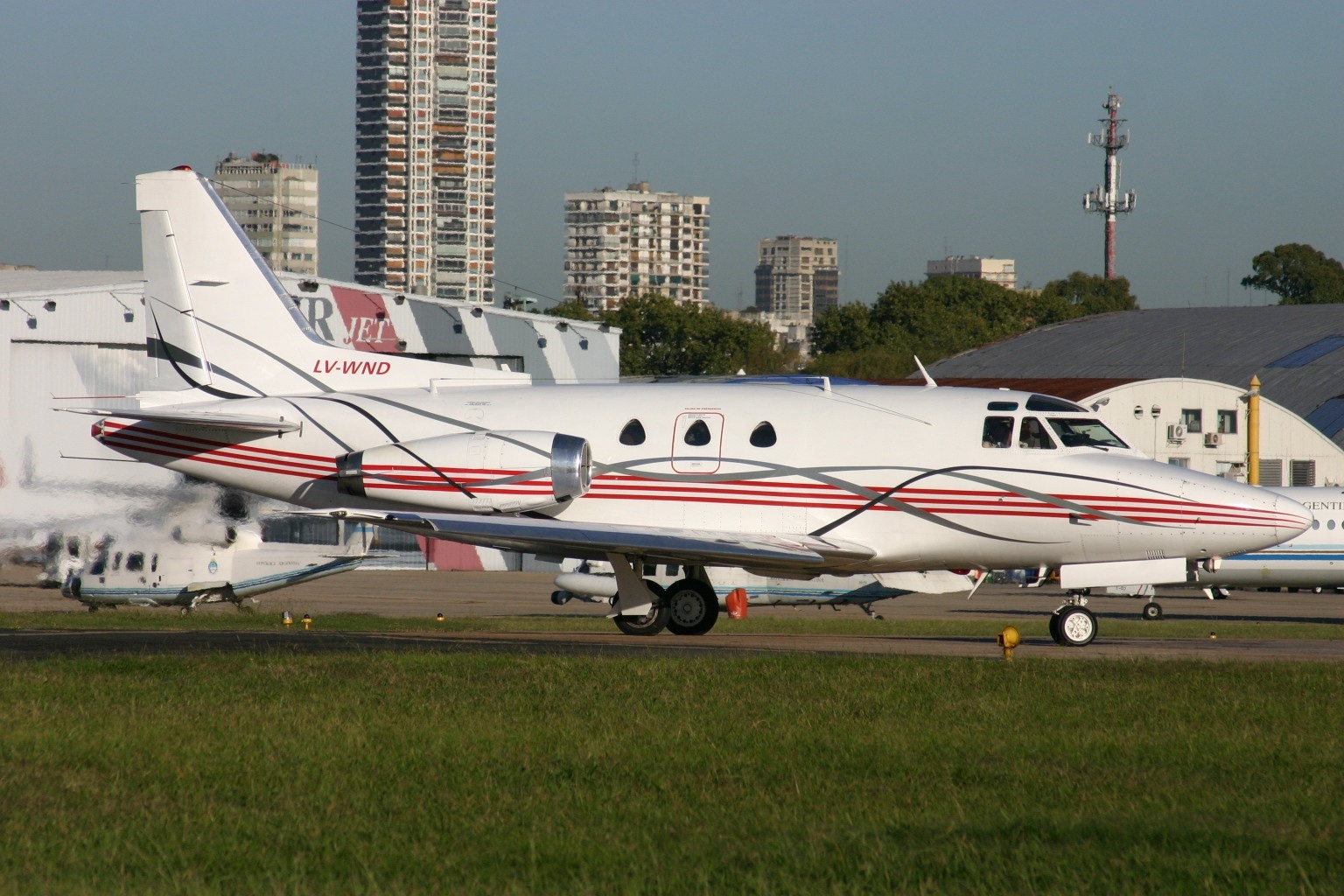
A Sabreliner 40A at Buenos Aires Aeroparque in 2012. · Photo: Aeroprints.com, CC BY-SA 3.0, via Wikimedia Commons
Sabreliner · Midsize Jet
Sabreliner 40 / 40A
The first civil Sabreliner; the 40A was the final short-fuselage version before the stretched 60.
A historic, rugged airplane that no longer works as US transportation. Its Stage 2 turbojets are barred from the 48 contiguous states, no noise kit exists, and range with four passengers is only about 1,050 nm.
Buy it if
You will base and fly it outside the 48 contiguous states, or want a collectible piece of jet history, and have experienced Sabreliner pilots and mechanics plus an example with current wing spar inspections and engine records.
Skip it if
You need to fly to or from US airports in the lower 48 states, want a cabin you can stand in, or want predictable costs. A Citation II or Learjet 35A is far easier to own.
Biggest compromise
Noise rules. Since January 2016 a Stage 2 jet under 75,000 lb may not fly to or from airports in the 48 contiguous states except under special FAA permission for purposes such as export, maintenance or scrapping.
The numbers that matter
What it costs per year
$1.27M
at 300 hrs · two professional pilots
How far it flies
1,650 nm
1,000–1,050 nm with passengers
How fast
459 kt
high-speed cruise
Seats
6
6 typical, 7–8 by interior
Pilots needed
2
Two pilots are required on every flight.
Price
What one costs to buy
Typical asking price
$0
Other sites
Priced vs call
with a price / call for price
No Sabre 40 is advertised. Before the 2016 noise ban, guide values ran $235,000–$290,000; the FAA expected them to fall toward scrap value.
Price vs its family and alternatives
Scroll to explore · select a jet for details
Sabreliner 60 (NA-265-60)
$235K–$363K guide
Guide value, not a listed asking price.
See the Sabreliner 60 (NA-265-60)For sale now
None listed right now
Cost to own
What it costs per year to run
300hours / year
Per year
Per flight hour
Estimate — your operator will quote actual numbers.
Fuel, airframe maintenance and inspections and parts allowance rise as you fly more. Two professional pilots, recurrent training, hangar, insurance and charts, weather and records stay the same however much you fly.
Where the money goes
Partial estimate- Two professional pilots$275,00022%
- Recurrent training$55,0004%
- Hangar$42,0003%
- Insurance$55,0004%
- Charts, weather and records$7,5001%
- Fuel$610,74048%
- Airframe maintenance$195,00015%
- Inspections and parts allowance$30,0002%
Fuel is the biggest single cost at 48% of the total.
The JetGrade
40 out of 100 — Well below its class
Peer group: HS-125-1A / -1B / -3, HS-125-400, Falcon 20 (20C / 20D / 20E / 20F), Learjet 25 / 25B / 25C / 25D
Seven categories at a glance
- - - 70 = typical— This aircraft
Strongest on speed & trip time, weakest on airport access.
Grades are editorial opinions about the model, not any specific aircraft. Sponsors and affiliates have no input. Reviewed 2026-10-29.
Where it flies
Sample trips and reach
Typical trips on a map
Nonstop
Depends on weight or weather
Fuel stop likely
Out of reach
2 of 8 sample trips are comfortable nonstops.
Sample flight times
- 0.9 hr
Carlsbad → Las Vegas
205 nm · Easy range; US noise rules bar the flight
- 1.9 hr
Carlsbad → Aspen
625 nm · Hot-and-high; noise rules also bar it
- 2.2 hr
Santa Ana → San José del Cabo
765 nm · In range; US departure barred by noise rules
- 2.6 hr
Teterboro → West Palm Beach
900 nm · Near its limit with four; headwinds force stop
- 3.4 hr
Dallas → Teterboro
1,190 nm · One stop; noise rules bar both ends
- 3.9 hr
Teterboro → San Juan
1,410 nm · One stop, typically in Florida
- 5.7 hr
Carlsbad → Teterboro
2,100 nm · Two stops in still air
Los Angeles → Honolulu
2,215 nm · Ocean crossing far beyond its range
Lineage
What came before and after
1960–1963
North American T-39 Sabreliner
Military trainer and crew transport for the Air Force and Navy.

1963–1974
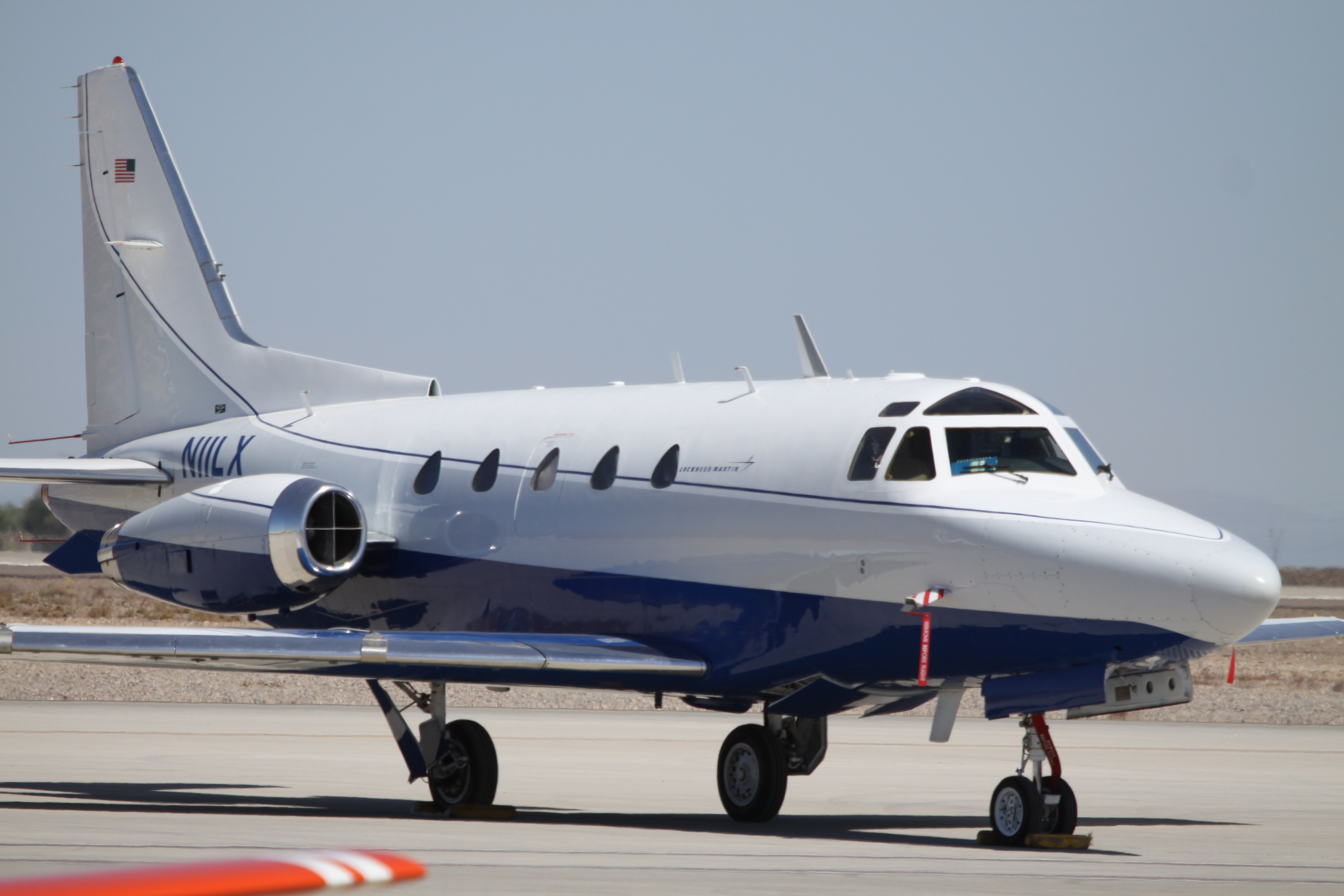
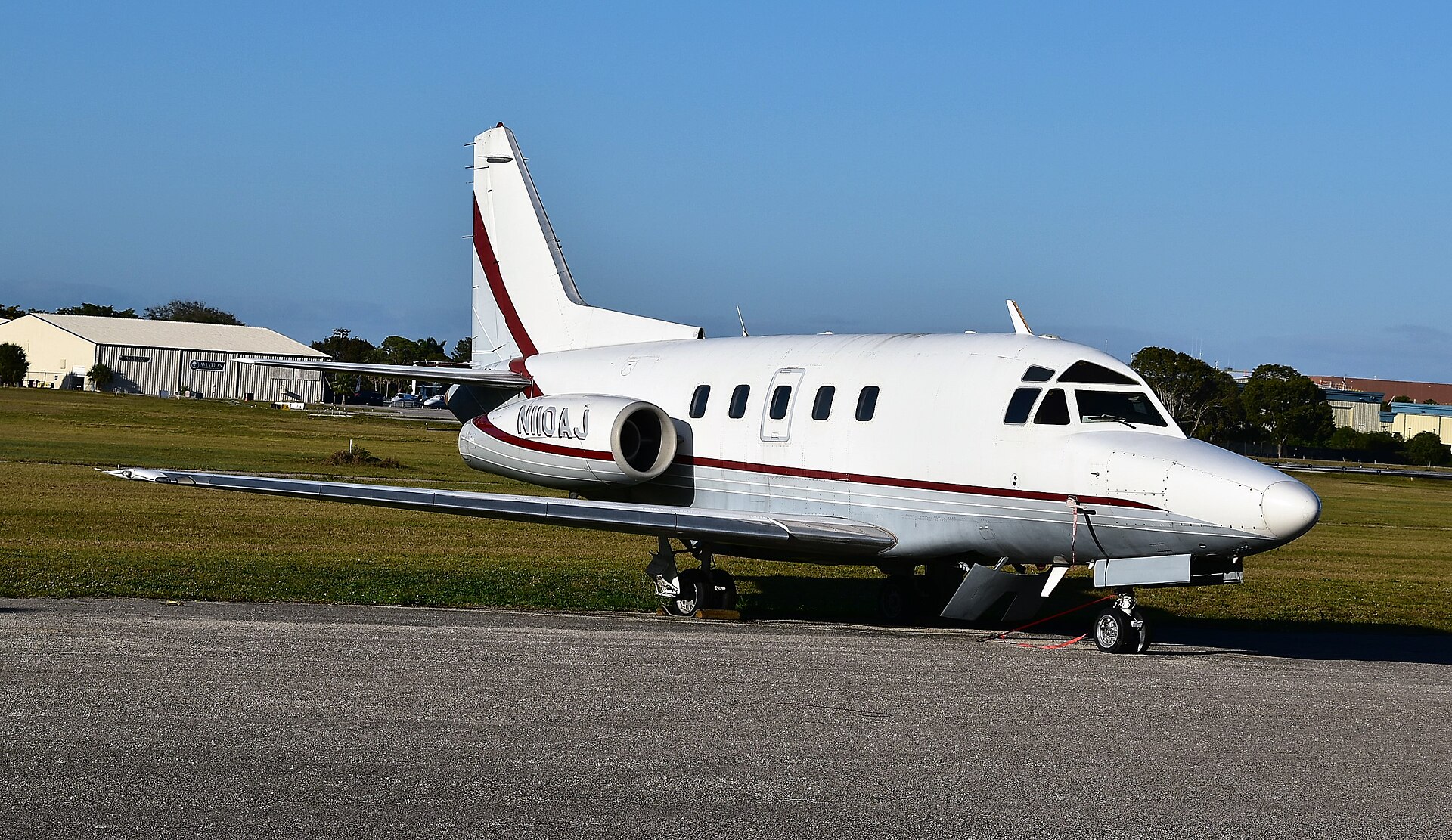
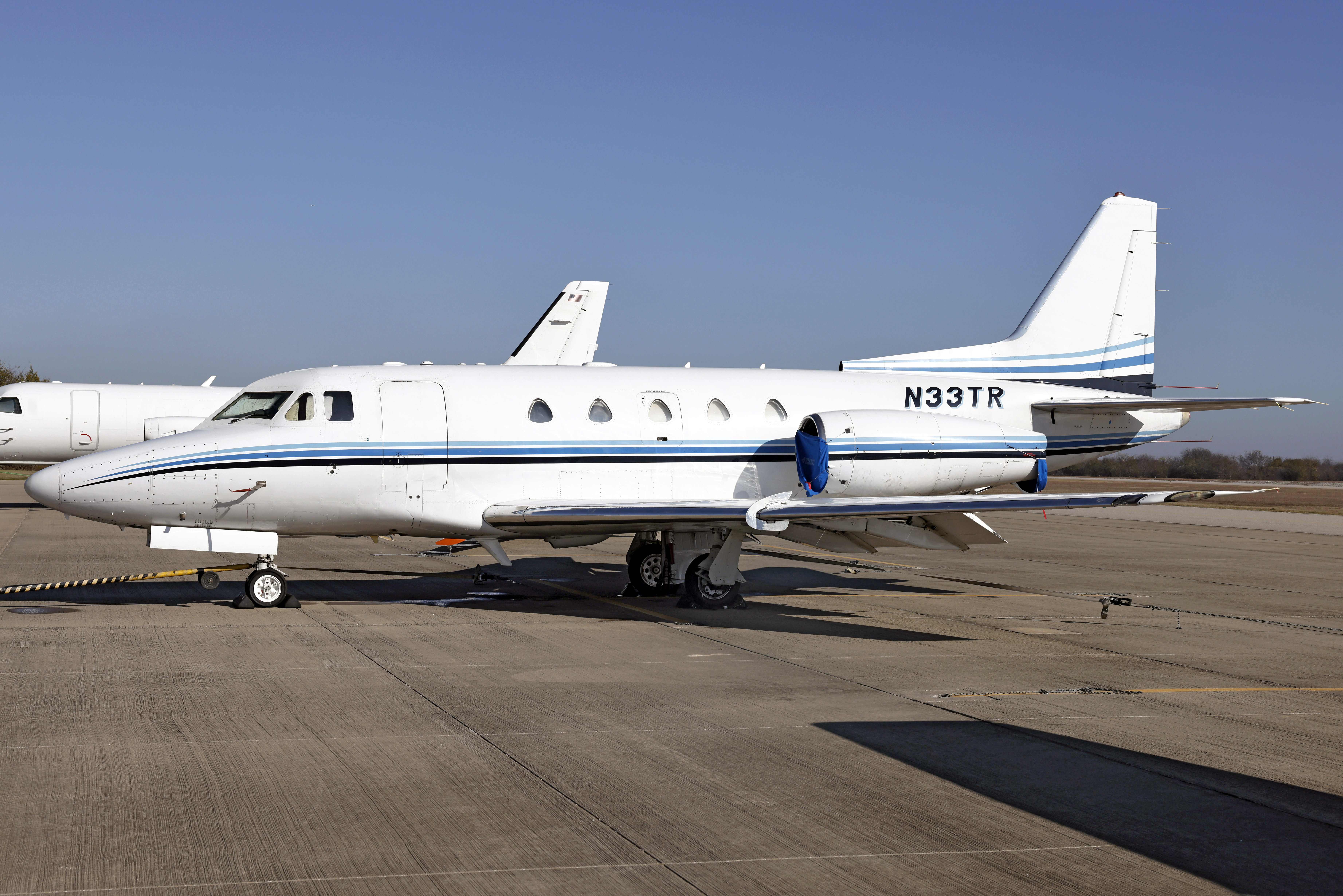
Sabreliner 40 / 40A
First civil version; 40A added a higher-weight option in 1972.
What changed from the North American T-39 Sabreliner
- Civil executive interior for about six passengers in place of military trainer equipment.
- Civil Pratt & Whitney JT12A turbojets; the JT12A-8 from 1966 added about 10% thrust.
- A 1965 landing gear upgrade raised maximum takeoff weight to 18,650 lb.
- The 1972 40A offered a higher maximum takeoff weight of 19,612 lb.
- Business avionics packages; the 40A brought updated equipment and a lighter interior.
Size and cabin
How big it is, inside and out
Outside
Silhouette · scaled to length
Length
Wingspan
Height
Inside the cabin
Cabin length
Width
Compare
How it stacks up
This aircraft
Sabreliner 40 / 40A
- JetGrade
- 40
- Cost per year
- $1.27M
- Range
- 1,650 nm
- Speed
- 459 kt
- Seats
- 6
- Cabin length
- 15′ 11″
- Pilots
- 2
- Years built
- 1963–1974
← Before
North American T-39 Sabreliner
Not yet graded
After →
- JetGrade
- 46
- Price
- $235K–$363K guide
- Cost per year
- $2.18M
- Range
- 1,335 nm
- Speed
- 428 kt
- Seats
- 7
- Cabin length
- 19′ 0″
- Pilots
- 2
- Years built
- 1967–1979
Alternative
- JetGrade
- 59
- Price
- $350K–$505K guide
- Cost per year
- $2M
- Range
- 2,460 nm
- Speed
- 465 kt
- Seats
- 8
- Cabin length
- 19′ 0″
- Pilots
- 2
- Years built
- 1979–1981
Alternative
- JetGrade
- 67
- Price
- $581K–$920K guide
- Cost per year
- $1.31M
- Range
- 2,196 nm
- Speed
- 451 kt
- Seats
- 6
- Cabin length
- 12′ 11″
- Pilots
- 2
- Years built
- 1974–1993
Alternative
- JetGrade
- 67
- Price
- $895K
- Cost per year
- $919K
- Range
- 1,159 nm
- Speed
- 355 kt
- Seats
- 6
- Cabin length
- 15′ 9″
- Pilots
- 2
- Years built
- 1978–1994
- Sabreliner 65 instead: The same family with turbofan engines and a new wing: far longer range, lower fuel burn and a better chance of meeting today's noise rules.
- Learjet 35 / 35A instead: Similar speed with turbofan engines, roughly double the practical range, Stage 3 noise compliance and a large support base.
- Cessna Citation II (550) instead: Slower, but legal everywhere in the US, cheaper to run, with shorter runway needs and Cessna's service network.
Gold marks the best figure in each row.
Owning one
What to know before you buy
Engines & inspections
2 × Pratt & Whitney JT12A-8 turbojet (JT12A-6A on early 40s) · 3,300 lbf each
No APUEngine hours until overhaul
- Engine overhaul · 3,000 hr
- Airframe structural life limit · 10,000 hr
- Life extension inspection · 15,000 hr
- Wing spar inspection every 24 months
No pay-per-hour engine plan covers the JT12, so owners fund overhauls directly. Get a current shop quote before buying.
Known issues
Barred by US noise rules
As a Stage 2 jet it may not fly to or from airports in the 48 contiguous states without special FAA permission.
No noise kit exists
When the FAA wrote the rule it listed no hush kit for the Sabre 40, and none has appeared since.
Wing spar cracking
An airworthiness directive requires spar and lug inspections every 24 months; cracks must be repaired before flight.
Pre-buy checklist
0 of 9 checked
Sabreliner still holds the type certificate, and since 2017 AVMATS in Chesterfield, Missouri, has been the authorized Sabreliner service center and parts distributor, including JT12 engine work.
Review
The full review
Strengths
- A 459-knot maximum cruise, 5,050 feet per minute climb and 45,000 ft ceiling still feel quick.
- Built to US Air Force trainer standards, with automatic leading-edge slats that AOPA described as giving docile stalls.
- Full tanks still leave about 1,600 lb of payload, so six passengers can ride with full fuel.
Limitations
- Barred from airports in the 48 contiguous states since 2016 because no noise kit was ever offered.
- About 1,050 nm with four passengers, and a cabin only about 4 ft 6 in to 5 ft tall.
- Turbojets burn roughly 240–280 gallons an hour, with no hourly engine plans and wing spar inspections every 24 months.
The Sabreliner 40 is the first civil version of the North American T-39, the jet the US Air Force bought in the late 1950s to train and carry crews. North American delivered the first Sabre 40 to a corporate customer in April 1963, making it one of the first business jets on the market. Early aircraft used Pratt & Whitney JT12A-6A turbojets of about 3,000 lb thrust; from 1966 the JT12A-8 added roughly 10% more. In 1972 the standard 40 and the seven-seat Sabreliner Commander were renamed the 40A, which offered a higher maximum takeoff weight of 19,612 lb and was built until about 1974. About 137 short-fuselage Sabreliners were built before the stretched Sabreliner 60 and turbofan Sabreliner 65 took over.
Pilot's take
The Sabre 40 flies like the military trainer it came from. AOPA's 1999 flight report described a transport-category cockpit with a big yoke and a busy overhead panel, automatic leading-edge slats that deploy between about 180 and 140 knots, and stall behavior gentler than a Bonanza's, with no stick pusher. Nosewheel steering is very sensitive, so crews usually steer with rudder above about 80 knots, and thrust reversers must be stowed by 80 knots. Final approach runs about 137 knots. It climbs hard and cruises fast up high, but the turbojets punish low, slow flying with heavy fuel burn.
Who this is for
A collector, museum, foreign or special-mission operator, or enthusiast who will base it outside the lower 48 states, flying a few people under about 900 nm, with Sabreliner-experienced crews and money set aside for unplanned maintenance.

Ask about this aircraft
Answers come only from our research file on the Sabreliner 40 / 40A.
Your earlier questionsOwners
Private to verified ownersOwn a Sabreliner Sabreliner 40 / 40A? Verify with its FAA registration to join the owners' thread and the real-cost poll.