
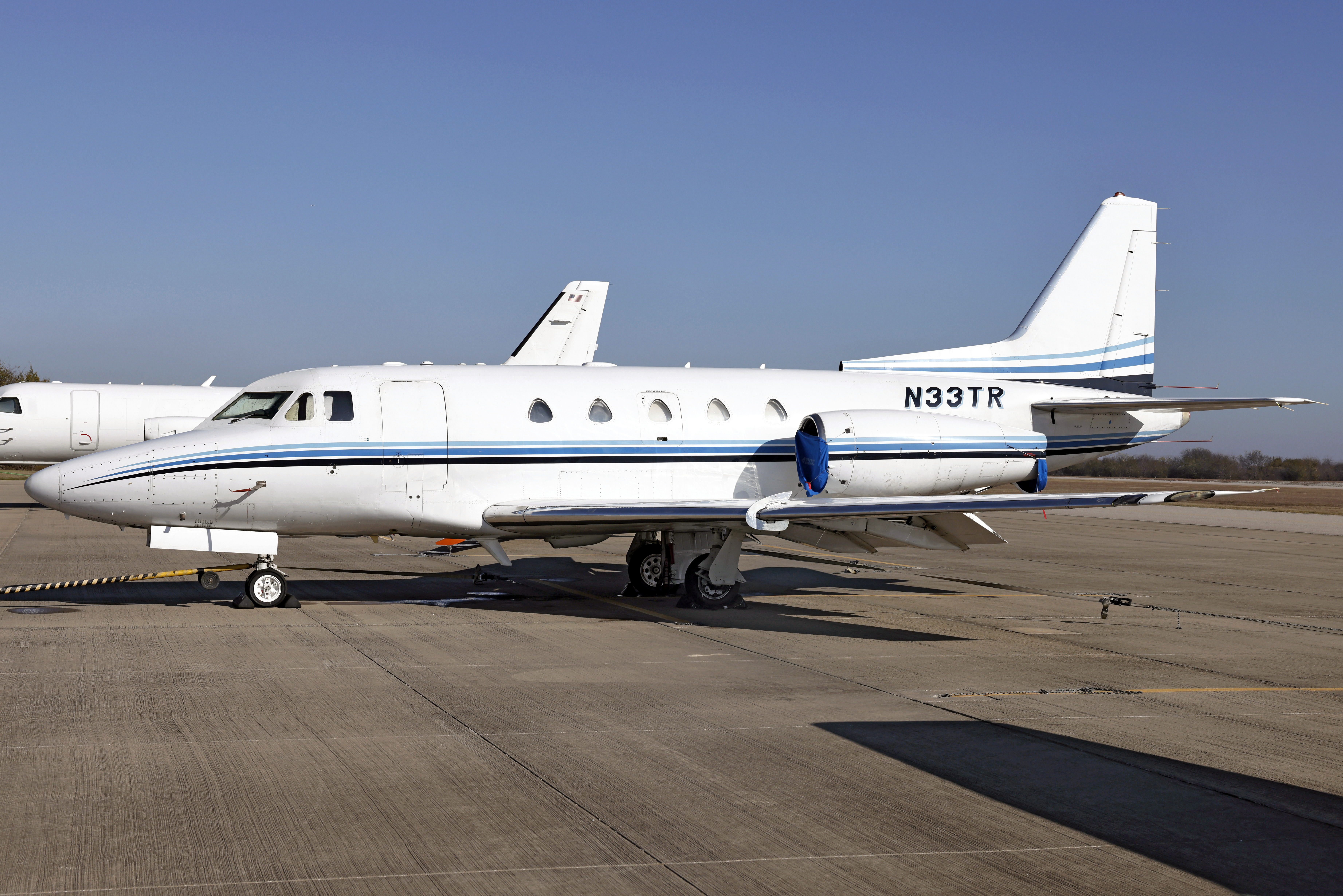
A 1980 Sabreliner 65 on the ramp at Mid-Way Regional Airport, Texas, December 2025. · Photo: Duncan Kirk, CC BY 4.0, via Wikimedia Commons
Sabreliner · Midsize Jet
Sabreliner 65 (NA-265-65)
The last and most capable Sabreliner, built after the Sabre 60 and Sabre 75A/80.
The Sabre 65 still flies about 2,300 nm with six passengers and costs less to buy than many light jets. But only 76 were built, the original maker has stepped back, and running one costs about $2 million a year.
Buy it if
You want real midsize range on a small purchase budget, fly mostly from runways of 6,000 ft or longer, have a Sabreliner-savvy shop lined up, and can absorb a six-figure engine bill.
Skip it if
You need to stand up in the cabin, fly from short or high-altitude runways in summer, want to base the jet in Europe, or need predictable costs and an easy resale.
Biggest compromise
You get range and speed that newer jets charge millions for, but you inherit a 45-year-old airframe with a tiny fleet, thin factory support and engines that can need six-figure inspections. A $400,000 jet can cost five times its price to run each year.
The numbers that matter
Purchase price
$350K–$505K
guide value (Aircraft Cost Calculator, evoJets and windsock.ai)
What it costs per year
$2M
at 300 hrs · two professional pilots
How far it flies
2,460 nm
About 2,300 nm with six passengers
How fast
465 kt
high-speed cruise
Seats
8
8 typical (6–8 by interior)
Pilots needed
2
Always flown by two pilots.
Price
What one costs to buy
Guide value
$350K–$505K
Other sites
Priced vs call
with a price / call for price
One Sabre 65 for sale shows a price: $495,000 for a 1980 jet on an engine plan. A 1981 jet asking $395,000 was reported sold this fall.
Price vs its family and alternatives
Scroll to explore · select a jet for details
Sabreliner 65 (NA-265-65) · This aircraft
$350K–$505K guide
Guide value, not a listed asking price.
Sits between the Sabreliner 60 (NA-265-60) and the Westwind II (1124A).
For sale now
None listed right now
Cost to own
What it costs per year to run
300hours / year
Per year
Per flight hour
Estimate — your operator will quote actual numbers.
Fuel, airframe maintenance, engine program or reserve and technician, contractors and upgrades rise as you fly more. Two professional pilots, recurrent training, hangar, insurance and subscriptions and services stay the same however much you fly.
Where the money goes
- Two professional pilots$345,05017%
- Recurrent training$53,8573%
- Hangar$57,8223%
- Insurance$35,9192%
- Subscriptions and services$96,8345%
- Fuel$673,39834%
- Airframe maintenance$290,10015%
- Engine program or reserve$324,90016%
- Technician, contractors and upgrades$122,7346%
Fuel is the biggest single cost at 34% of the total.
The JetGrade
59 out of 100 — Well below its class
Peer group: IAI Westwind II, Learjet 55, Hawker 700, Cessna Citation III
Seven categories at a glance
- - - 70 = typical— This aircraft
Strongest on range & payload, weakest on reliability & support.
Grades are editorial opinions about the model, not any specific aircraft. Sponsors and affiliates have no input. Reviewed 2026-10-29.
Where it flies
Sample trips and reach
Typical trips on a map
Nonstop
Depends on weight or weather
Fuel stop likely
Out of reach
5 of 8 sample trips are comfortable nonstops.
Sample flight times
- 0.8 hr
Carlsbad → Las Vegas
205 nm · Short hop, well within range
- 2.0 hr
Carlsbad → Aspen
625 nm · Hot-and-high; depends on weight and weather
- 2.3 hr
Santa Ana → San José del Cabo
765 nm · Comfortable nonstop with four passengers
- 2.6 hr
Teterboro → West Palm Beach
900 nm · Easy nonstop with a full cabin
- 3.3 hr
Dallas → Teterboro
1,190 nm · Comfortable nonstop with four passengers
- 3.8 hr
Teterboro → San Juan
1,410 nm · Nonstop with four passengers and bags
- 5.9 hr
Carlsbad → Teterboro
2,100 nm · Carlsbad's short runway limits fuel; plan one stop
Los Angeles → Honolulu
2,215 nm · Too far over water with safe reserves
Lineage
What came before and after

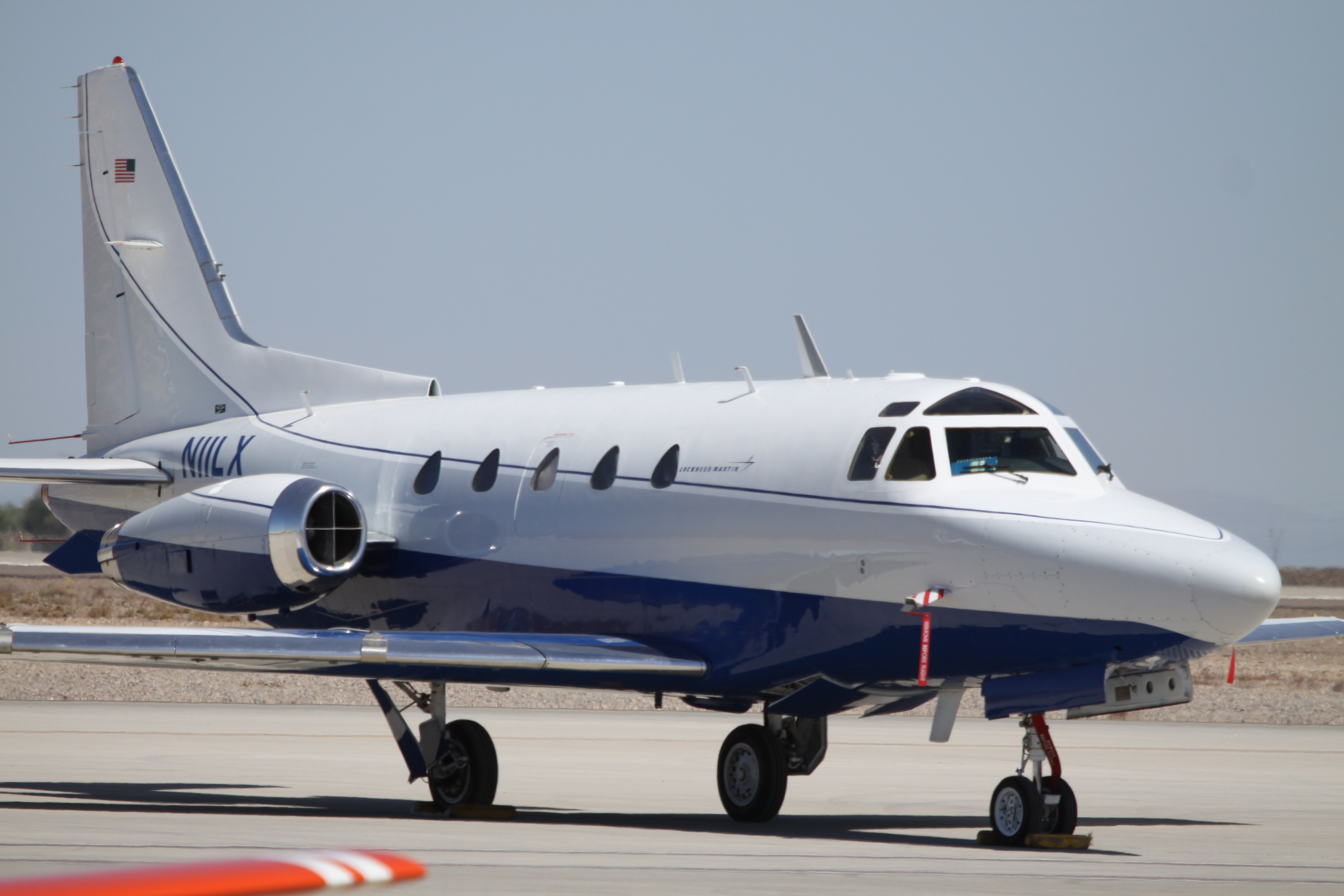
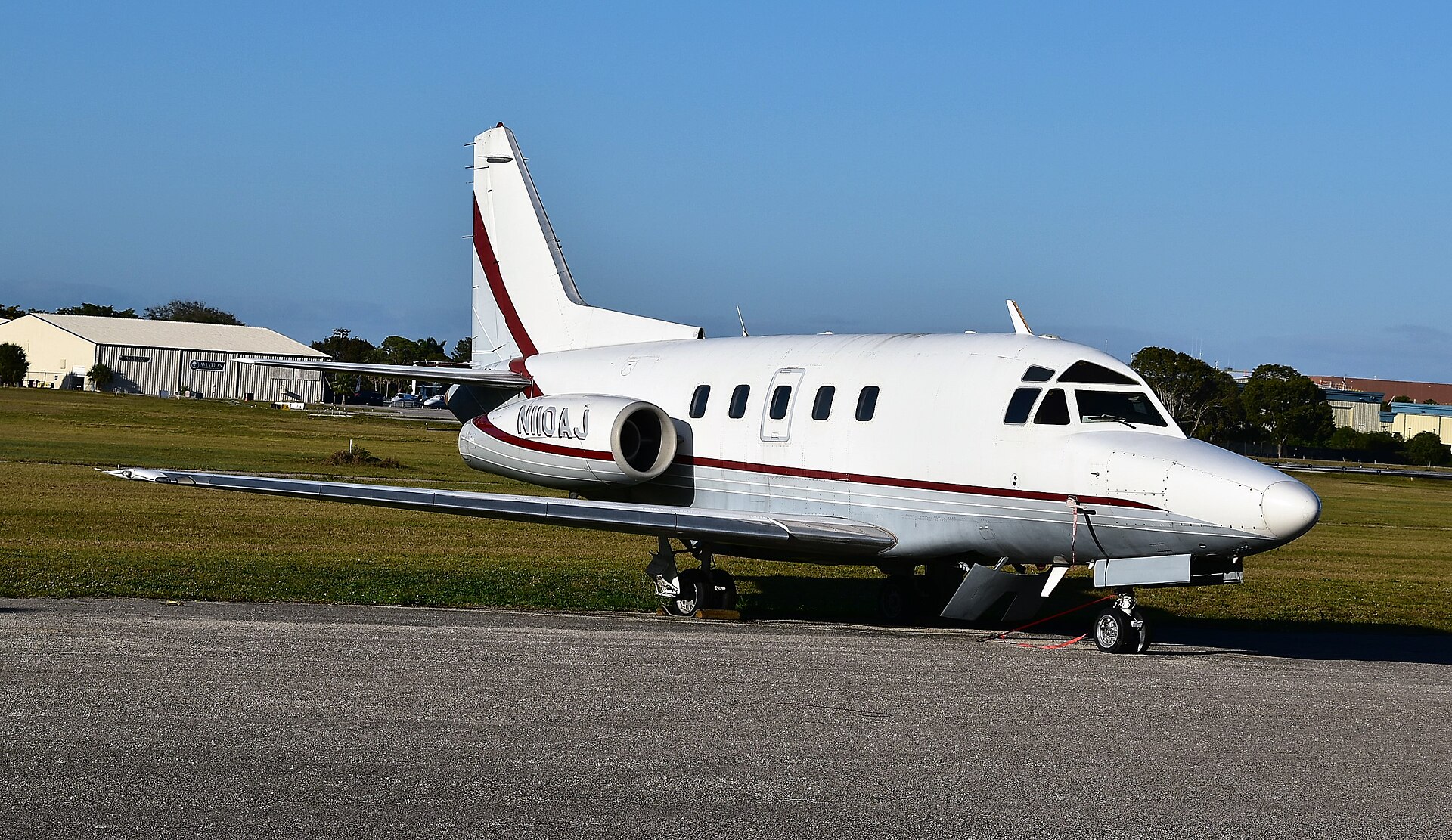
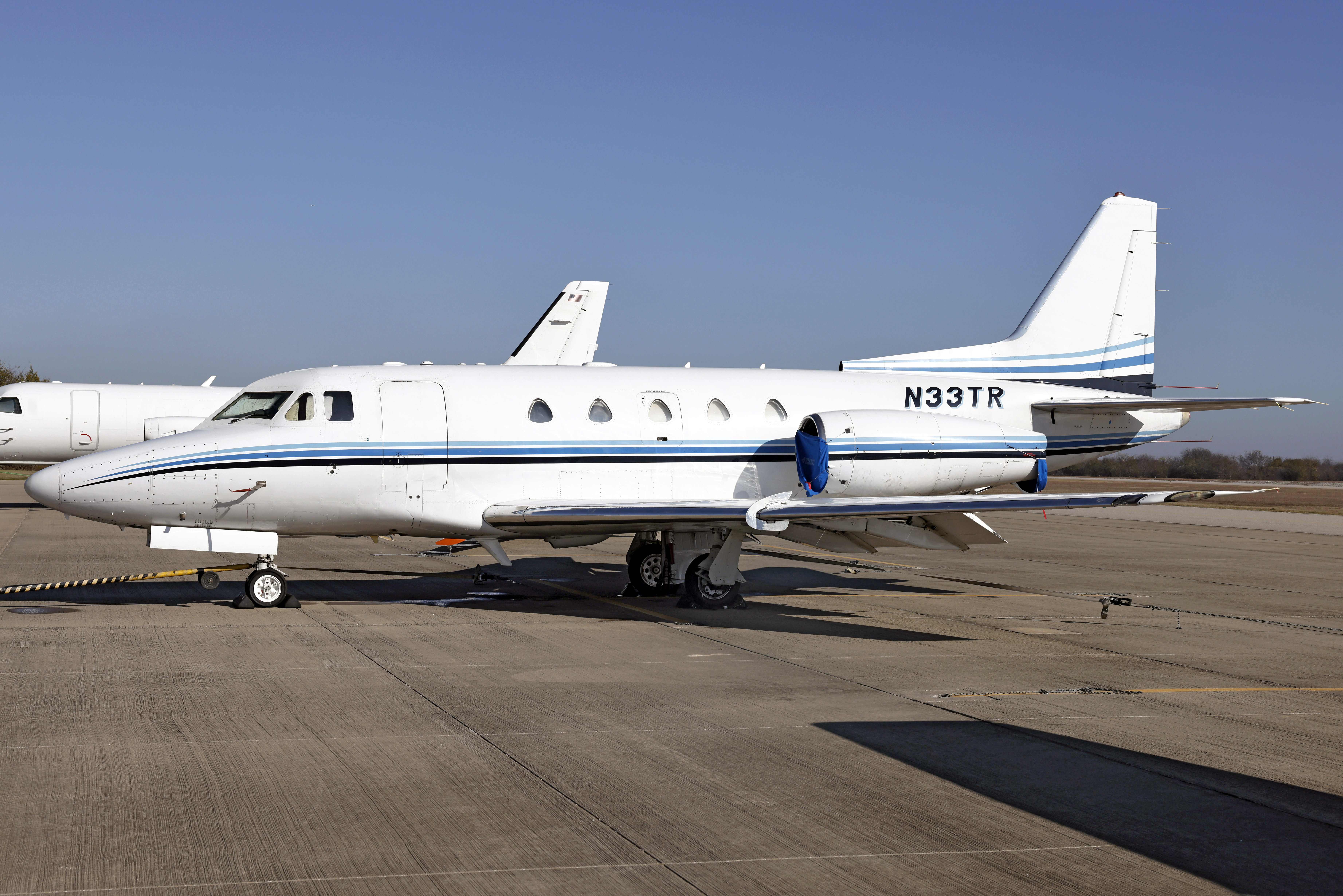
1979–1981
Sabreliner 65
Sabre 60 cabin with TFE731 fans and a new wing
What changed from the Sabreliner 60
- Pratt & Whitney JT12 turbojets replaced by Garrett TFE731-3 turbofans of 3,700 lb thrust each.
- New Raisbeck supercritical wing, the first on a US civil jet, spanning about 50.5 ft.
- Range grew to about 2,300 nm with six passengers.
- Maximum takeoff weight rose to 24,000 lb.
Size and cabin
How big it is, inside and out
Outside
Silhouette · scaled to length
Length
Wingspan
Height
Inside the cabin
Cabin length
Width
Height
Compare
How it stacks up
This aircraft
Sabreliner 65 (NA-265-65)
- JetGrade
- 59
- Price
- $350K–$505K guide
- Cost per year
- $2M
- Range
- 2,460 nm
- Speed
- 465 kt
- Seats
- 8
- Cabin length
- 19′ 0″
- Pilots
- 2
- Years built
- 1979–1981
← Before
- JetGrade
- 46
- Price
- $235K–$363K guide
- Cost per year
- $2.18M
- Range
- 1,335 nm
- Speed
- 428 kt
- Seats
- 7
- Cabin length
- 19′ 0″
- Pilots
- 2
- Years built
- 1967–1979
Alternative
- JetGrade
- 65
- Price
- $375K–$523K guide
- Cost per year
- $1.47M
- Range
- 2,530 nm
- Speed
- 436 kt
- Seats
- 7
- Cabin length
- 15′ 7″
- Pilots
- 2
- Years built
- 1980–1987
Alternative
- JetGrade
- 68
- Price
- $400K–$642K guide
- Cost per year
- $1.82M
- Range
- 2,170 nm
- Speed
- 430 kt
- Seats
- 8
- Cabin length
- 21′ 4″
- Pilots
- 2
- Years built
- 1977–1984
Alternative
- JetGrade
- 65
- Price
- $649K
- Cost per year
- $1.93M
- Range
- 2,244 nm
- Speed
- 458 kt
- Seats
- 7
- Cabin length
- 13′ 7″
- Pilots
- 2
- Years built
- 1981–1986
- IAI Westwind II instead: Similar money and even more range with four aboard, from a larger fleet, but the cabin is narrower and lower still.
- Hawker 700 instead: Same TFE731-3 engines with a taller, roomier cabin, an external bag hold and a much bigger fleet, for somewhat less range.
- Learjet 55 instead: A newer design that climbs and cruises faster with a wider owner base, though it costs more and flies a little less far.
Gold marks the best figure in each row.
Owning one
What to know before you buy
Engines & inspections
2 × Honeywell (Garrett) TFE731-3R-1D · 3,700 lbf each
Engine hours until overhaul
- Engine hot-section inspection · 1,400 hr
- Engine core inspection · 4,200 hr
- Wing spar inspection every 24 months
- 60-month airframe inspection every 60 months
Some aircraft are on Honeywell's pay-per-hour MSP plan; many for sale are not, leaving the owner to pay engine inspections as they come due.
Known issues
Thin factory support
The type certificate holder closed its Missouri center in 2017; AVMATS now distributes parts, and some take time to find.
Uncovered engine inspections
Many for-sale aircraft have no engine plan, so owners pay six-figure TFE731 inspections and overhauls directly.
Wing spar crack checks
A repeat FAA directive requires wing spar inspections every 24 months to catch cracks near the center section.
Pre-buy checklist
0 of 10 checked
AVMATS in St. Louis is the authorized Sabreliner service center and parts distributor. TFE731 engines are widely supported by Honeywell shops, but airframe parts and experienced technicians are scarce.
Review
The full review
Strengths
- About 2,300 nm with six passengers and full tanks, enough for many coast-to-coast trips in still air.
- Cruises at 436–465 kt, near Mach 0.80, a little quicker than a Hawker 700 or Westwind II.
- Recent asking prices of $395,000–$495,000 buy a two-engine midsize jet with an enclosed rear lavatory.
Limitations
- The 19 ft cabin is about 5 ft 3 in wide and roughly 4 ft 7 in tall; bags ride inside.
- Needs about 6,600 ft of runway at maximum weight and struggles at hot, high airports like Aspen in summer.
- Only 76 were built, and the factory support center in Missouri closed in 2017, so parts take effort.
The Sabreliner 65 is the last chapter of a jet family that started as the US Air Force's T-39 trainer in the late 1950s. Rockwell built 76 of them between December 1979 and October 1981, pairing the Sabre 60's cabin with two Garrett TFE731-3 turbofans of 3,700 lb thrust each and a new supercritical wing designed by James Raisbeck. It was the first US civil jet to fly with that kind of wing, and it turned an old design into a genuine transcontinental airplane. No Sabreliner came after it.
Pilot's take
The 65 flies like a heavier, more solid jet than its size suggests. It is stable, easy to hand-fly at altitude and honest on approach, and Mach 0.80 cruise in the high 30s is its natural pace. Plan long legs at slower long-range settings up in the low 40s. The weak spot is takeoff performance: on hot days, at high fields or on runways near 6,000 ft, weight and fuel have to come down. We would want an engine plan, a crew with real time in type and a shop that knows Sabreliners before taking the first trip.
Who this is for
An experienced owner or small operator who flies four to six people on long domestic legs, values range over cabin comfort, keeps the jet in the US and holds cash in reserve for old-airframe surprises.

Ask about this aircraft
Answers come only from our research file on the Sabreliner 65.
Your earlier questionsOwners
Private to verified ownersOwn a Sabreliner Sabreliner 65 (NA-265-65)? Verify with its FAA registration to join the owners' thread and the real-cost poll.