
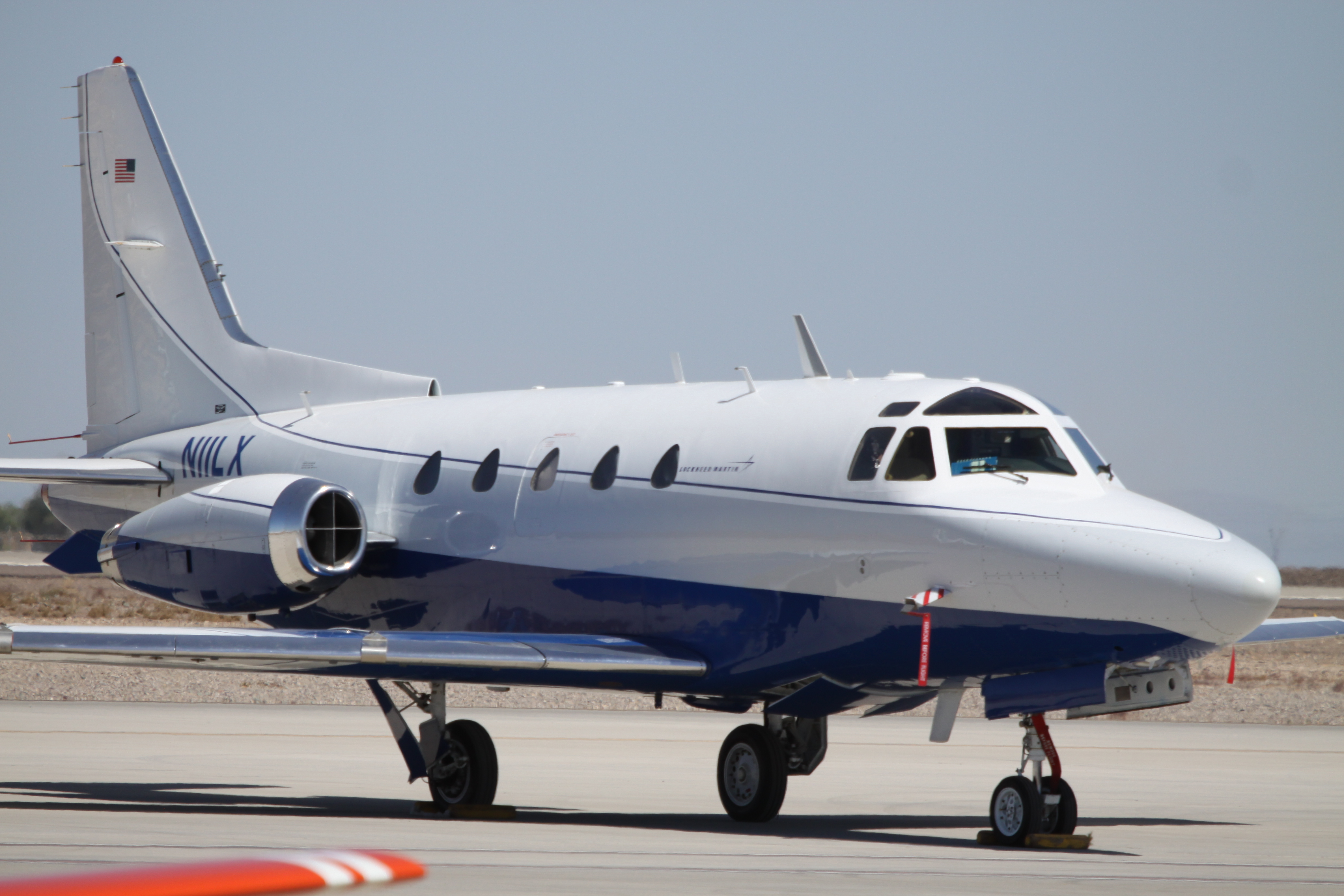
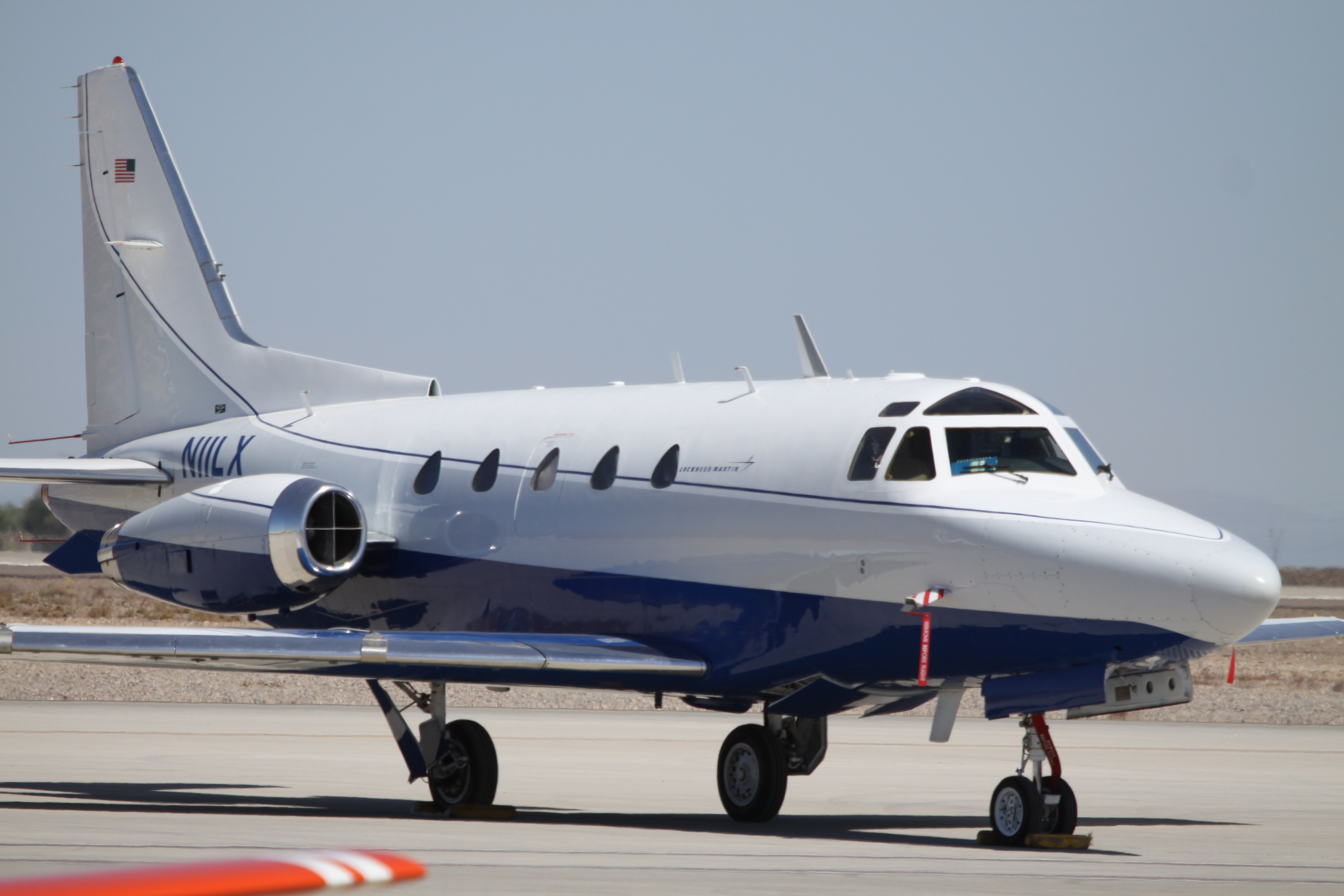
A Sabreliner 60 at Goodyear, Arizona, in April 2013. · Photo: Aeroprints.com / Wikimedia Commons, CC BY-SA 3.0
Sabreliner · Midsize Jet
Sabreliner 60 (NA-265-60)
The stretched, five-window development of the original Sabreliner, built between the Sabre 40 and the fan-powered Sabre 65.
A fast, strongly built piece of business-jet history that most US buyers cannot use. Its turbojets do not meet Stage 3, no noise kit exists, and it may not fly to or from airports in the lower 48 states on a standard certificate.
Buy it if
You will base and fly it outside the contiguous US, or operate it on an experimental certificate for research, training or display, and want a fast two-pilot jet for very little purchase money.
Skip it if
You need to use airports in the lower 48 states, want to carry more than a few passengers far, or want a jet with factory support you can resell.
Biggest compromise
Noise. The JT12 turbojets do not meet FAA Stage 3 and no hushkit was ever offered, so since the end of 2015 a standard-category Sabre 60 may not use airports in the contiguous US except on special one-off permits.
The numbers that matter
Purchase price
$235K–$363K
guide value (Aircraft Bluebook (2011) and evoJets)
What it costs per year
$2.18M
at 300 hrs · two professional pilots
How far it flies
1,335 nm
1,000–1,150 nm with passengers
How fast
428 kt
high-speed cruise
Seats
7
6–8 typical, 10 maximum
Pilots needed
2
Two pilots are required on every flight.
Price
What one costs to buy
Guide value
$235K–$363K
Other sites
Priced vs call
with a price / call for price
No flyable Sabre 60 is advertised. Older guide values ran $235,000–$363,000, set before the 2016 US noise ban took effect.
Price vs its family and alternatives
Scroll to explore · select a jet for details
Sabreliner 60 (NA-265-60) · This aircraft
$235K–$363K guide
Guide value, not a listed asking price.
The least expensive here; next up is the Sabreliner 65 (NA-265-65).
For sale now
None listed right now
Cost to own
What it costs per year to run
300hours / year
Per year
Per flight hour
Estimate — your operator will quote actual numbers.
Fuel, airframe maintenance, engine and major-event reserves and technician, trip and other costs rise as you fly more. Two pilots, pilot and technician training, hangar and office, insurance and maintenance tracking and subscriptions stay the same however much you fly.
Where the money goes
- Two pilots$345,05016%
- Pilot and technician training$67,3213%
- Hangar and office$57,8223%
- Insurance$35,9192%
- Maintenance tracking and subscriptions$60,1703%
- Fuel$743,45734%
- Airframe maintenance$218,40010%
- Engine and major-event reserves$157,8007%
- Technician, trip and other costs$499,03423%
Fuel is the biggest single cost at 34% of the total.
The JetGrade
46 out of 100 — Well below its class
Peer group: Dassault Falcon 20 (20C / 20D / 20E / 20F), Hawker Siddeley HS-125-400, Hawker Siddeley HS-125-600, Sabreliner 75A / 80, IAI 1123 Westwind
Seven categories at a glance
- - - 70 = typical— This aircraft
Strongest on speed & trip time, weakest on value & resale.
Grades are editorial opinions about the model, not any specific aircraft. Sponsors and affiliates have no input. Reviewed 2026-10-29.
Where it flies
Sample trips and reach
Typical trips on a map
Nonstop
Depends on weight or weather
Fuel stop likely
Out of reach
3 of 8 sample trips are comfortable nonstops.
Sample flight times
- 0.9 hr
Carlsbad → Las Vegas
205 nm · Easy range; US noise rules restrict airport use
- 1.9 hr
Carlsbad → Aspen
625 nm · Hot-and-high; needs light load and cool weather
- 2.3 hr
Santa Ana → San José del Cabo
765 nm · Within range; US departure needs noise compliance
- 2.6 hr
Teterboro → West Palm Beach
900 nm · Within four-passenger range; US noise limits apply
- 3.4 hr
Dallas → Teterboro
1,190 nm · Beyond loaded range; plan one fuel stop
- 4.0 hr
Teterboro → San Juan
1,410 nm · Needs one stop, typically in Florida
- 5.6 hr
Carlsbad → Teterboro
2,100 nm · Needs one stop, typically mid-continent
Los Angeles → Honolulu
2,215 nm · Beyond range; no fuel stop over water
Lineage
What came before and after

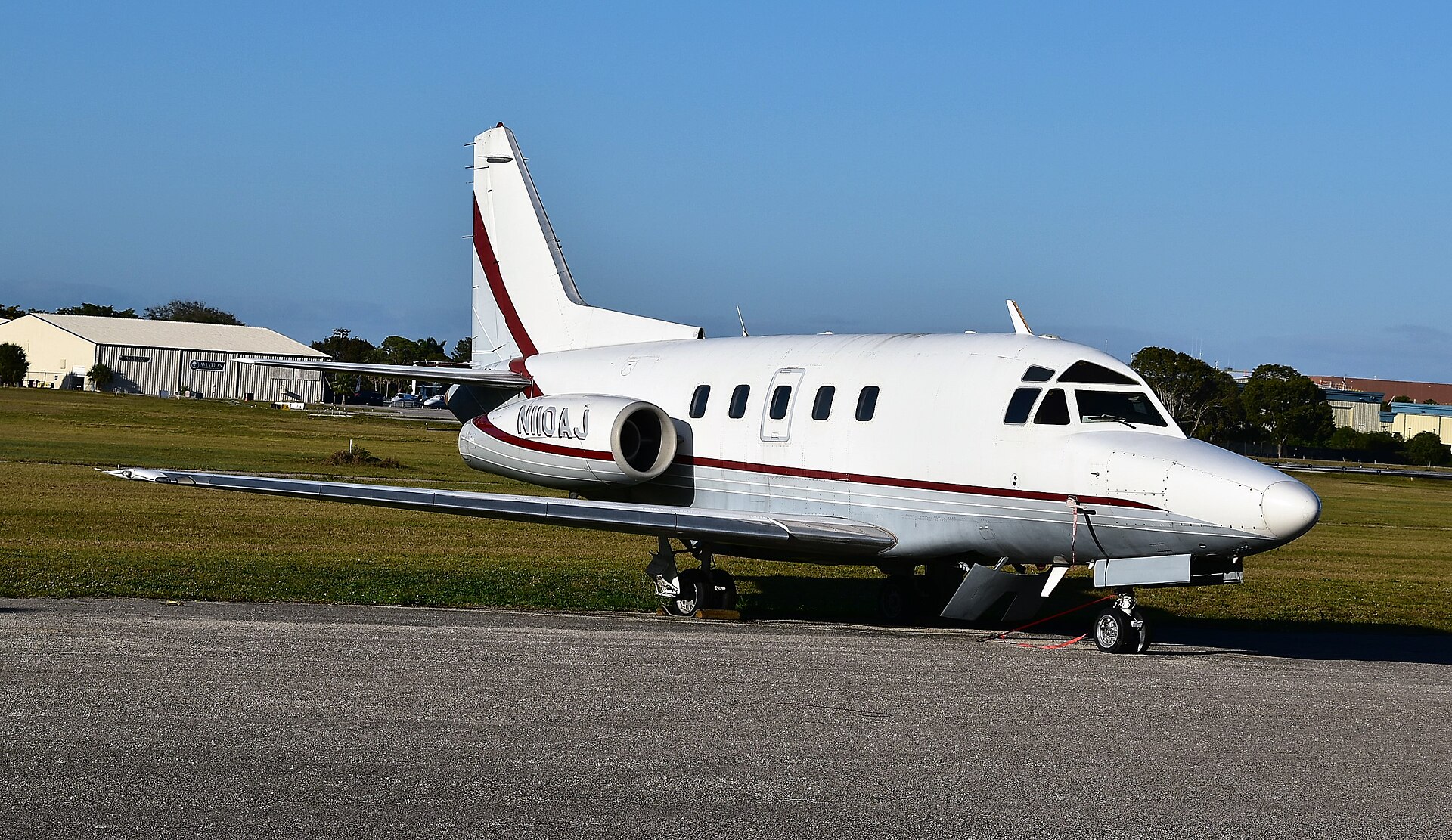
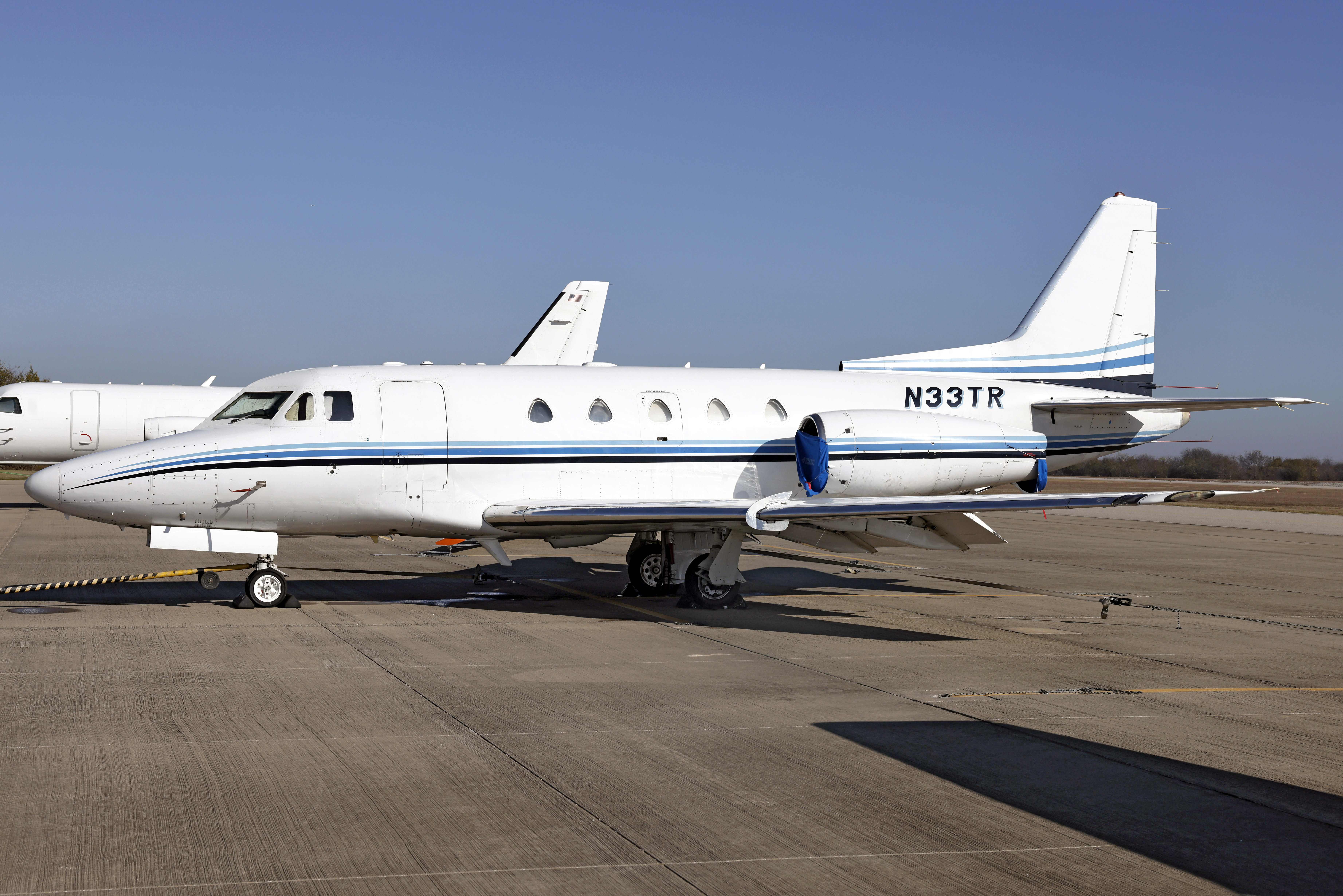
1967–1979
Sabreliner 60
Fuselage stretched 38 in, with five rounded windows a side.
What changed from the Sabreliner 40 / 40A
- Fuselage stretched 38 in for a longer cabin.
- Five rounded cabin windows a side replace the 40's small triangular windows.
- Same Pratt & Whitney JT12A-8 turbojets, 3,300 lb thrust each.
- Maximum takeoff weight of 20,172 lb.
Size and cabin
How big it is, inside and out
Outside
Silhouette · scaled to length
Length
Wingspan
Height
Inside the cabin
Cabin length
Compare
How it stacks up
This aircraft
Sabreliner 60 (NA-265-60)
- JetGrade
- 46
- Price
- $235K–$363K guide
- Cost per year
- $2.18M
- Range
- 1,335 nm
- Speed
- 428 kt
- Seats
- 7
- Cabin length
- 19′ 0″
- Pilots
- 2
- Years built
- 1967–1979
← Before
- JetGrade
- 40
- Cost per year
- $1.27M
- Range
- 1,650 nm
- Speed
- 459 kt
- Seats
- 6
- Cabin length
- 15′ 11″
- Pilots
- 2
- Years built
- 1963–1974
After →
- JetGrade
- 59
- Price
- $350K–$505K guide
- Cost per year
- $2M
- Range
- 2,460 nm
- Speed
- 465 kt
- Seats
- 8
- Cabin length
- 19′ 0″
- Pilots
- 2
- Years built
- 1979–1981
Alternative
- JetGrade
- 68
- Price
- $897K–$1.25M guide
- Cost per year
- $1.58M
- Range
- 2,460 nm
- Speed
- 455 kt
- Seats
- 8
- Cabin length
- 24′ 2″
- Pilots
- 2
- Years built
- 1989–2005
Alternative
- JetGrade
- 68
- Price
- $400K–$642K guide
- Cost per year
- $1.82M
- Range
- 2,170 nm
- Speed
- 430 kt
- Seats
- 8
- Cabin length
- 21′ 4″
- Pilots
- 2
- Years built
- 1977–1984
- Sabreliner 65 instead: Same family with Garrett TFE731 fan engines and a supercritical wing, so it flies farther on less fuel.
- Dassault Falcon 20-5 instead: A wider cabin with TFE731-5 engines that meet Stage 3, and examples still trade as flyable aircraft.
- Hawker 700 instead: A roomier cabin and TFE731 fan engines in a midsize jet that is still widely supported and flown.
Gold marks the best figure in each row.
Owning one
What to know before you buy
Engines & inspections
2 × Pratt & Whitney JT12A-8 turbojet · 3,300 lbf each
Engine hours until overhaul
- Lavatory waste door inspection · 1,000 hr
- Engine overhaul · 3,000 hr
- Airframe life limit · 10,000 hr
- Wing spar borescope inspection every 24 months
- Engine corrosion inspection every 48 months
- 60-month corrosion inspection every 60 months
No pay-per-hour engine plan exists. Owners reserve by the hour; AVMATS in Missouri offers exchange engines and a JT12 test cell.
Known issues
Noise ban in lower 48
Standard-category aircraft may not use airports in the 48 contiguous states since 31 December 2015, except on special permits.
No noise kit exists
The FAA found no hushkit for the Sabre 60, so Stage 3 compliance is not available.
Wing spar corrosion
A directive requires spar borescope checks every 24 months; one aircraft had corrosion through the upper wing skin.
Pre-buy checklist
0 of 8 checked
Sabreliner closed its Perryville plant in 2017. AVMATS in Chesterfield, Missouri, is now the authorized service center and parts distributor, with exchange engines and a JT12 test cell.
Review
The full review
Strengths
- Cruises at about 428 kt and climbs to 45,000 ft, quick for a jet designed in the 1960s.
- Five rounded windows a side, a refreshment center and a private lavatory in a 19 ft cabin.
- Low purchase cost: older guide values ran $235,000 to $363,000 before the noise ban.
Limitations
- Not Stage 3: barred from airports in the 48 contiguous states since 31 December 2015 on standard certificates.
- Thirsty turbojets burning about 283 to 350 gallons an hour push costs near $7,280 an hour.
- Short legs: about 1,335 nm at best and roughly 1,000 nm with all seats filled.
The Sabreliner 60 is the stretched version of North American's original Sabreliner, the business jet that grew out of the T-39 trainer the company built for the US Air Force. Certificated in April 1967, it added 38 in to the Sabre 40's fuselage and replaced the 40's small triangular windows with five rounded windows a side. About 130 were built before the fan-powered Sabre 65 took its place at the end of the 1970s. Some 60s were later fitted with a supercritical wing and sold as the 60A.
Pilot's take
We see the Sabreliner 60 as a solid, conventional two-pilot jet from the military-trainer school of design. Its swept wing and JT12 turbojets give it real speed, about 428 kt in cruise, and a 45,000 ft ceiling that still reads well today. The trade-offs are the ones turbojets always bring: heavy fuel burn, long takeoff runs and a lot of noise. Careful fuel planning matters on every leg. The flying qualities are not what limits the 60 now; the noise rules, the shrinking support network and the airframe's age are.
Who this is for
Test-pilot schools, research and air-show operators flying on experimental certificates, owners based outside the lower 48 states, and parts or restoration specialists. It is not a sensible first private jet for a US owner.

Ask about this aircraft
Answers come only from our research file on the Sabreliner 60.
Your earlier questionsOwners
Private to verified ownersOwn a Sabreliner Sabreliner 60 (NA-265-60)? Verify with its FAA registration to join the owners' thread and the real-cost poll.